
Grid bottlenecks put India's renewable energy targets at risk, Centre told
Transmission capacity is lagging behind new solar and wind projects, and the warning now lands squarely on the government's desk.
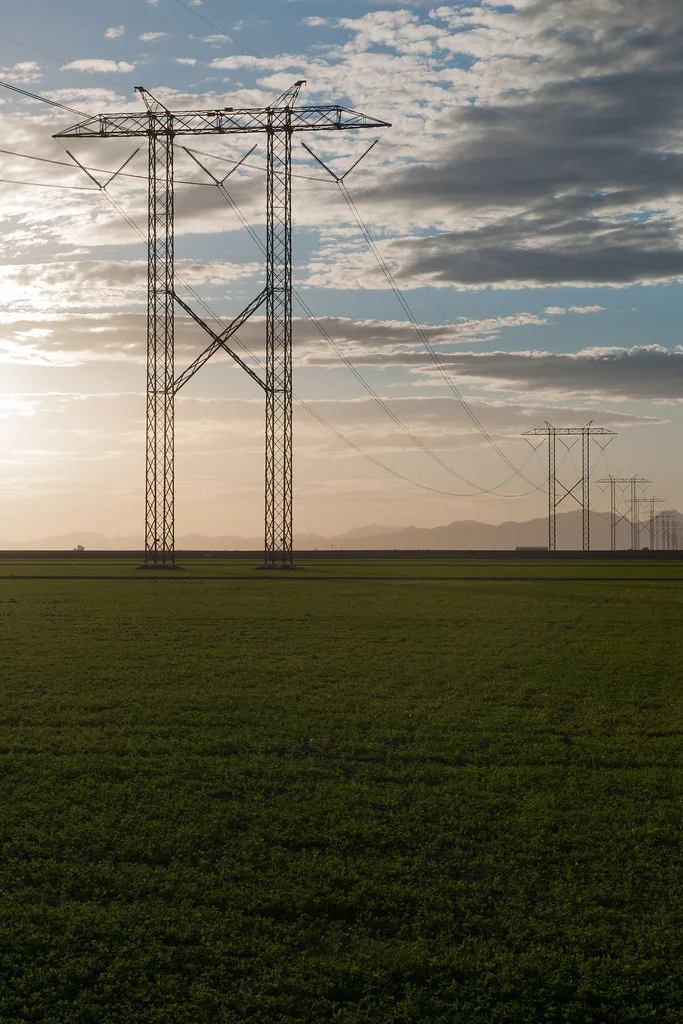
India's renewable energy build-out is running into a wall that isn't made of land, finance or panels. It's the grid. According to a report by Counterview, the Centre has been warned that transmission bottlenecks are threatening the country's renewable energy growth, with the power evacuation infrastructure failing to keep pace with new solar and wind capacity.
The warning comes as India pushes toward its 2030 target of 500 GW of non-fossil capacity. That number gets most of the attention. The wires that carry the power get far less.
Why the grid matters more than the headline target
Solar parks in Rajasthan, Gujarat and Andhra Pradesh can be built in 18 to 24 months. A transmission line crossing three states can take five to seven years, often longer once right-of-way disputes and forest clearances enter the picture. That mismatch is the core of the problem. Projects get commissioned, then wait for evacuation lines that aren't ready.
The result is curtailment. Generators are told to switch off or run below capacity because the grid can't absorb what they produce. For developers, that's lost revenue on assets they've already financed. For the country, it's clean electricity that never reaches a consumer.
Counterview's report flags that the Centre has been formally alerted to this gap. The details of who raised the alarm and in what forum are not fully spelled out in the source, but the substance is clear: the transmission side of the energy transition is falling behind the generation side.
The states carrying the load
Most of India's renewable capacity sits in a handful of states. Rajasthan and Gujarat lead on solar and wind. Tamil Nadu has some of the oldest wind farms in the country and some of the worst evacuation constraints. Andhra Pradesh and Karnataka are close behind. The power has to travel to demand centres in Maharashtra, Uttar Pradesh and the southern industrial belts.
Inter-state transmission corridors are the bottleneck. Green energy corridors were planned years ago, but execution has slipped. Land acquisition for towers and substations remains slow. So does coordination between the Central Transmission Utility and state transmission utilities.
- Generation capacity is being added faster than evacuation infrastructure.
- Curtailment of renewable power is a growing risk for developers.
- Inter-state corridors and green energy corridors are behind schedule.
- The Centre has been warned that the gap threatens overall renewable growth.
What it means for investors
Developers price risk. If a solar plant can't be sure its power will be evacuated, lenders demand a higher return. That raises tariffs or kills projects outright. India's renewable auction pipeline is large, but a grid that can't absorb the output makes every bid riskier.
The Centre has pushed reforms, including a push for storage and hybrid projects to smooth output. Storage helps. It doesn't fix a missing line.
The warning reported by Counterview is a reminder that the energy transition is a two-part job. Building the plants is one part. Moving the power is the other. India has been faster at the first.
The Centre has not yet issued a detailed public response to the warning, according to the report.
Source: Counterview · 25 Oct 2026
Comments
Be the first to comment.
Leave a comment