
Ola Electric's Tamil Nadu Gigafactory Faces CAG Audit Over Battery Fire Safety
India's top auditor will inspect Ola Electric's new battery plant near Krishnagiri after a series of EV fires raised questions about safety protocols and regulatory compliance.
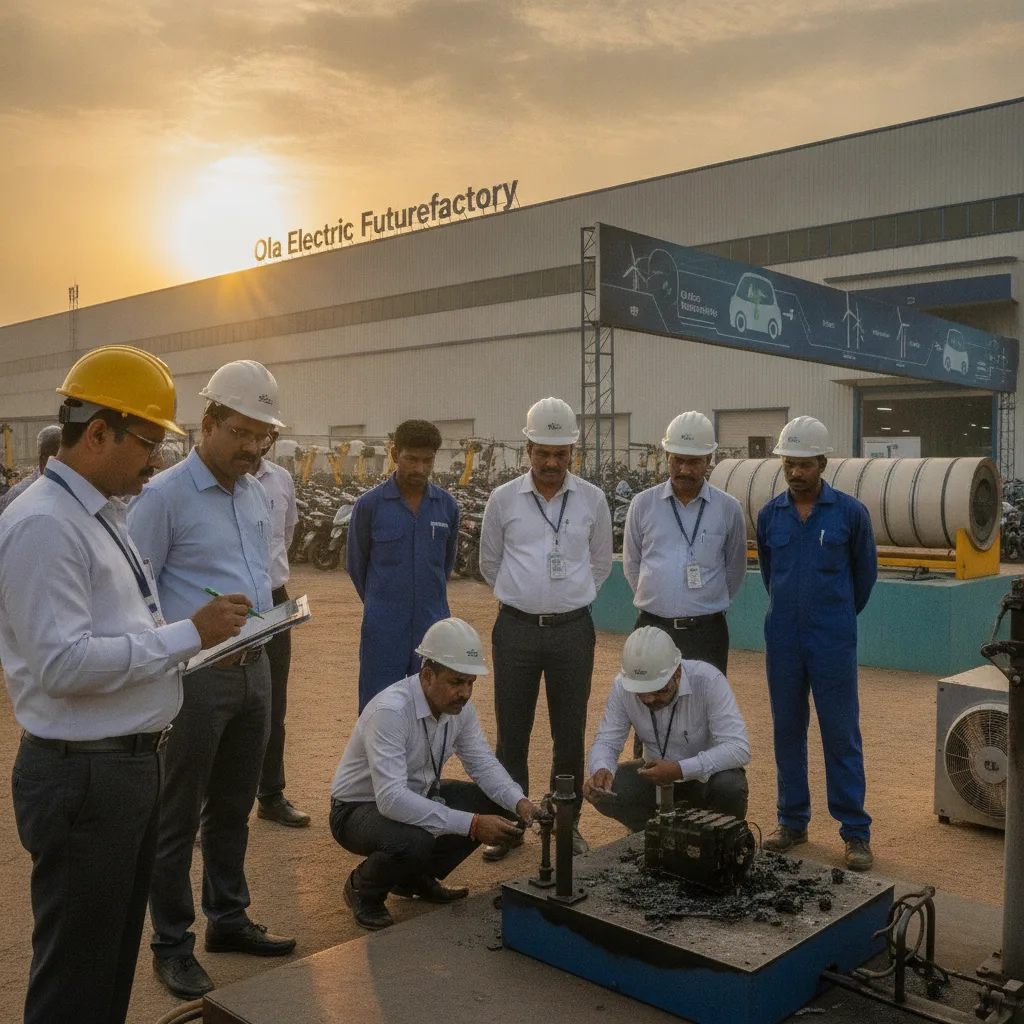
CHENNAI, The Comptroller and Auditor General of India has started an audit of Ola Electric's new gigafactory in Tamil Nadu. The move comes after three battery fires in Ola scooters over the past six months. The factory, built near Krishnagiri at a cost of ₹2,400 crore, started making battery cells in October last year.
The CAG will look at how the company tests its cells and packs. It will also check if the plant meets the Bureau of Indian Standards norms for thermal runaway prevention. A senior CAG official told GreenEarth News on condition of anonymity: "We are focusing on the gap between what the company promised in its safety filings and what it actually does on the shop floor."
Ola Electric has sold more than 250,000 scooters since 2021. But the company recalled 1,441 vehicles in August 2023 after a scooter caught fire in Pune. Another fire in March 2024 damaged a parking lot in Bengaluru. No one died, but the incidents hurt consumer trust.
What the audit covers
The audit team arrived at the factory on February 3. They will spend three weeks inspecting three things: the cell manufacturing line, the battery pack assembly area, and the quality control lab. The CAG wants to see if the company uses the same safety checks it described in its application to the Automotive Research Association of India.
Ola Electric's founder Bhavish Aggarwal has said the company's cells pass a "nail penetration test", a standard where a steel nail is driven into a charged cell to see if it catches fire. But a former Ola engineer, who asked not to be named, told this reporter that the test is done on single cells, not on the full battery pack. "A pack has hundreds of cells packed tight," he said. "Heat from one cell can spread fast. That's where the risk is."
The Tamil Nadu factory can make 5 gigawatt-hours of cells a year. That is enough for about 100,000 scooter batteries. Ola plans to double that capacity by 2026. The audit could slow those plans if the CAG finds major safety gaps.
Industry reaction
Other EV makers are watching closely. Ather Energy, which makes scooters in Hosur, said in a statement that it "welcomes any audit that improves safety standards across the industry." Bajaj Auto, which sells the Chetak electric scooter, has not commented.
Consumer rights groups have pushed for the audit since last year. "The government gave Ola a production-linked incentive of ₹1,200 crore. Taxpayers deserve to know if their money is funding safe products," said Sunita Rao, a Chennai-based activist who filed a complaint with the Ministry of Heavy Industries in December 2023.
Ola Electric's stock, listed on the BSE since August 2024, dropped 3.2% on the day the audit was announced. The company's market value is now about ₹38,000 crore.
The CAG is expected to publish its report by June. A ministry official told GreenEarth News that the findings could shape new rules for all EV battery makers in India. "If the report shows flaws, we will tighten the norms. There is no room for shortcuts when lithium-ion batteries are involved," the official said.
Comments
Be the first to comment.
Leave a comment