
Tamil Nadu EV policy 2.0 sets 30% electric bus target by 2026; Olectra wins first tender
The state transport department has mandated a third of its fleet to go electric in two years, and Olectra Greentech has bagged the first order for 100 buses.
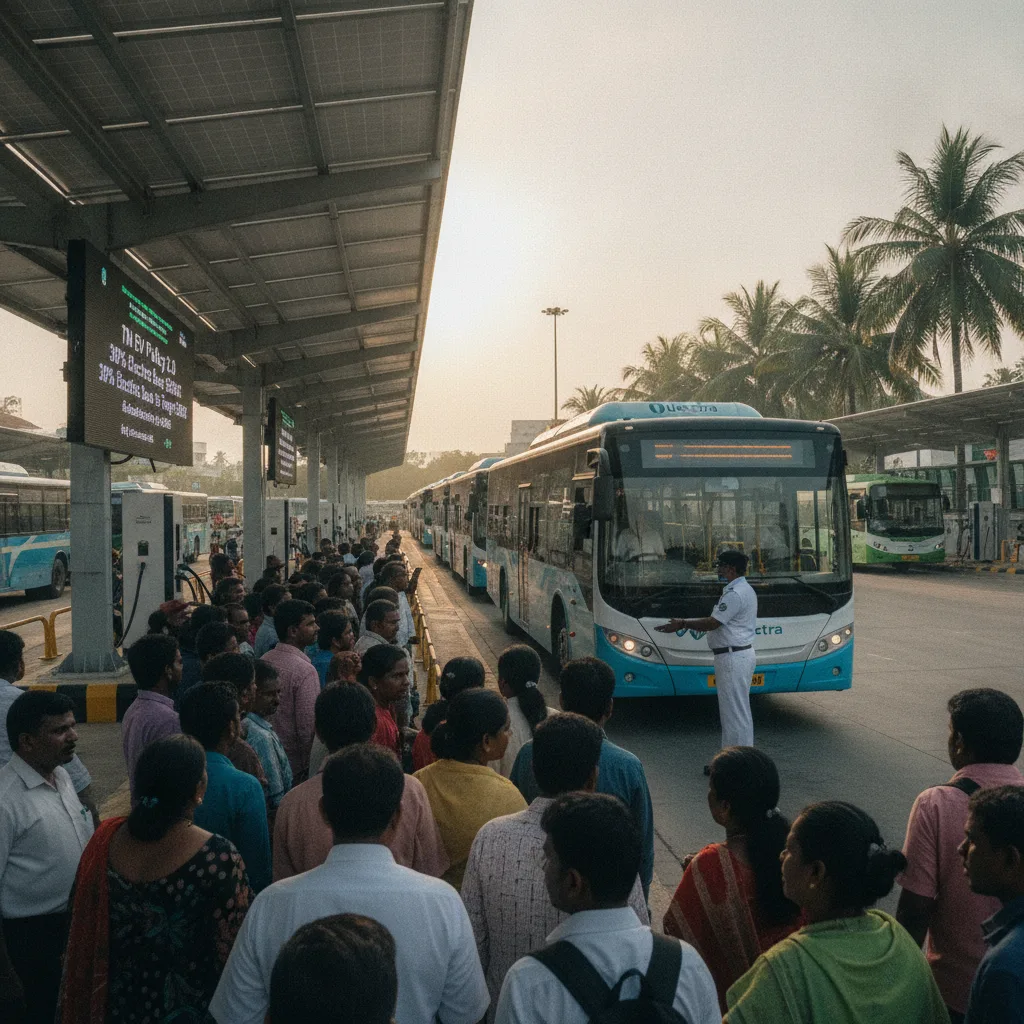
CHENNAI, Tamil Nadu has put its clean-energy push into a higher gear. The state's new EV policy 2.0, released last week, orders that 30% of all buses owned by state transport undertakings must be electric by 2026. That is a jump from the earlier target of 20% by 2025.
The rule applies to the 21 state-run bus corporations that run across Tamil Nadu. Together they operate roughly 22,000 buses today. A 30% share means about 6,600 electric buses need to hit the roads in the next two years.
Hyderabad-based Olectra Greentech Ltd has already grabbed the first piece of that business. On Monday, the company said it won a tender to supply 100 electric buses to the Tamil Nadu State Transport Corporation in Salem. The deal is worth around ₹90 crore, including a 12-year maintenance contract. Delivery is expected within 12 months.
Why the rush?
Tamil Nadu is India's second-largest bus market after Maharashtra. Its transport corporations burn through roughly ₹5,000 crore a year on diesel. Switching to electric buses could cut that bill by half, state officials say.
"We are not just saving fuel costs. We are cutting noise and air pollution in our cities," said a senior transport department official who spoke on condition of anonymity. "The 30% target is doable if we bid out tenders fast and get charging infrastructure ready."
The policy also offers a 100% road tax exemption for electric buses bought before 2026. It waives permit fees and gives priority parking at bus terminals. Charging stations will be set up at depots and along major routes, with power supplied at concessional rates.
Olectra's edge
Olectra is no stranger to Tamil Nadu. It supplied 50 buses to the state's transport corporation in 2022 under a pilot project. Those buses have run more than 2 million km so far, the company says.
"We have a proven track record here," said Olectra's chief executive, K. V. P. Rao. "This new order shows the state's confidence in our technology and after-sales service."
Olectra builds its buses in partnership with China's BYD, using BYD's battery and chassis. The company has a factory in Hyderabad with an annual capacity of 1,500 buses. It plans to expand to 3,000 units next year.
But the company faces competition. Tata Motors, Ashok Leyland, and JBM Auto have also bid for Tamil Nadu bus tenders in recent months. The state is expected to float more tenders for another 500 buses before March 2025.
Stumbling blocks
Not everyone thinks the 30% target is realistic. Bus operators point to three big problems. First, charging infrastructure is still patchy. Most depots lack the high-voltage connections needed to charge a fleet overnight. Second, electric buses cost about ₹2 crore each, nearly twice the price of a diesel bus. Even with tax breaks, the upfront cost is steep. Third, range anxiety is real. A fully charged electric bus can run about 200 km, but many routes in Tamil Nadu stretch beyond 300 km a day.
"The government must build charging stations first, then set targets," said R. Srinivasan, a transport analyst based in Chennai. "Otherwise, we will see buses parked idle."
The policy tries to address this. It promises to set up at least one charging depot in each of the state's 38 districts by the end of 2025. It also allows private companies to build and run charging stations on bus routes.
What this means for the grid
Adding 6,600 electric buses will put a heavy load on Tamil Nadu's power grid. Each bus draws about 250 kWh per charge. Multiply that by 6,600, and you get 1.65 million kWh of demand every night. That is roughly the output of a 300 MW power plant.
The state electricity board says it can handle the load if charging is staggered. "We will use smart meters to spread charging across the night, from 10 p.m. to 6 a.m.," said a board engineer. "That is when the grid has spare capacity."
Tamil Nadu already gets about 30% of its power from wind and solar. The policy encourages bus depots to install rooftop solar panels to offset some of the charging load.
Olectra expects to deliver the first batch of 25 buses to Salem by June 2025. The rest will follow by the end of that year.
Comments
Be the first to comment.
Leave a comment