
Canal-Top Solar: India's Canals Could Host 18 GW of Photovoltaics
A new report from Vajiram & Ravi examines how covering irrigation canals with solar panels can save water and land while generating clean power.
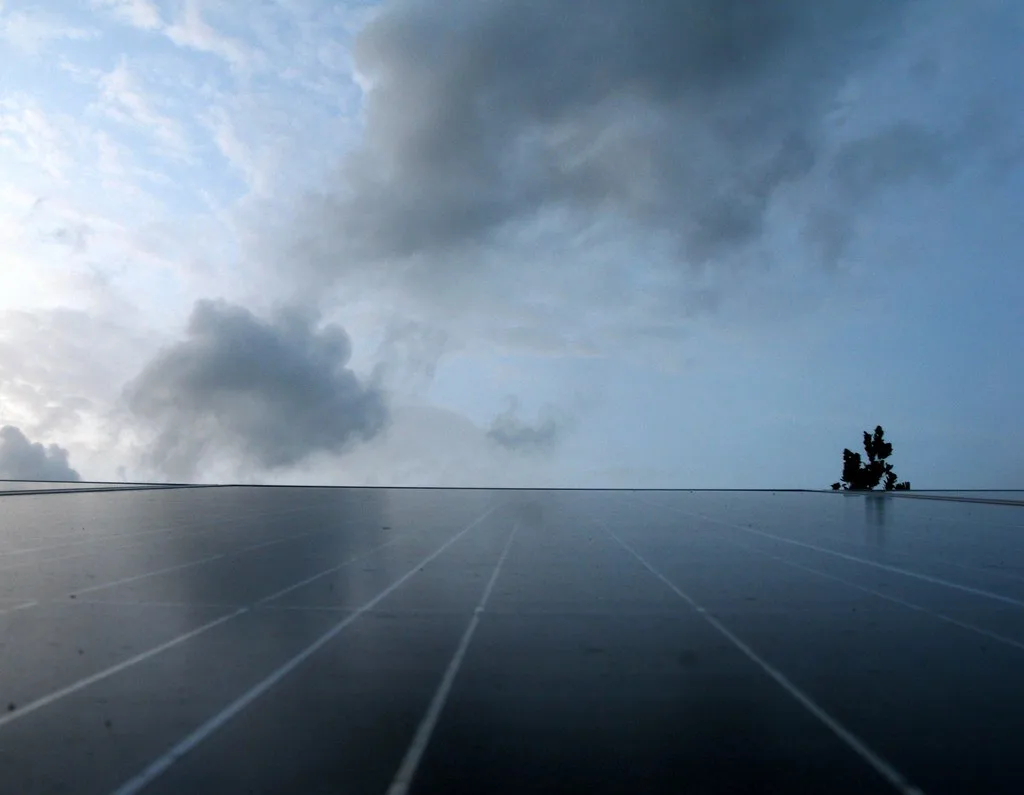
India's canal network stretches for thousands of kilometres. A new report from Vajiram & Ravi looks at a technology that could turn those canals into power plants: canal-top photovoltaics.
The idea is simple. Mount solar panels on structures built over irrigation canals. The panels generate electricity. The shade they cast reduces evaporation from the water below. And the canal itself cools the panels, which can improve their efficiency.
The report, published on September 23, 2026, notes that India has about 18,000 kilometres of major canals. If even a fraction were covered, the potential is large. According to the report, covering just 10% of the canal network could generate over 18 GW of solar power. That's enough to power millions of homes.
Gujarat was an early mover. In 2012, the state built a 1 MW canal-top solar plant on the Narmada canal. The project showed that the concept works. Since then, other states have shown interest, but progress has been slow.
Why? Cost is one reason. Building over water is more expensive than building on land. The structures need to be sturdy and corrosion-resistant. Maintenance is trickier too. But the benefits can offset those costs. Land is scarce and expensive. Canal-top solar uses no land. It also saves water, a critical advantage in a country where many regions face drought.
The report points out that evaporation from canals is a major loss. Covering them with panels can cut evaporation by up to 70%. That water can then be used for irrigation or drinking. In states like Maharashtra, where water scarcity is a recurring problem, this matters.
There are challenges. The panels need to be cleaned regularly, and dust can reduce output. Access for maintenance is difficult. And the canal banks must be strong enough to support the structures. But these are engineering problems, not deal-breakers.
The report also highlights the role of government policy. Subsidies and incentives can make canal-top solar more attractive. The Ministry of New and Renewable Energy has supported pilot projects. But a national push is needed to scale up.
Some experts say canal-top solar could be a game-changer for India's clean energy targets. The country aims to install 500 GW of non-fossil fuel capacity by 2030. Canal-top solar could contribute a slice of that.
But it's not a silver bullet. The technology works best in specific locations. Canals in sunny, dry regions are ideal. In hilly areas or where canals are narrow, it may not be feasible.
The report calls for a detailed mapping of India's canals to identify the best spots. It also suggests a standard design for canal-top structures to bring down costs.
For now, the technology remains a niche. But as land becomes scarcer and water more precious, the calculus may change. The Narmada canal plant is still running. It's a proof of concept that has yet to become a movement.
"Canal-top solar is a smart way to use existing infrastructure," the report states. "It addresses two problems at once: energy and water."
Source: Vajiram & Ravi · 23 Sep 2026
Comments
Be the first to comment.
Leave a comment