
Delhi Solar Policy 2.0: 75% Subsidy Drives 40,000 Rooftop Installations This Quarter
A new state subsidy scheme has pushed rooftop solar installations in Delhi past 40,000 in the last three months, but grid bottlenecks and paperwork delays threaten to slow the boom.
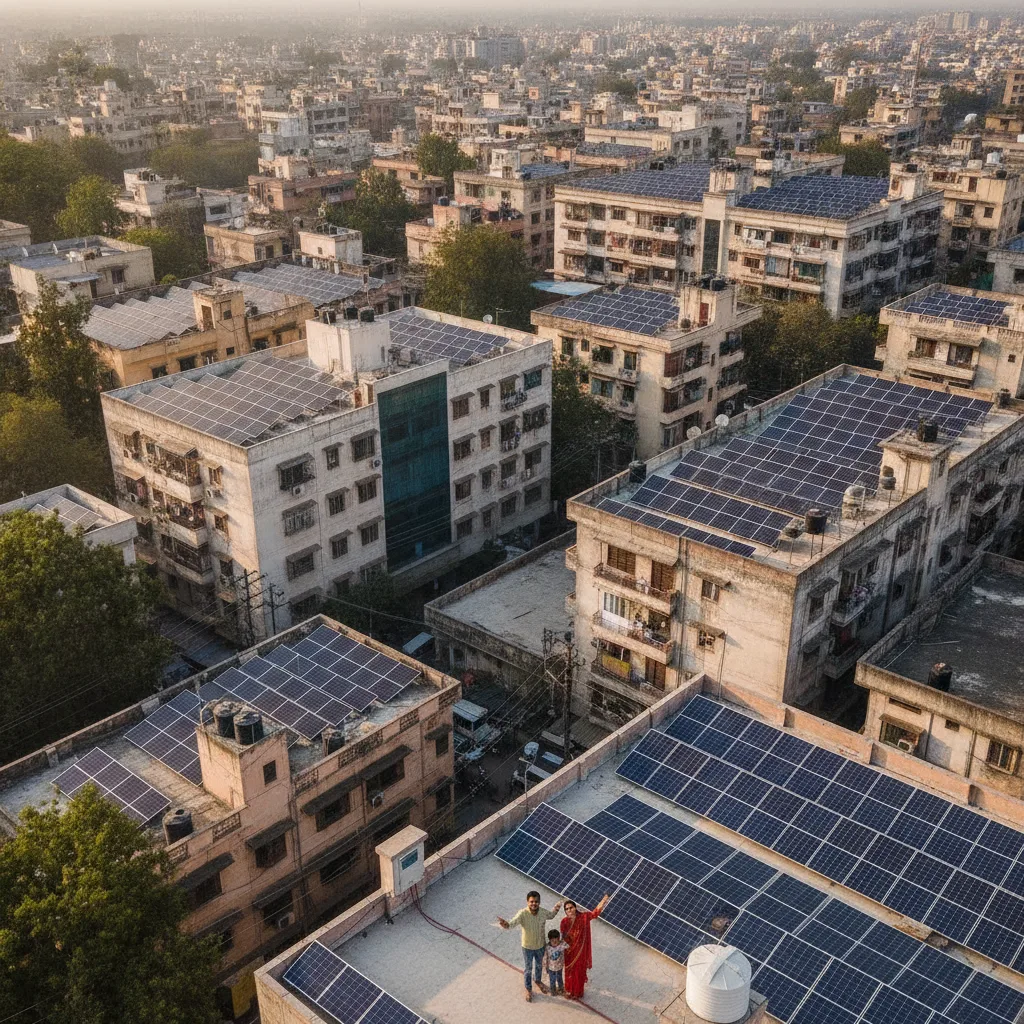
NEW DELHI, The numbers are stark. In the first quarter of 2025, Delhi added 40,012 rooftop solar systems. That is more than the city installed in the previous two years combined.
The driver is Delhi Solar Policy 2.0, launched in January. It offers a 75% subsidy on systems up to 3 kilowatts for residential consumers. A typical 3 kW setup, which costs about ₹1.8 lakh, now sets a homeowner back only ₹45,000 after the state and central subsidies kick in.
"I paid ₹42,000 for a 3 kW system. My monthly electricity bill dropped from ₹4,500 to ₹200," said Sunita Mehta, a resident of Dwarka Sector 12 who installed panels in February. "The payback period is under two years."
How the policy works
The scheme covers 75% of the cost for systems up to 3 kW, and 60% for 3, 10 kW. The central government's PM Surya Ghar scheme adds another 30% on the first 3 kW. Combined, a Delhi homeowner can get up to 90% of the cost covered on small systems.
BSES, the city's main power distributor, reported 18,500 new connections under the policy between January and March. Tata Power Delhi Distribution, which serves north Delhi, added 12,300. The remaining 9,212 came through other discoms and third-party installers.
"We are seeing demand we never expected," said Rajesh Gupta, head of renewable energy at BSES. "Our field teams are stretched. We have hired 200 extra technicians this quarter alone."
Grid congestion and red tape
But the boom has hit a wall. Many of Delhi's low-voltage distribution transformers were built for 1950s-era loads. They cannot handle the reverse power flow from thousands of solar panels feeding into the grid.
In Rohini, residents who installed panels in January waited eight weeks for net-meter approval. "The transformer in our block was undersized. BSES said they need to upgrade it, but that takes three months," said Amit Verma, a resident of Rohini Sector 9. "Meanwhile, my panels are sitting idle."
The Delhi Electricity Regulatory Commission has approved a ₹120 crore upgrade plan for 1,200 transformers across the city. Work is expected to finish by September. Until then, new installations in some areas face a backlog.
Paperwork is another choke point. The subsidy application requires seven documents, including a structural stability certificate from a licensed engineer. Many homeowners struggle to find one. "I called five engineers. None had the time," said Priya Sharma, a resident of Lajpat Nagar. "I finally paid ₹3,000 to a guy who did it in one day."
Installers scramble
Solar installation companies are struggling to keep up. Loom Solar, one of Delhi's largest rooftop installers, reported a 300% jump in orders this quarter. "We used to do 50 installations a month. Now we do 200," said Amrit Singh, the company's operations manager. "But we are turning away customers because we don't have enough trained crews."
The company has started a two-week training program for electricians. It pays ₹25,000 a month to trainees. "We need 500 more installers across Delhi," Singh said. "If we don't get them, the subsidy boom will fizzle."
What comes next
The Delhi government has set a target of 250,000 rooftop solar installations by the end of 2026. At the current rate, that target is within reach, if the grid upgrades and paperwork fixes happen on time.
"The subsidy is working, but it is not enough," said Mehta. "The government also needs to fix the grid and cut the red tape. Otherwise, people will lose interest."
Comments
Be the first to comment.
Leave a comment