El Niño Likely to Cut India's Wind and Hydropower Output, Study Warns
A new study finds that El Niño conditions could slash wind power generation by up to 6% and hydropower by 10% across India, threatening grid stability.
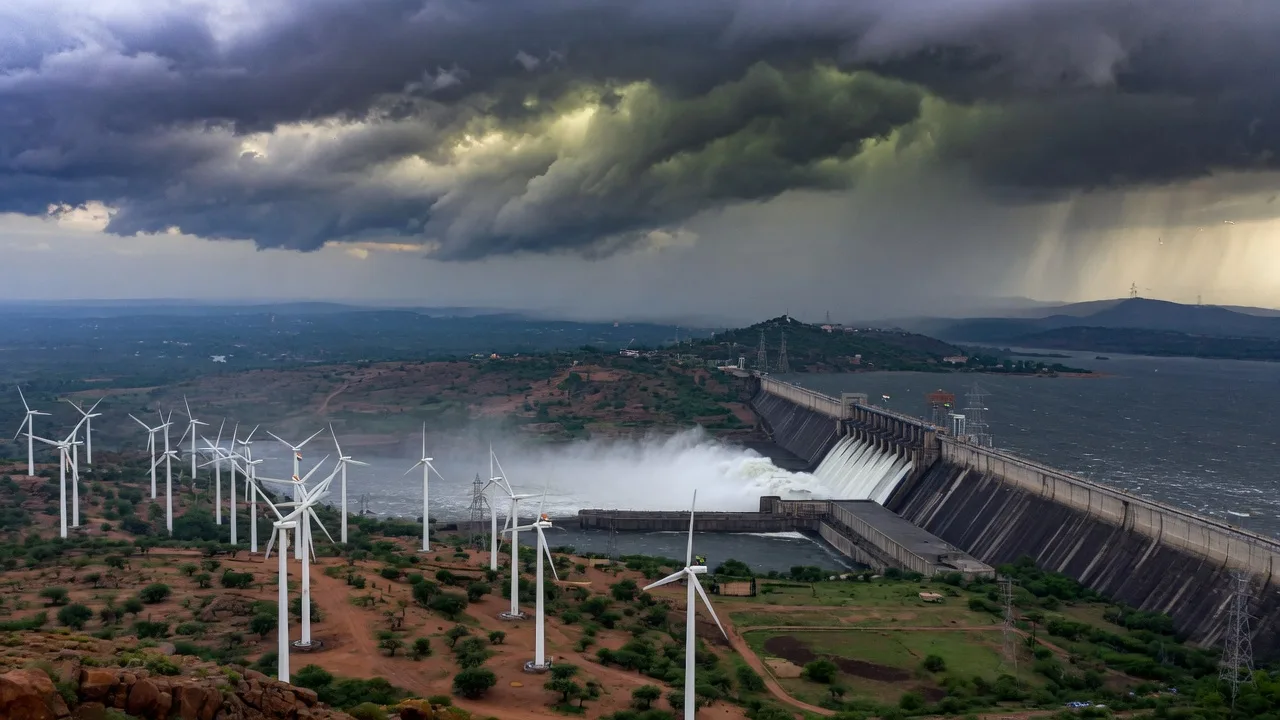
New research warns that El Niño could deal a double blow to India's clean energy sector. The climate pattern is expected to cut wind power output by up to 6% and hydropower generation by as much as 10%, according to a study published in The Hindu.
The findings come at a critical time. India has set ambitious targets for renewable energy. Wind and hydropower together make up a large share of the country's non-fossil fuel capacity. Any drop in their output could force grid operators to rely more on coal-fired plants.
How El Niño Changes the Weather
El Niño is a natural climate cycle. It warms sea surface temperatures in the Pacific Ocean. That shift alters wind patterns and rainfall across the globe. In India, El Niño years often bring weaker monsoon rains and slower wind speeds. The study looked at historical data from past El Niño events. It then modeled how similar conditions would affect India's wind and hydropower plants.
The results are stark. Wind farms in southern and western India, states like Tamil Nadu, Gujarat, and Maharashtra, face the biggest losses. These regions rely on steady monsoon winds. El Niño disrupts those winds. Hydropower plants in the Himalayas and the Western Ghats also suffer. Lower rainfall means less water in reservoirs. Less water means less electricity.
A Stress Test for the Grid
The study did not name specific power plants. But it made clear that the combined effect could strain the national grid. India's peak electricity demand has grown sharply in recent years. Summer heatwaves have pushed demand to record highs. If wind and hydropower fall short, the grid may need more coal or gas-fired power to fill the gap.
That would be bad news for India's climate goals. The government wants 500 gigawatts of renewable capacity by 2030. It also aims to cut carbon emissions. A dip in clean power output could slow progress.
What Can Be Done?
The study suggests better forecasting and grid management. It also calls for more diverse renewable sources. Solar power, for example, is less affected by El Niño. But solar has its own limits, it stops working at night and drops sharply on cloudy days.
Energy storage could help. Batteries and pumped-hydro storage can save excess power for later use. But India's storage capacity is still small. The government has offered incentives to build more, but projects take years to complete.
Another option is to spread wind farms across more regions. If one area loses wind, another might still have strong breezes. That approach would require new transmission lines. Building them is slow and costly.
The study's authors did not give policy recommendations. They simply laid out the risks. The message is clear: El Niño is a natural event, but its impact on clean energy is real. India needs to prepare.
For now, the coming El Niño season is being watched closely. Meteorologists expect conditions to develop later this year. If they do, India's wind and hydropower plants will face a tough test. How the grid handles it will depend on how well the country has planned for the worst.
Comments
Be the first to comment.
Leave a comment