
Super El Nino Could Cause 18 TWh Power Shortfall in India: Study
A new report warns that a Super El Nino weather event may create a nearly 18 TWh gap between India's electricity supply and demand.
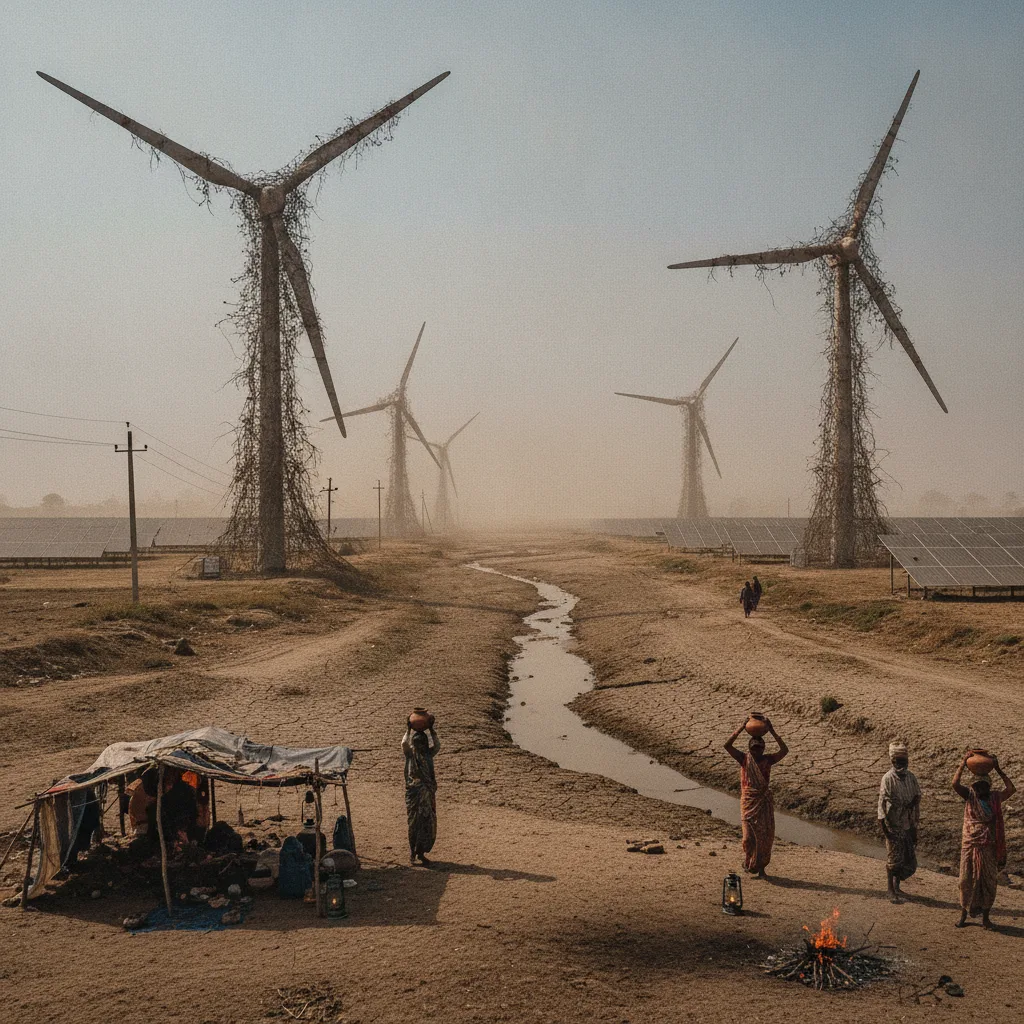
A strong Super El Nino could leave India facing a power generation shortfall of nearly 18 terawatt-hours (TWh), according to a study cited by Saur Energy. The analysis points to the risk of reduced hydropower output and higher cooling demand during such a climate event.
How the gap adds up
The study estimates that a Super El Nino, the most intense phase of the natural climate pattern, would cut hydroelectric generation significantly. Many of India's key hydropower plants depend on monsoon rains. El Nino typically brings weaker rainfall to the Indian subcontinent. Less rain means lower reservoir levels and less water to spin turbines.
At the same time, hotter temperatures would push up electricity use. People and businesses would run more fans, air conditioners, and coolers. That extra demand, combined with lower hydropower supply, creates the projected 18 TWh gap.
To put that number in context: 18 TWh is roughly equal to the annual power output of a large coal-fired plant, or enough electricity to power about 15 million Indian homes for a year. The gap would force grid operators to rely more on coal and gas, or to cut power to some users.
Past patterns and future risks
India has seen severe power shortages before. In 2022, a heatwave pushed peak demand to record levels, leading to blackouts in several states. The study suggests a Super El Nino could produce even worse conditions.
The Indian Meteorological Department has said El Nino conditions are already developing in the Pacific. Forecasters expect them to strengthen later this year. If the event reaches Super El Nino strength, defined by sea surface temperatures in the central Pacific rising more than 2°C above normal, the impacts on Indian rainfall and temperatures would be severe.
Hydropower accounts for about 11% of India's total electricity generation. In a normal year, it provides flexible, low-cost power that helps balance the grid. During a weak monsoon, that buffer shrinks.
What it means for the grid
India's power ministry has already asked states to prepare for higher demand. The Central Electricity Authority has warned that peak demand could cross 240 GW in summer 2025. A Super El Nino would push that number higher.
The study's authors argue that the country needs to build more non-hydro renewable capacity, solar and wind, to reduce dependence on rain-fed hydropower. They also call for better weather forecasting and grid planning to handle extreme events.
But solar and wind have their own limits. Solar output drops during cloudy monsoon days. Wind farms in many parts of India see their strongest generation in summer, but El Nino can shift wind patterns too.
Storage, batteries and pumped hydro, could help fill the gap. India has set a target of 500 GW of renewable capacity by 2030. But battery storage is still expensive, and large pumped hydro projects take years to build.
The study does not name specific states that would be hit hardest. But regions that depend heavily on hydropower, like the Himalayan states, Karnataka, Kerala, and Tamil Nadu, are likely to face the biggest supply drops. Northern and eastern states, which rely more on coal, could see less direct impact but may still face higher prices if the national grid comes under pressure.
Comments
Be the first to comment.
Leave a comment