
Electric Car Race Widens as New Players Gain Traction in H1 CY26
India's EV market sees a surge of fresh manufacturers and stronger sales in the first half of 2026, tightening competition for established brands.
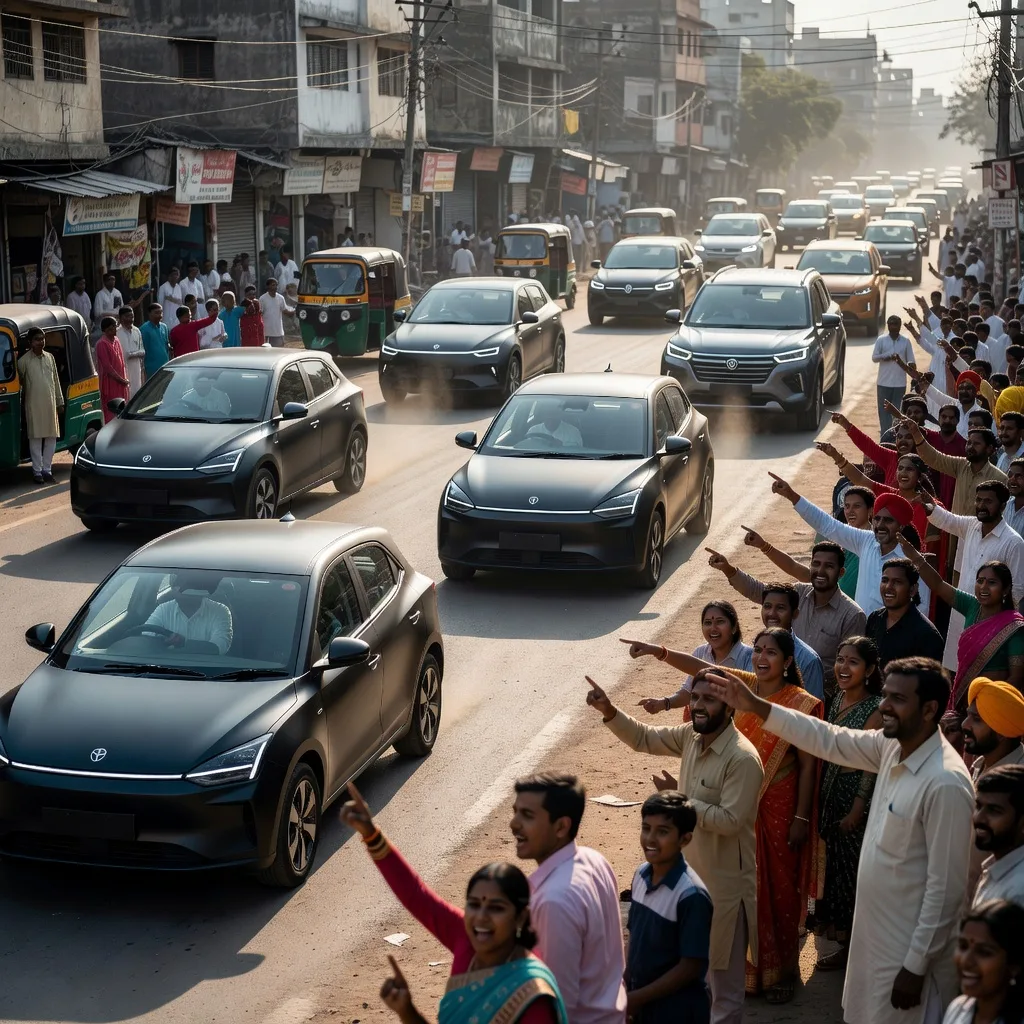
India's electric‑vehicle market is moving faster as a wave of new manufacturers joins the race. In the first half of calendar year 2026 (H1 CY26), sales of electric cars rose by about 38 % year‑on‑year, according to the Society of Indian Automobile Manufacturers (SIAM). The growth has forced incumbents such as Tata Motors and Mahindra to lookat pricing, product range and dealer networks more closely.
New entrants boost competition
Four new companies entered the Indian passenger‑EV segment in the last twelve months. Two of them are domestic start‑ups that built their own battery‑pack technology, while the other two are foreign firms that use existing Indian factories under a joint‑venture model. All four launched sub‑compact models priced below INR 8 lakh, a segment that has long been dominated by internal‑combustion cars.
Analysts say the fresh supply has helped push average selling prices down by roughly 5 % and has given first‑time buyers more choices. The new players also show a willingness to partner with local charging‑network operators, a move that could speed up the roll‑out of fast‑charge stations in tier‑two cities.
Policy support keeps the momentum
The central government kept its fiscal incentives steady in H1 CY26, offering a tax credit of up to 20 % on the on‑road price of electric cars that cost less than INR 10 lakh. In addition, the Faster Adoption and Manufacturing of Hybrid and Electric Vehicles (FAME‑II) scheme allocated another INR 10 billion for charging‑infrastructure grants. State governments in Maharashtra, Karnataka and Delhi also announced new subsidies for home‑installations of chargers.
These measures have been credited with the steady rise in registrations. SIAM data shows that EV registrations now account for 7.2 % of total passenger‑car sales, up from just 4.9 % a year earlier.
Challenges remain
- Supply‑chain bottlenecks for lithium‑ion cells continue to push prices up, especially for larger battery packs.
- Charging‑network coverage is still uneven, with many rural districts lacking even a single fast‑charge point.
- Consumer awareness about total‑cost‑of‑ownership remains low, causing some buyers to stick with cheap diesel models.
Industry bodies say the sector must grow its domestic cell‑manufacturing capacity and improve public education to keep the momentum going. Without a broader network, the market could hit a plateau before 2027.
What the incumbents are doing
Established players are responding with a mix of new model launches and price cuts. Tata Motors introduced a 300‑kilometre range variant of its Nexon EV at INR 7.9 lakh, while Mahindra rolled out a compact EV aimed at city commuters priced at INR 6.5 lakh. Both firms are also using their existing dealer networks to offer home‑charging kits, a service that has become a key selling point.
Overall, the first half of 2026 shows a market that is opening up to more players and more buyers. The next six months will test whether the current policy push and private‑sector investment can keep the growth curve steep.
Comments
Be the first to comment.
Leave a comment