
Gujarat Solar Policy 2.0 Targets 50 GW by 2025: Can Rooftop Subsidies Break the Discom Deadlock?
Gujarat's new solar policy aims to add 50 GW by 2025, with higher rooftop subsidies meant to push past utility resistance.
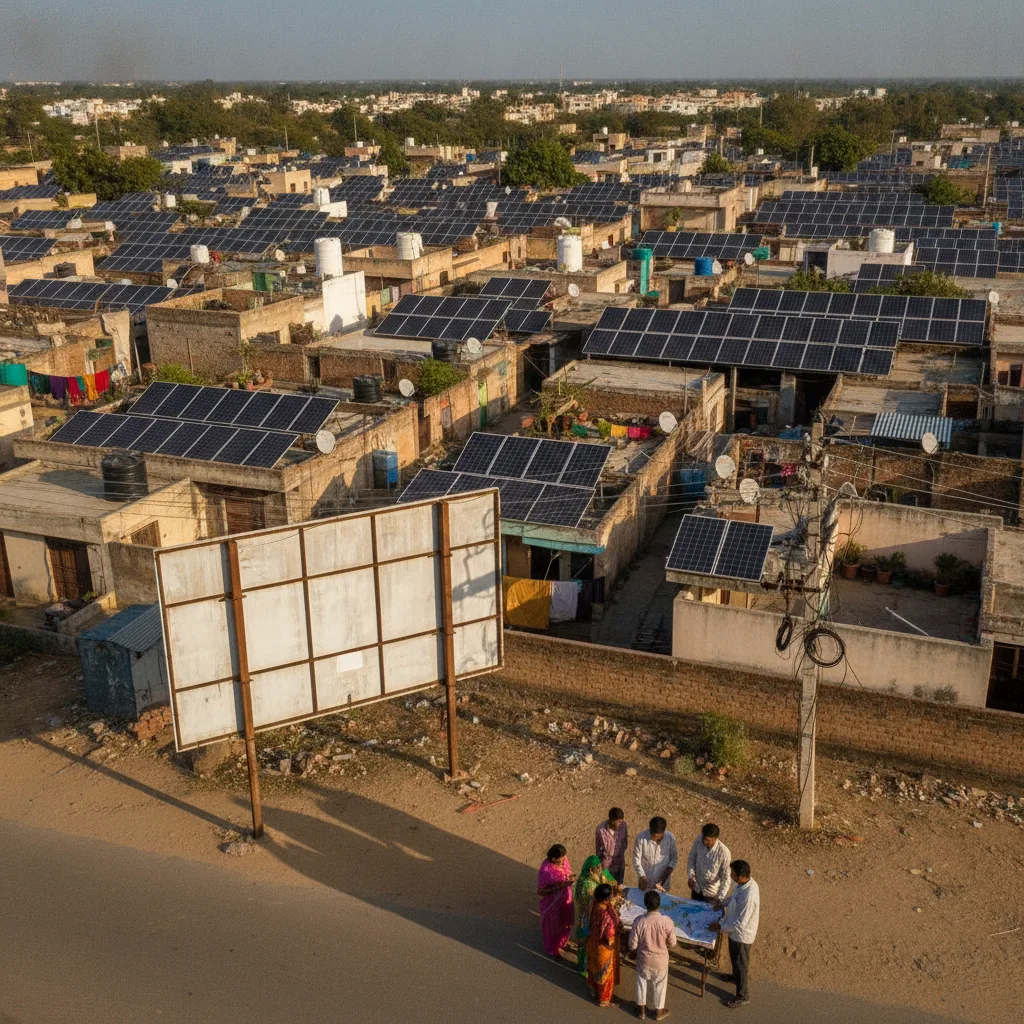
Gandhinagar, Gujarat's government has rolled out its Solar Policy 2.0, setting a target of 50 gigawatts of solar capacity by 2025. That is more than double the state's current 22 GW. The policy, announced on March 15, 2025, puts rooftop solar at the center of the plan. It offers a subsidy of ₹18,000 per kilowatt for residential systems up to 3 kW, with a cap of ₹54,000. For larger systems, the subsidy drops to ₹9,000 per kW.
The state wants 10 GW of that 50 GW target to come from rooftop solar. Right now, Gujarat has just 2.8 GW of rooftop capacity. The gap is wide. The big question: will these subsidies finally get past the resistance from power distribution companies, or discoms?
The Discom Problem
Discoms have long dragged their feet on rooftop solar. They lose paying customers when homes and businesses generate their own power. Net metering, where users sell extra power back to the grid, cuts into discom revenue. In Gujarat, the four state discoms have fought rooftop solar for years. They capped net metering at 1 MW and made approvals slow.
"The discoms see rooftop solar as a threat to their bottom line," says Meera Patel, an energy analyst at the Gujarat Energy Research Institute in Ahmedabad. "They have no incentive to push it. The state government has to force the issue."
The new policy tries to do just that. It orders discoms to clear rooftop applications within 30 days. If they miss the deadline, the project is deemed approved. It also raises the net metering cap to 2 MW for commercial buildings. For residential users, the cap stays at 1 MW.
Subsidies and Savings
The subsidies are meant to cut the upfront cost. A 3 kW system in Gujarat costs about ₹1.5 lakh. The subsidy knocks off ₹54,000. With state and central subsidies combined, a household can save up to 60 percent. Payback time drops from 7 years to 3 years, according to the Gujarat Energy Development Agency.
But subsidies alone won't fix the problem. "Money helps, but it does not change the discom mindset," says Rajesh Sharma, a solar installer in Surat. "They still find ways to delay. They ask for extra documents. They say the transformer is full. They stall."
Sharma says he has 40 pending applications with the Surat discom, some sitting for six months. The new 30-day rule is good, he says, but he doubts it will be enforced.
Grid Readiness and Land
The policy also pushes for 40 GW of utility-scale solar. That means big solar farms in the Rann of Kutch and the border districts of Banaskantha and Patan. The state has set aside 50,000 hectares of wasteland for these projects. But the grid needs upgrades. Gujarat's transmission lines are already strained. The policy calls for ₹10,000 crore in new transmission infrastructure by 2026.
"The grid is the weak link," says Patel. "You can build all the solar you want, but if the wires can't carry the power, it is useless."
The state has also opened the door for solar parks on farmlands, a move meant to win over farmers. Farmers can lease their land for solar panels and keep farming below them. The policy guarantees a lease payment of ₹50,000 per acre per year.
What Comes Next
Gujarat already leads India in solar capacity. It has 22 GW installed, more than any other state. Rajasthan is close behind with 20 GW. The new target of 50 GW would put Gujarat far ahead. But hitting that number means adding 28 GW in two years. That is a tall order.
The policy includes penalties for discoms that fail to meet rooftop targets. If a discom falls short, it pays a fine of ₹1 lakh per MW of unmet target. That money goes into a state clean energy fund. Whether the fines are big enough to change behavior is an open question.
"The fines are a start, but they need to be higher," says Sharma. "For a discom, ₹1 lakh is pocket change. Make it ₹10 lakh, and then watch them move."
Gujarat's Solar Policy 2.0 is ambitious. It puts money on the table and sets deadlines. Whether it can break the discom deadlock will depend on enforcement, and on whether the state is willing to push its own utilities.
Comments
Be the first to comment.
Leave a comment