Gujarat's Wind-Solar Hybrid Park Nears 2 GW: Adani Green's Khavda Project Set to Power 1.5 Million Homes
Adani Green Energy's massive wind-solar hybrid park in Khavda, Gujarat, is set to reach 2 GW capacity by mid-2025, enough to power 1.5 million homes and cut 4 million tonnes of CO2 yearly.
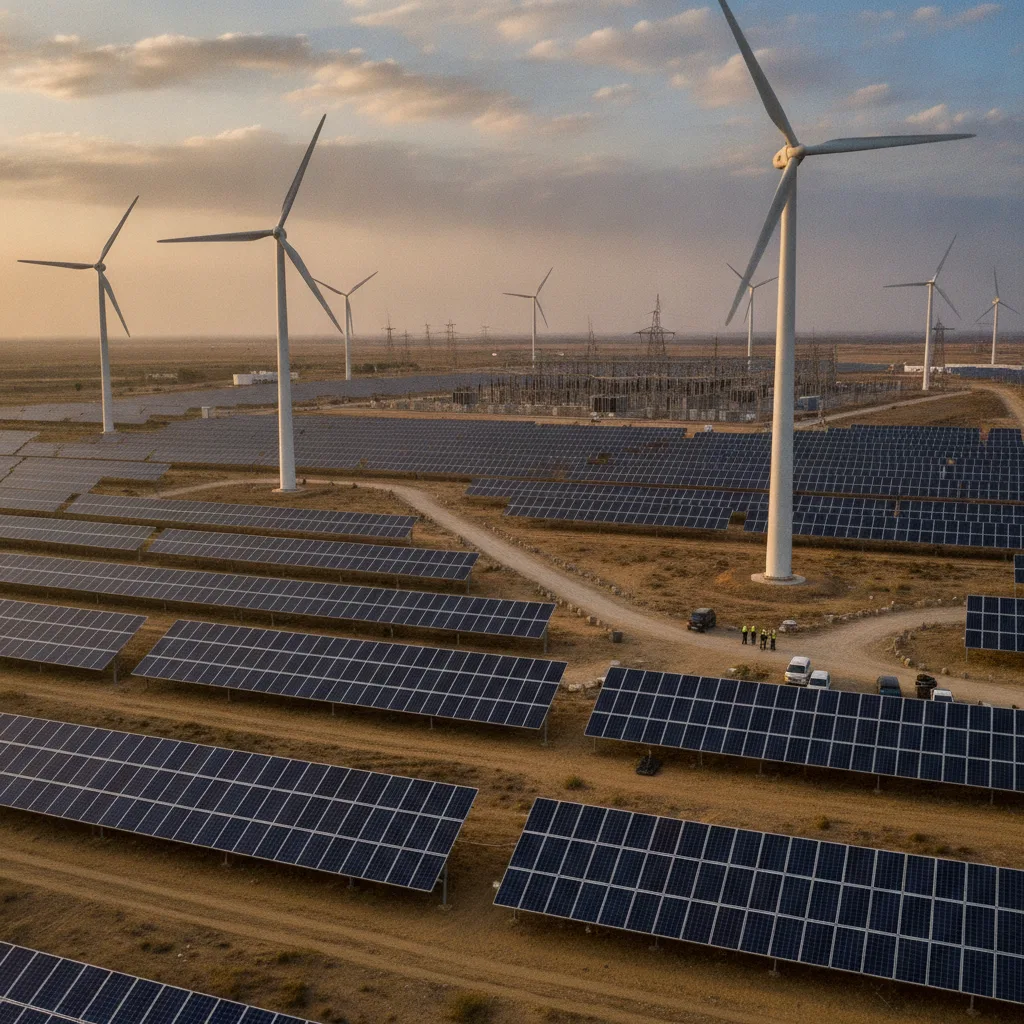
KHAVDA, Gujarat, The desert near the Pakistan border is turning into a power plant. Adani Green Energy Ltd (AGEL) is close to finishing a 2 GW wind-solar hybrid park here. The company says it will supply electricity to 1.5 million homes once fully running.
The park sits on 10,000 acres of barren land in Khavda, a village in Kutch district. It is part of a bigger plan: AGEL wants to build 30 GW of renewable capacity in the area by 2030. That would make it the world's largest clean-energy cluster.
How the hybrid works
Solar panels and wind turbines share the same land. During the day, the sun drives the solar output. At night and in monsoon months, the winds pick up. The mix smooths out the power supply. AGEL says the hybrid setup gives 40% more energy per acre than a solar-only plant.
The project uses bifacial solar modules, they catch light on both sides. The wind turbines are 3 MW each, with 120-metre rotor diameters. Total solar capacity is 1.2 GW, wind is 0.8 GW. A 220 kV substation sends power to the grid.
Jobs and water use
Construction has employed 8,000 workers, most from nearby villages. AGEL runs a training centre in Khavda for local youth. Permanent jobs after completion will be around 500.
Water is a worry in this dry region. The company uses robotic cleaning for solar panels, no water needed. For drinking and dust control, it trucks in water from 50 km away. AGEL says it has planted 200,000 trees around the park to cut dust and hold soil.
Grid and policy push
Gujarat's state government backs the project. It has built a new transmission line from Khavda to Bhuj, 150 km south. The central government's green energy corridor scheme paid for half the line cost. India wants 500 GW of non-fossil capacity by 2030. Hybrid parks like this one help meet that target without taking up extra land.
The park sells power under a 25-year power purchase agreement (PPA) with the Solar Energy Corporation of India (SECI). The tariff is Rs 2.70 per unit, among the lowest for hybrid projects in India.
What comes next
AGEL is already laying foundations for the next phase: 4 GW more by 2027. That would bring the total to 6 GW. The company plans to add battery storage to store excess wind power at night.
Critics point to the fragile ecology of the Rann of Kutch. Environmentalists say the salt flats and grasslands host flamingos, wild asses, and desert foxes. AGEL says it has done an environmental impact assessment and will keep 30% of the land as green buffer. The Gujarat forest department has approved the plan.
"We are building this at a pace no one thought possible," said Amit Singh, CEO of Adani Green Energy, in a press statement. "This project shows that India can scale renewables faster than any country in the world."
Comments
Be the first to comment.
Leave a comment