
How Indian is a 'Made in India' solar panel? Business Standard asks
A Business Standard report examines how much of a domestically assembled solar module is actually made in the country.
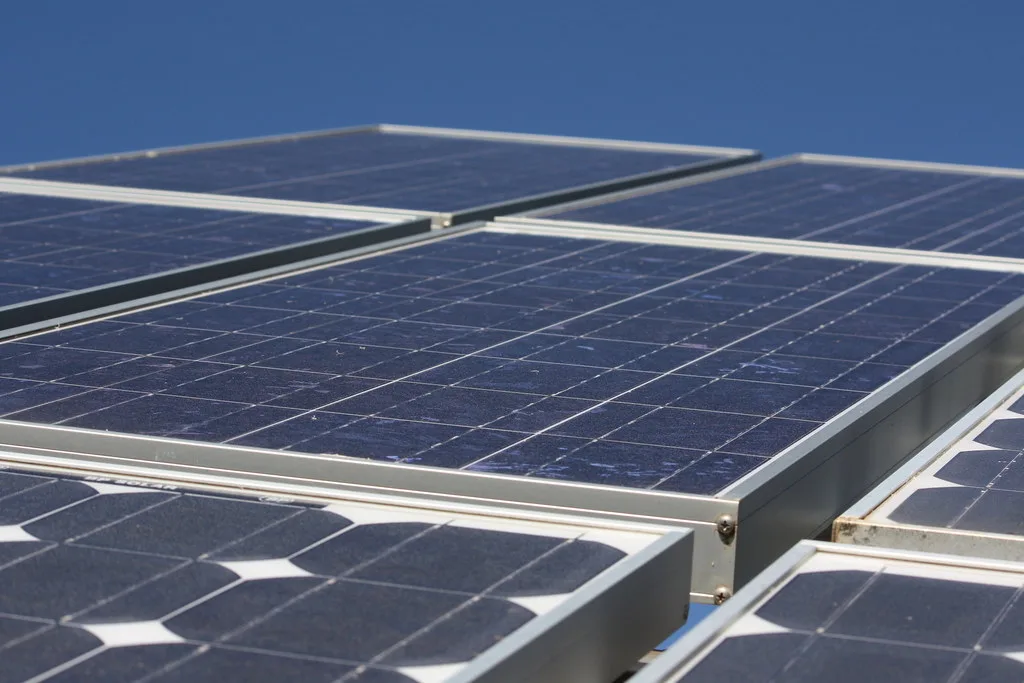
India's solar manufacturing push has a labelling problem. A module can carry a 'Made in India' stamp while most of what's inside it comes from somewhere else. Business Standard took up that question in a report published on November 3, 2026, asking how Indian a 'Made in India' solar panel really is.
The answer, per the report, sits in the supply chain. Cells, wafers and polysilicon are the hard parts to make. Module assembly is the easier part. India has built out assembly capacity faster than it has built out the upstream links that feed it.
Where the value sits
A solar panel is a stack of layers. Polysilicon gets pulled into ingots, sliced into wafers, processed into cells, and finally wired and framed into a module. Each step up that chain is more capital-intensive and harder to master than the one below it.
Most Indian factories sit at the last step. They import cells and assemble modules. That keeps the 'Made in India' tag technically true and economically thin, because the cell is where a large share of the panel's cost and technology sits.
The report points to this gap as the central question for the country's manufacturing ambitions. A module plant can come up in months. A wafer or polysilicon plant takes years and far more money.
Why the label matters
Domestic content rules sit behind much of the demand. Government-linked tenders and subsidy schemes often require locally made equipment, and that requirement has driven investment into module lines. The rules are written around where the finished product is made, not always around where its components come from.
That leaves room for imported cells to pass through Indian assembly and still qualify. Business Standard's reporting raises the question of whether that counts as a domestic manufacturing base or a domestic assembly base.
- Module assembly: largely done in India
- Solar cells: still heavily imported
- Wafers and polysilicon: limited domestic capacity
The capacity question
India has added module capacity at a steady clip over the past few years, and several large groups have announced plans to move into cells and wafers. Those plans are the test. If they run on schedule, the share of an Indian panel that is actually Indian goes up. If they slip, the label keeps outrunning the factory floor.
The report doesn't settle the argument. It lays out the layers and lets the numbers speak. For a country chasing 500 GW of non-fossil capacity, the difference between assembling a panel and making one is the difference between a market and an industry.
Business Standard's piece lands at a moment when solar demand is climbing and the policy push for local manufacturing is at its strongest. The question it asks is simple enough to fit in a headline and hard enough to take years to answer.
Source: Business Standard · 3 Nov 2026
Comments
Be the first to comment.
Leave a comment