
India curtails 8,133 GWh solar power in Q1 to keep grid secure, says government
The Union government told Parliament that over 8,000 GWh of solar generation was curtailed in the first quarter to protect grid stability.
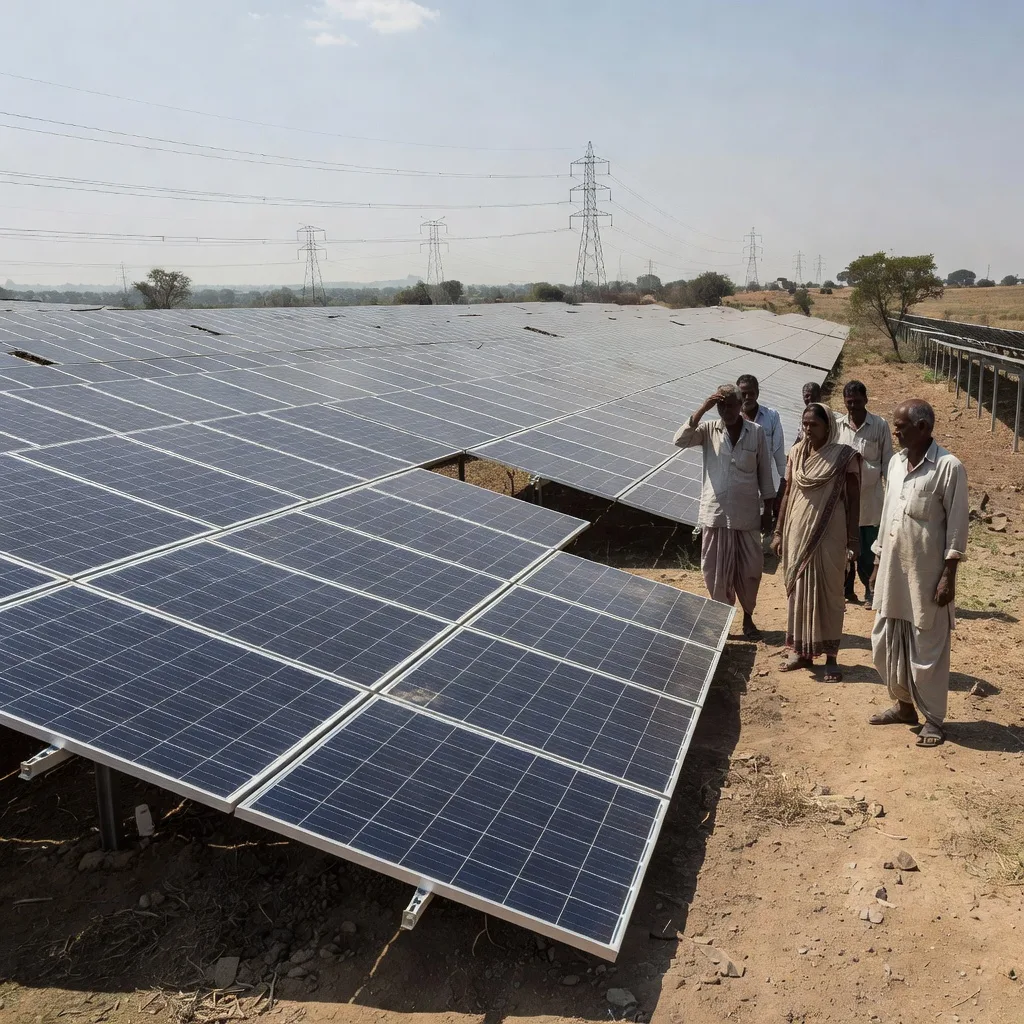
Background
India's power ministry reported to Parliament that the country curtailed 8,133 gigawatt‑hours (GWh) of solar electricity in the first quarter of 2024. The figure covers the period from April to June and represents a sharp rise from the 5,200 GWh curtailed in the same quarter a year earlier.
Scale of curtailment
According to the ministry's data, the total solar capacity installed by the end of March 2024 stood at about 70 GW. During the three‑month window, grid operators limited output from a large share of that capacity, mainly in states where renewable penetration is highest.
- 8,133 GWh of solar energy not used, roughly the annual output of a 1 GW coal plant.
- Curtailed output rose by about 56 % compared with Q1 2023.
- Peak curtailment occurred in May, when solar generation hit record levels.
Reasons given
The ministry said the curtailment was needed to "maintain grid security." Grid operators faced three main issues:
- Limited transmission lines in the north‑east and western regions, where most new solar farms sit.
- Insufficient balancing resources such as pumped hydro and battery storage.
- Sudden spikes in solar output that outpaced the ability of the grid to absorb power.
Officials stressed that the decision was not a reflection on the quality of the solar plants but a short‑term operational need.
Impact on renewable goals
India aims to reach 500 GW of renewable capacity by 2030, with solar accounting for at least 300 GW. The curtailment data shows that integrating that much clean power will require upgrades to the transmission network and more flexible resources.
Energy analysts note that each GWh of curtailed solar represents a missed opportunity to cut emissions. The Ministry of New and Renewable Energy (MNRE) has warned that repeated curtailment could slow progress toward the country's climate targets.
Responses and next steps
State electricity regulators have been asked to submit plans for expanding high‑voltage lines and adding more storage. The central government has also proposed a "green corridor" scheme that would give priority to renewable power on key transmission routes.
Industry groups, including the Solar Power Developers Association, have urged faster clearance of land and faster construction of substations. They argue that the cost of curtailment, borne by developers and ultimately by consumers, can be reduced with better planning.
In Parliament, opposition members questioned why the curtailment figure was so high and called for an independent audit of grid management practices. The power ministry replied that it will publish a detailed report by the end of the year and will work with the Central Electricity Authority to improve forecasting and dispatch protocols.
Overall, the episode highlights the growing pains of a power system that is rapidly adding renewable capacity. While the curtailment helped keep the grid stable, it also shows that further investment in infrastructure is needed to let solar power run at full strength.
Comments
Be the first to comment.
Leave a comment