
Tamil Nadu’s New Wind-Solar Hybrid Policy Targets 20 GW by 2030: Can It Revive Stalled Projects?
The state aims to add 20 GW of hybrid capacity in six years, but developers say land and grid issues must be fixed first.
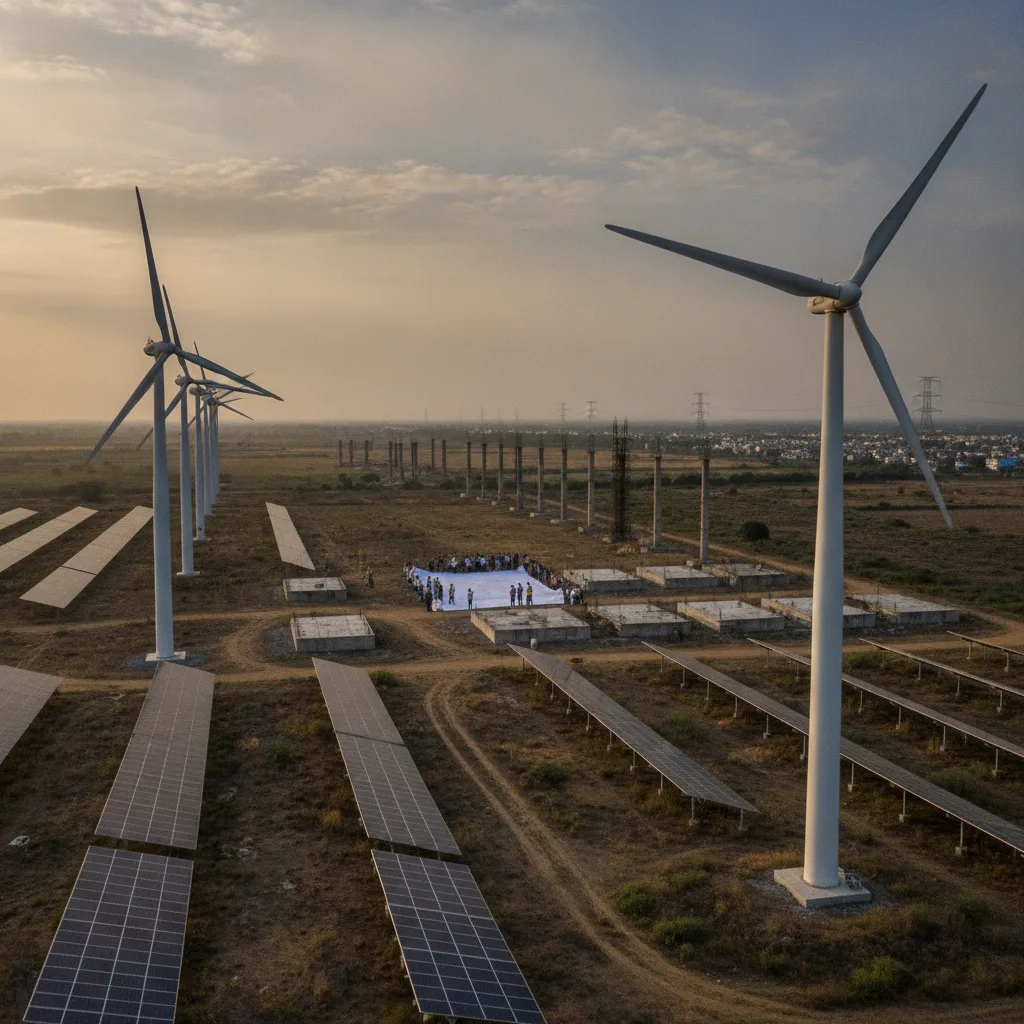
CHENNAI, Tamil Nadu's government last week released a new wind-solar hybrid policy that sets a 20 GW target by 2030. The policy, notified on 15 March, replaces a 2019 version that drew little interest. Only 300 MW of hybrid capacity came online under the old rules.
The new plan offers a single-window clearance for projects that mix wind and solar on the same site. Developers can also bank surplus power with the state grid and draw it back later, paying a small fee. The policy waives transmission charges for 25 years for projects that feed power to the state's own distribution company.
"This is a big step," said K. S. Sridhar, a senior official at the Tamil Nadu Energy Development Agency. "We want to use our wind and solar resources together. That gives steady power for more hours of the day."
Tamil Nadu already leads India in wind capacity, over 10 GW, and ranks fourth in solar, at about 7 GW. But hybrid projects have stalled. Developers point to two main hurdles: land and grid connectivity.
Land and grid remain sticking points
Hybrid plants need large contiguous plots, often 10 to 20 acres per MW. In Tamil Nadu, land prices have jumped 40% in the last three years in wind-rich districts like Tirunelveli and Theni. The policy does not offer any land acquisition help. It only says the state will identify "potential zones."
Grid congestion is another problem. The southern grid, which serves Tamil Nadu, Kerala, Karnataka, Andhra Pradesh, and Telangana, frequently gets overloaded during windy months. The state's own transmission utility, TANTRANSCO, has not added major new lines since 2021. A 400 kV substation at Kayathar, meant to evacuate wind power, is still two years behind schedule.
"The policy is good on paper," said R. S. Sivakumar, a Chennai-based renewable energy consultant who worked on hybrid bids for a private firm. "But if you can't get land or push power out, the numbers don't work."
The policy tries to ease grid issues by letting projects connect at 33 kV or 110 kV levels, instead of forcing them to go through the high-voltage 220 kV network. But developers say that only helps small projects under 50 MW. Larger ones still need the main grid.
Stalled projects may get a second look
Several hybrid projects were awarded in 2020 and 2021 through state auctions but never built. The new policy allows these projects to renegotiate their power purchase agreements. They can now sell power outside the state, something the old rules banned, if they pay a 5% surcharge.
That could free up about 1.2 GW of stuck capacity, according to data from the Indian Renewable Energy Development Agency. One such project is a 250 MW hybrid plant by Green Infra Wind Energy Ltd in Tuticorin district. It was awarded in 2021 but never broke ground. The company's CEO, Vikram Bhandari, said the new rules "make the project viable again."
But Bhandari also warned that the 5% surcharge is too high. "If you sell to another state, you already pay interstate transmission charges. Adding 5% on top eats the margin," he said.
The state says the surcharge is needed to protect its own distribution company, which buys expensive thermal power when wind and solar are not available. Tamil Nadu's discom, TANGEDCO, lost ₹3,200 crore last financial year. It cannot afford to lose paying customers.
What the numbers look like
To hit 20 GW by 2030, Tamil Nadu needs to add roughly 2.8 GW of hybrid capacity every year. So far, it has added none in 2024. The best year for hybrid additions in India was 2023, when the whole country added 1.5 GW. Tamil Nadu's target alone is 13 times that.
The policy also sets a 50 MW minimum project size, which locks out small developers. Only large players like Adani Green, ReNew, and Tata Power have the capital to build at that scale. Critics say that hurts local companies.
"Small and medium firms built Tamil Nadu's wind sector," said Sivakumar. "Now the policy is built for big guys."
The state has not yet opened the window for applications. Officials say the detailed procedure will be out by June 2025. Until then, developers wait, and watch whether the state fixes the land and grid problems that killed the first policy.
Comments
Be the first to comment.
Leave a comment