India's Auto Market Set to Grow 12‑Fold to 30.4 Units by 2032, Report Says
A new ET Auto report projects India's automotive market could expand twelve times, reaching 30.4 units by 2032 under a high‑growth scenario.
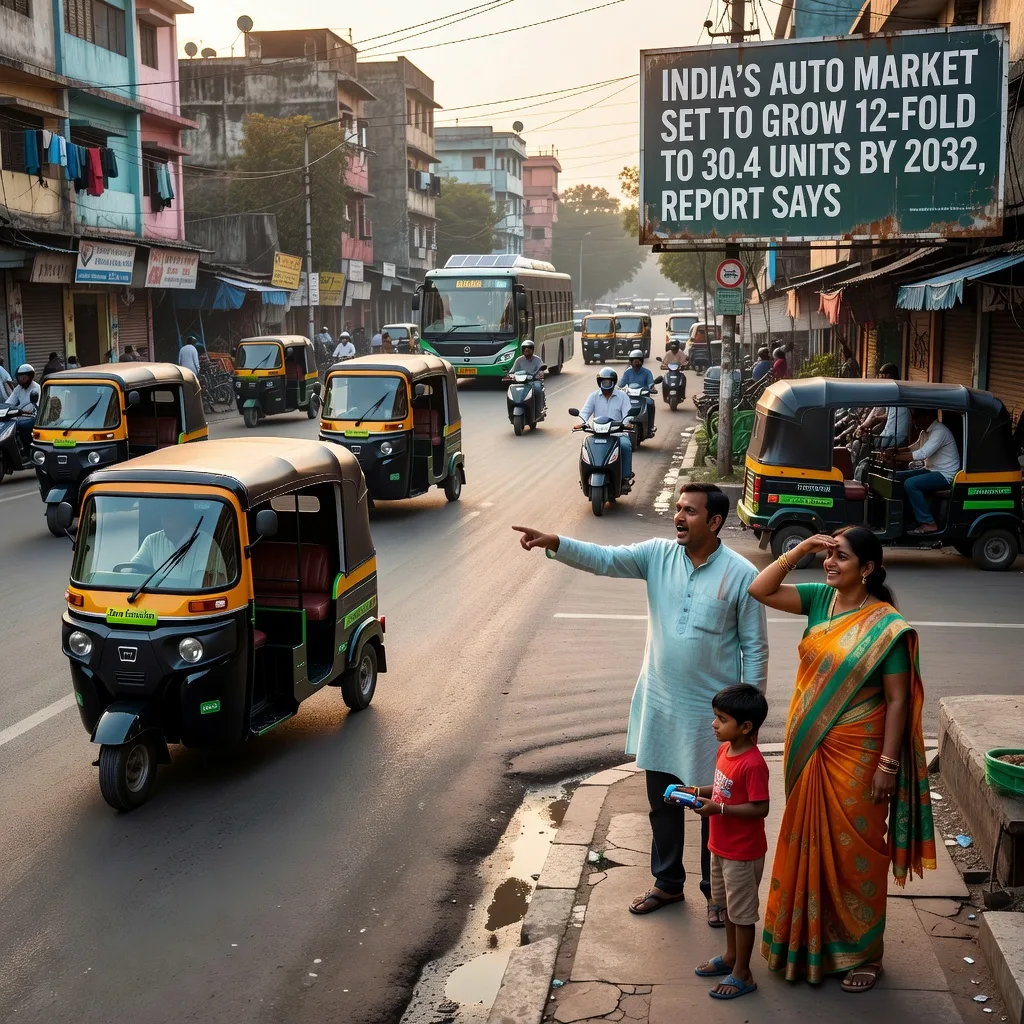
India's automotive sector is poised for a dramatic rise, according to a recent report by ET Auto. The study projects that the market could grow twelve‑fold, hitting 30.4 units by 2032 if a high‑growth scenario plays out.
Key assumptions behind the forecast
The report builds its outlook on several factors. First, it uses data on vehicle registrations, consumer income trends, and policy support for electric vehicles. Second, it looksat the rollout of charging infrastructure and the pace of domestic manufacturing capacity expansion. Finally, it assumes continued foreign investment and a stable regulatory environment.
What drives the surge?
Several trends combine to push the market forward. Rising middle‑class incomes give more people the means to buy cars. The government's push for electric mobility, including subsidies and tax breaks, makes EVs more affordable. At the same time, Indian manufacturers are building new plants and upgrading existing lines to meet higher demand.
- Consumer demand: Real wages have grown about 8% annually, widening the pool of potential buyers.
- Policy support: The Faster Adoption and Manufacturing of Hybrid and Electric Vehicles (FAME) scheme provides cash incentives for EV purchases.
- Infrastructure: Over 1.5 million public charging points are planned by 2030, reducing range anxiety.
- Investment: Global automakers have pledged $30 billion in joint ventures and R&D in India.
Potential risks
While the outlook is bright, the report warns of risks that could slow growth. Supply‑chain disruptions, especially for batteries, could raise costs. If fuel prices fall sharply, the incentive to switch to EVs might weaken. Any slowdown in policy implementation could hold back infrastructure rollout.
Impact on the industry
Manufacturers are already adjusting their plans. Major players such as Tata Motors, Mahindra & Mahindra, and Hyundai are expanding EV line‑ups and setting up local battery plants. Smaller firms see the forecast as a chance to enter niche segments like electric two‑wheelers and commercial vans.
The projected 12‑fold rise also shows a shift in market composition. By 2032, EVs could make up more than half of new vehicle registrations, up from under 5% today. This shift will require new skills in the workforce, prompting training programs and partnerships with technical institutes.
What it means for consumers
For buyers, the forecast suggests more choices and potentially lower prices as economies of scale kick in. The increase in charging stations will make EV ownership more convenient, especially in tier‑2 and tier‑3 cities.
Overall, the report shows that India's auto market is on a fast track to expansion. If the high‑growth scenario holds, the sector will not only boost the economy but also help the country cut emissions, aligning with its climate goals.
Comments
Be the first to comment.
Leave a comment