
India’s Battery Swapping Stations Surge as EV Market Gains Momentum
New swapping hubs pop up across the country, backed by policy incentives and private investment, as electric two‑wheelers and cars seek faster charging solutions.
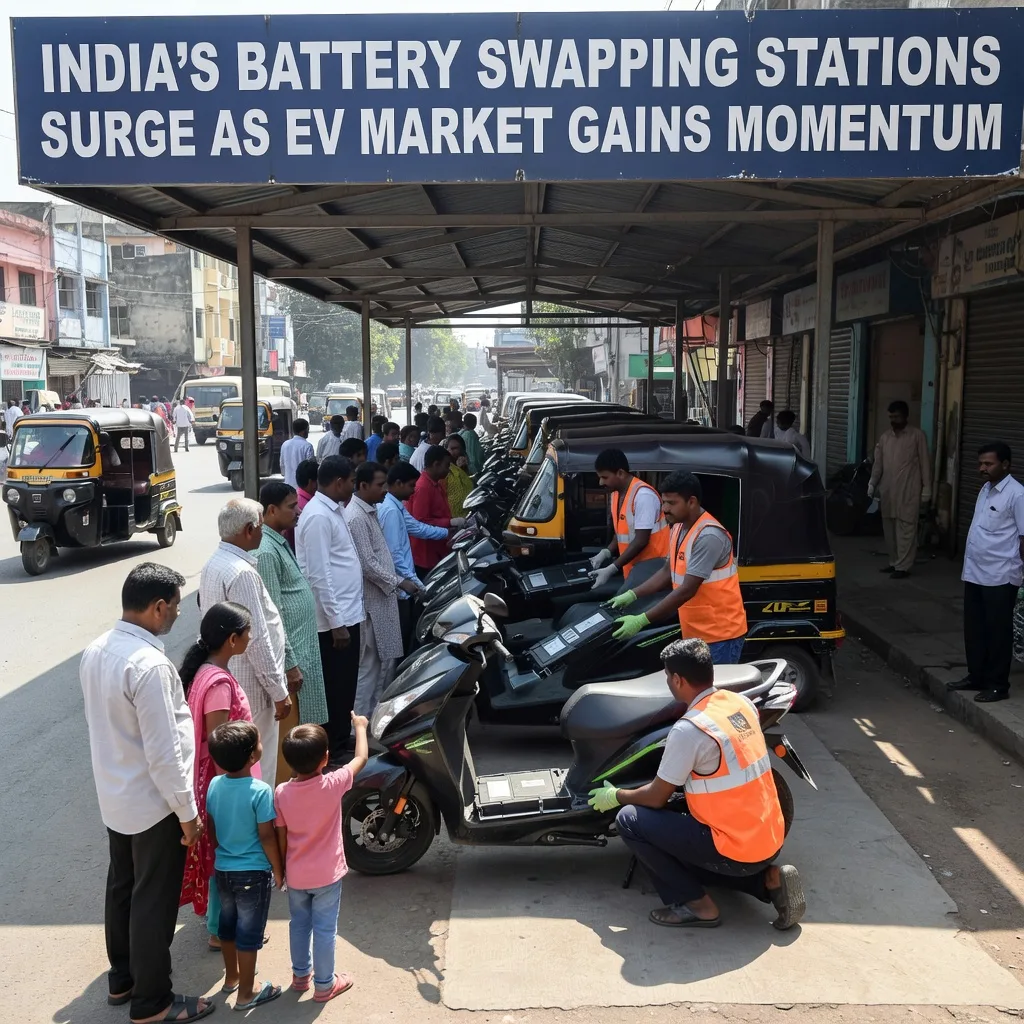
India's electric vehicle (EV) market is growing fast, and a new kind of charging hub is helping it move ahead. Battery swapping stations, where a depleted pack is swapped for a fully charged one in minutes, are appearing in more than 30 cities.
Policy push fuels growth
The government has set a target of 30 percent EV sales by 2030 and is offering subsidies for swapping stations under the Faster Adoption and Manufacturing of Hybrid & Electric Vehicles (FAME) scheme. States such as Delhi, Maharashtra and Karnataka have added extra grants for firms that set up stations in underserved areas. These incentives lower the upfront cost and make it easier for companies to build a network.
Private players step in
Companies like Sun Mobility, Ola Electric and Hero MotoCorp are leading the rollout. Sun Mobility says it now operates more than 1,200 swapping points, mostly for two‑wheelers, and plans to add 500 more by the end of 2025. Ola Electric has announced a pilot for electric cars in Hyderabad, using a hub that can swap a pack in under three minutes. Hero MotoCorp is testing a mixed‑use model that serves both scooters and light‑weight trucks.
How the model works
Customers ride to a station, pull a lever, and a robotic arm lifts the empty pack out and places a charged one in the vehicle. The process takes about five minutes, comparable to a fuel stop. Users pay per swap, and many operators bundle swaps with a monthly subscription that includes a certain number of rides.
Challenges remain
Standardisation is a key hurdle. Different manufacturers use different pack sizes and connector types, which limits the ability of a single station to serve all models. The industry is working on a common form factor, but progress is slow. Land acquisition and real‑estate costs also add pressure, especially in crowded urban zones.
Outlook for the next years
Analysts say the swapping model could cut the average charging time for EV owners by 80 percent, making electric two‑wheelers and cars more attractive to price‑sensitive buyers. If the government keeps its subsidy flow and the industry settles on a standard pack, the number of stations could reach 5,000 by 2028, covering most major routes. That would support the goal of reducing road‑side emissions and help India meet its climate commitments.
For now, the rapid rise of battery swapping stations shows that India is looking for practical ways to speed up EV adoption, and the next few years will decide whether the model can scale beyond pilot projects.
Comments
Be the first to comment.
Leave a comment