
India's canal network could host solar panels without using land
A new report says canal-top solar offers a land-free path to clean power, but high costs and maintenance hurdles remain.
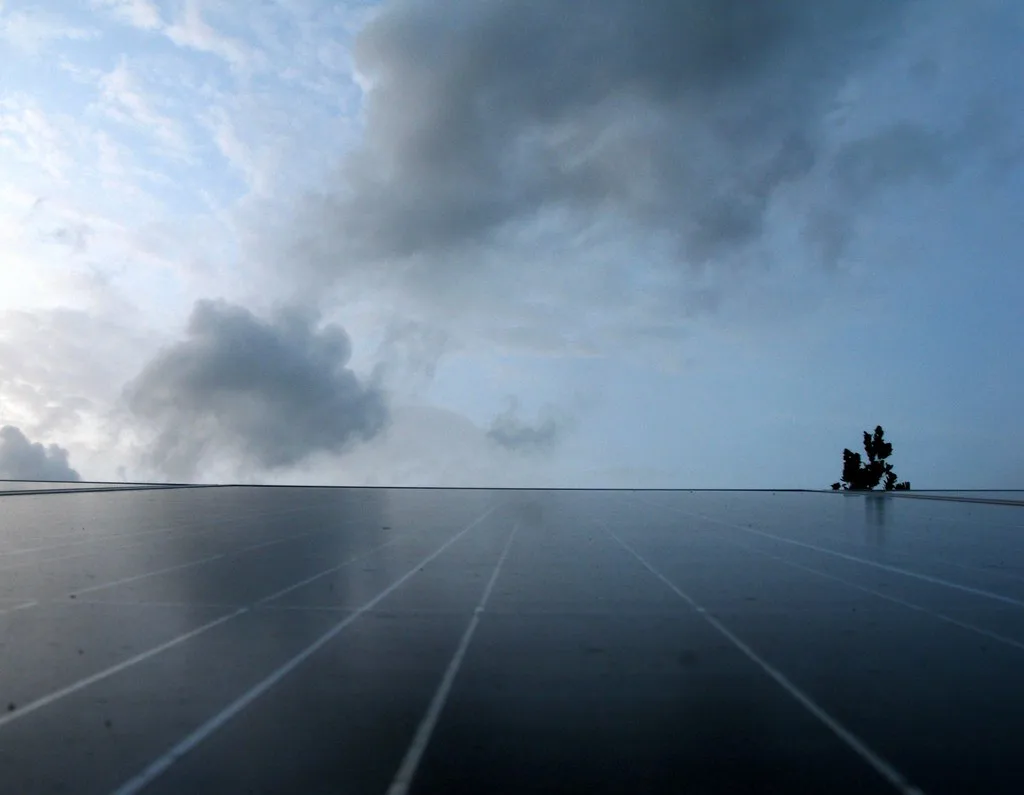
India's sprawling canal network could host thousands of megawatts of solar panels without using a single acre of land, according to a new report from the Central Water Commission. The study, released on Tuesday, maps out stretches of canals in seven states where solar panels can be installed over the water.
The idea isn't new. Gujarat built a 1 MW canal-top plant in 2012. Since then, several states have tested the concept. But the report is the first to assess the entire network's potential. It finds that covering just 10% of India's major canals could generate 20 GW of power.
That's enough to light up millions of homes. And it avoids the biggest problem with ground-mounted solar: land. In a country where land is scarce and expensive, canal-top solar looks attractive.
How it works
Panels are mounted on steel structures built over the canal. The water below cools the panels, which boosts their efficiency. And the shade reduces evaporation from the canal, saving water.
But the costs are high. Canal-top structures need to be sturdier than ground-mounted ones. They must withstand wind, corrosion, and maintenance crews. The report estimates capital costs at Rs 8 crore per MW, compared to Rs 5 crore for ground-mounted solar.
Maintenance is another challenge. Cleaning panels over water is tricky. And canals are often in remote areas, far from the grid.
Still, some states are pushing ahead. Gujarat has 100 MW of canal-top solar in the pipeline. Maharashtra and Karnataka are running pilot projects. The report recommends a national policy to standardise designs and provide subsidies.
"Canal-top solar is a win-win for water and energy security," said a senior official at the Ministry of New and Renewable Energy, who spoke on condition of anonymity. "But we need to bring down costs."
The report comes as India races to meet its target of 500 GW of non-fossil fuel capacity by 2030. Solar has been the biggest contributor, but land disputes have slowed projects. Canal-top solar could bypass those fights.
Not everyone is convinced. Some experts worry about the impact on canal maintenance. "You can't easily desilt or repair a canal if it's covered with panels," said a water resources engineer at IIT Roorkee, who asked not to be named. "It's a trade-off."
The Central Water Commission says it will work with states to identify priority stretches. A pilot on the Indira Gandhi Canal in Rajasthan is expected to start next year.
For now, the numbers are small. India has just 10 MW of canal-top solar installed. But the report's authors say the potential is huge. "We have 15,000 km of canals," the official said. "Even a fraction of that is a lot of power."
Source: The Hindu · 23 Sep 2026
Comments
Be the first to comment.
Leave a comment