India's Renewable Energy Push: Sectors, Policy Steps, and What It Means
A look at India's renewable energy landscape, key sectors driving growth, government initiatives, and the broader significance for the country's energy future.
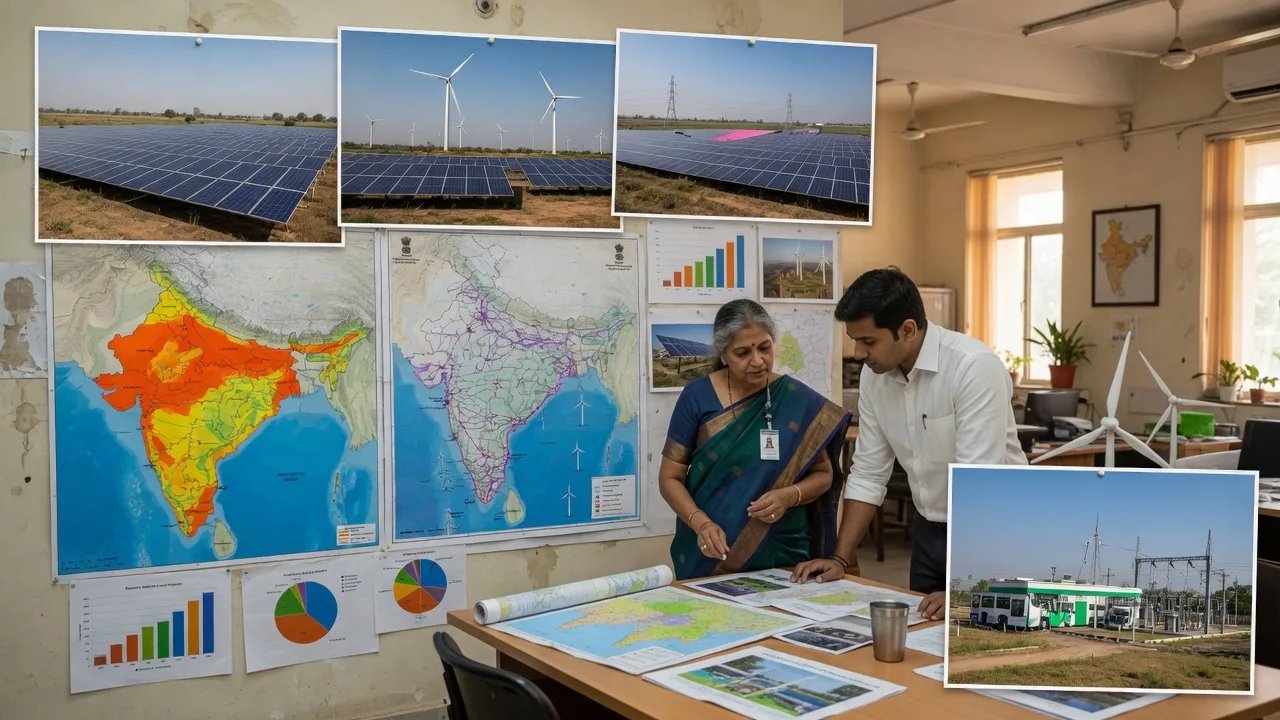
India is pushing hard on renewable energy. The numbers are big. The government has set a target of 500 gigawatts of non-fossil fuel capacity by 2030. That is roughly double the current installed base. The goal is to meet 50% of the country's electricity needs from renewables by the end of this decade.
Right now, India stands fourth in the world for installed renewable energy capacity. It ranks fourth in wind power and fifth in solar. Total renewable capacity has grown by nearly 400% in the last decade. But the job is far from done.
Solar power leads the charge
Solar is the star. Installed solar capacity has jumped from about 2.6 GW in 2014 to over 70 GW today. That includes both large solar parks and rooftop systems. The National Solar Mission, launched in 2010, set the stage. Later schemes like the Production Linked Incentive (PLI) for solar modules helped build domestic manufacturing. The government also pushed through the Green Energy Open Access Rules, making it easier for big power users to buy clean energy directly.
Rooftop solar is getting a fresh push. The PM Surya Ghar Muft Bijli Yojana, launched in 2024, offers subsidies to put solar panels on homes. The aim is to light up 10 million households.
Wind and hydro hold steady
Wind power gives India about 44 GW. The best sites are in Tamil Nadu, Gujarat, Maharashtra, and Karnataka. The government is now looking at repowering old wind farms with bigger, more efficient turbines. Offshore wind is still early days. Two initial projects, off the coast of Gujarat and Tamil Nadu, are in the works.
Hydropower, including small hydro, adds another 47 GW. The government recently changed rules to classify large hydro as renewable. That move opened up the sector to more funding and eased building rules. Pumped storage projects are also getting attention, they act like giant batteries, storing water and power for peak demand.
Bioenergy and the rest
Bioenergy, biomass, biogas, waste-to-energy, chips in about 10 GW. The National Bioenergy Programme backs new plants. The SATAT scheme pushes compressed biogas as a transport fuel. These projects help cut farm waste burning and create rural jobs.
Government steps that matter
Several policy moves stand out. The Renewable Purchase Obligation (RPO) forces power distributors to buy a set share of green power. Penalties apply if they fall short. The Green Hydrogen Mission, with a budget of Rs 19,744 crore, aims to make India a hub for making and exporting green hydrogen by 2030.
For the grid, the government rolled out the Green Day Ahead Market, allowing renewable power to be traded daily. The National Green Hydrogen Standard sets emission limits for hydrogen production. And the Ministry of New and Renewable Energy keeps tweaking rules to speed up project approvals and land acquisition.
Why this matters
The push is not just about climate change. It is about energy security. India imports nearly 90% of its crude oil and a chunk of its natural gas. Renewables cut that dependence. They also lower air pollution, a big public health problem in Indian cities. On jobs, the sector already employs over one million people, mostly in solar and wind installation and maintenance.
Challenges remain. Land for large solar parks is hard to get. Grid infrastructure needs upgrades to handle variable power from wind and solar. Financing costs are still high compared to coal. And states like Rajasthan and Gujarat have plenty of sun and wind, but the power must travel long distances to cities like Delhi and Mumbai.
Still, the direction is clear. India added more renewable capacity than coal for the fifth year running in 2024. The target for 2030 is ambitious, but the pace is picking up.
Comments
Be the first to comment.
Leave a comment