
India’s Solar Boom Has a Waste Problem
India's rapid solar expansion is creating a growing waste crisis as thousands of panels reach end of life with no recycling system in place.
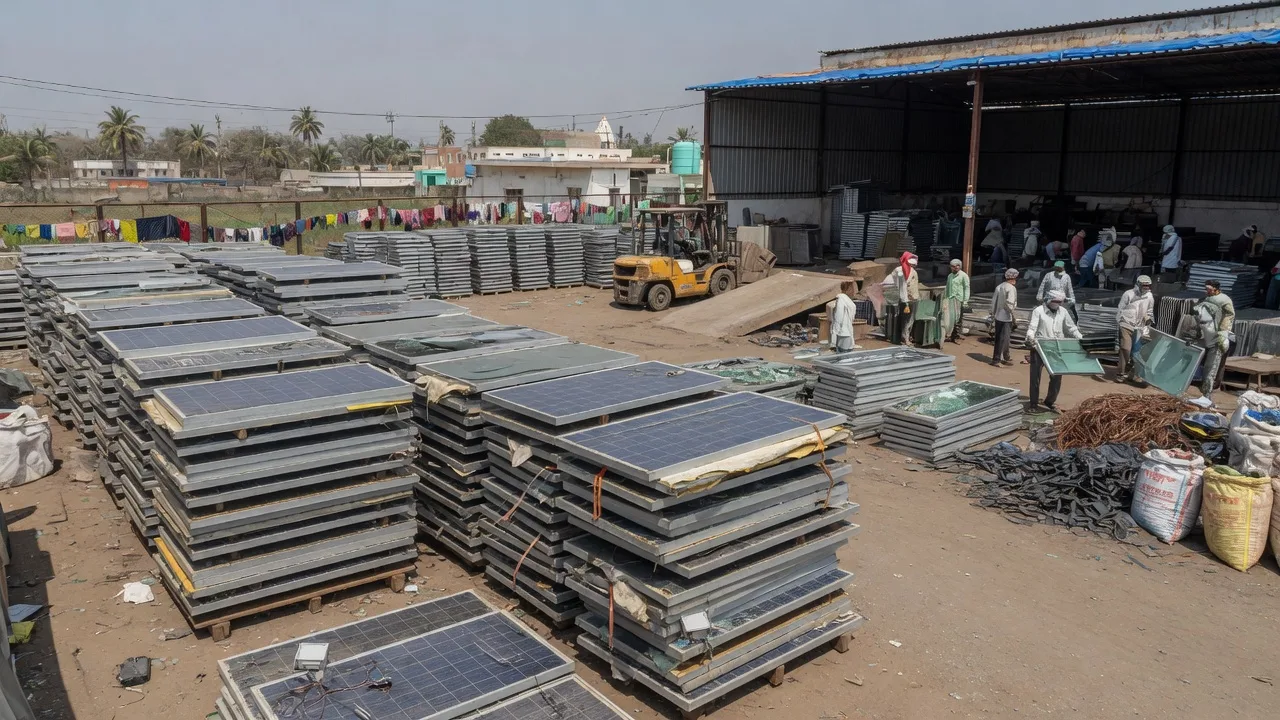
India is adding solar panels at a record pace. But these panels don't last forever. Now the country faces a new problem: what to do with millions of tonnes of solar waste.
By 2030, India could generate over 600,000 tonnes of discarded solar panels, according to a recent report. That number could hit 19 million tonnes by 2050. The waste comes from damaged panels, end-of-life units, and broken glass and metal from installations.
The government's solar push is huge. India aims for 500 GW of renewable capacity by 2030, with solar making up the bulk. But the rules for dealing with dead panels are still weak.
Right now, there is no mandatory recycling for solar waste. The Ministry of Environment, Forest and Climate Change included solar panels under the E-Waste Management Rules in 2022. But those rules only cover panels made after that date. Older panels, the ones already failing, fall through the cracks.
"We are sitting on a time bomb," said a waste management expert who asked not to be named. "The first big wave of replacements will hit in the next five years."
Recycling is costly, so panels go to landfills
Most solar panels end up in landfills. Recycling them is expensive. A typical silicon panel costs about $20, $30 to recycle in India, but the recovered materials, mostly glass and aluminum, are worth only $3, $5. There is no profit in it.
Some companies are trying. Attero Recycling in Noida and Eco Recycling in Mumbai have started pilot projects. But they handle only a few hundred tonnes a year. The volume of waste is already far higher.
India installed about 4 GW of solar in 2014. Those panels are now nearing the end of their 25-year life. But many fail earlier due to weather, poor installation, or manufacturing defects.
"The problem is not just the big solar farms," said a solar industry analyst. "It's the rooftop panels on homes and shops. People don't know what to do with them when they break."
China and the European Union already have laws forcing manufacturers to take back old panels. India does not. The draft Solar PV Manufacturing Policy, released in 2023, mentions recycling but sets no targets or penalties.
Lead and cadmium in panels pose health risks
Solar panels contain small amounts of lead, cadmium, and other toxic metals. If dumped in open landfills, these can leach into soil and water. The risk grows as more panels pile up.
The Central Pollution Control Board has not published a formal assessment of solar waste. But a 2021 study by the Council on Energy, Environment and Water (CEEW) warned that unmanaged solar waste could cause "serious environmental damage."
Some states are acting on their own. Gujarat and Rajasthan, which host large solar parks, are pushing for waste collection centers. But without a national law, progress is slow.
The Solar Energy Corporation of India (SECI) now includes a clause in new tenders requiring developers to submit a waste management plan. But critics say the clause is vague and hard to enforce.
"We need a clear rule: every panel sold must come with a take-back promise," said the waste management expert. "Without that, the solar boom will leave a toxic legacy."
India's solar industry is growing fast. The waste problem is growing just as fast. So far, no one has a plan to clean it up.
Comments
Be the first to comment.
Leave a comment