
India’s Solar Boom Hides a Sharp Fall in Large‑Scale Projects
While new rooftop and small‑scale solar installations surge, the number of utility‑scale solar farms under construction has dropped sharply this year.
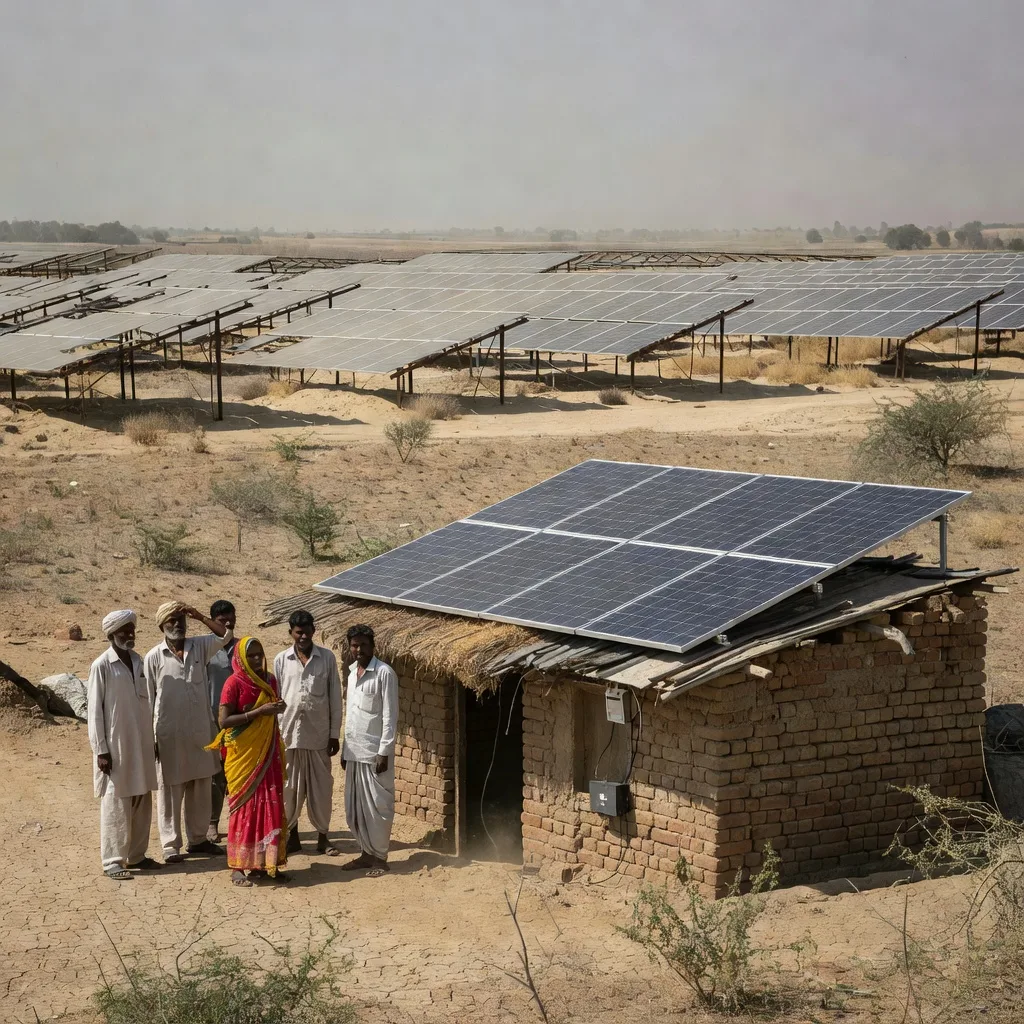
India's solar market keeps growing fast. New rooftop panels, community projects and small‑scale farms are being added at a record pace. The latest data from the Ministry of New and Renewable Energy (MNRE) shows that total solar capacity crossed 70 gigawatts (GW) in the first half of 2024, a level not seen before.
Growth in rooftop and distributed solar
State‑run schemes such as the Solar Rooftop Programme have helped install more than 10 GW of rooftop capacity since 2022. Private companies also report strong demand from households and businesses that want to cut electricity bills and avoid load‑shedding. The MNRE says that over 1.5 million rooftop systems were connected in 2023, a rise of 35 per cent from the previous year.
Utility‑scale projects lose steam
At the same time, the pipeline of large solar farms is shrinking. The number of projects with a capacity of 100 megawatts (MW) or more that were under construction fell from 45 in 2022 to 22 in 2023, according to a report by the International Solar Alliance. New land‑acquisition delays, higher financing costs and a slowdown in state approvals are the main reasons cited by developers.
One analyst from a Delhi‑based advisory firm said the dip is "a clear sign that the sector's early‑stage boom is hitting a bottleneck". He added that the government's push for renewable energy is still strong, but the lack of clear policy on land use and power purchase agreements is holding back big projects.
Impact on jobs and investment
Large solar farms usually create more permanent jobs than rooftop schemes. The slowdown has therefore raised concerns about employment in rural areas where many of these farms are built. Investment flows have also shifted. Foreign investors who once poured money into utility‑scale projects are now looking at smaller, quicker‑to‑market opportunities.
What the government says
The Ministry of New and Renewable Energy says it is aware of the slowdown and is working on a new set of guidelines to speed up land approvals. It also plans to launch a "green corridor" that will link solar farms to the grid with less bureaucracy. Officials stress that the overall target of 280 GW of renewable capacity by 2030 remains unchanged.
Outlook
Analysts expect the gap between rooftop growth and utility‑scale development to narrow if the government's new measures take effect. In the meantime, the solar boom continues to push India toward its climate goals, even as the dip in big projects reminds policymakers that a balanced mix of scales is needed for a sustainable transition.
Comments
Be the first to comment.
Leave a comment