
MG Windsor Hits 75,000 Sales in Two Years, Reshaping MG's India EV Push
The MG Windsor electric crossover has crossed 75,000 cumulative sales in India in under two years, becoming the brand's best-selling EV and rewriting its growth story, according to Autopunditz data.
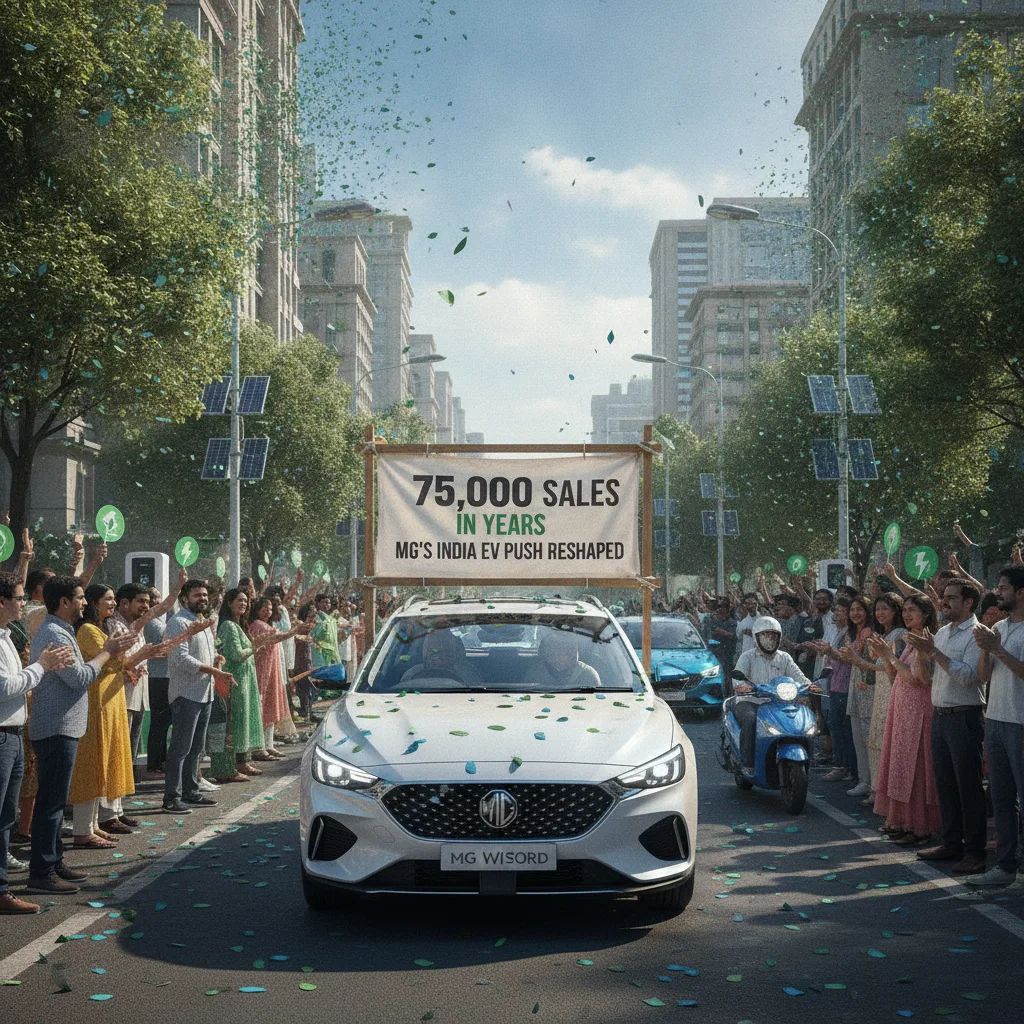
MG Motor India has a new star in its showroom. The Windsor electric crossover has crossed 75,000 cumulative sales in under two years since its launch. That number, reported by Autopunditz, makes it the fastest-selling EV in the company's India lineup.
The Windsor did not just sell. It changed how MG talks about itself in India. Before this car, MG's EV push was steady but not spectacular. The ZS EV had its fans, but it never broke out. The Windsor did.
What drove the numbers
MG priced the Windsor aggressively. It started at around Rs 10 lakh (ex-showroom) for the base variant. That put it within reach of buyers who had looked at petrol hatchbacks and small SUVs. The Windsor offered a 38.5 kWh battery pack with a claimed range of 332 km (ARAI certified). Real-world range, owners report, sits closer to 250 km. Still, that was enough for daily commutes and weekend trips in and around cities like Delhi, Mumbai, and Bengaluru.
The car also came with a battery rental option, MG's BaaS (Battery as a Service) plan. Buyers could pay a lower upfront price and then pay a monthly fee for the battery. That move cut the entry price by roughly Rs 3.5 lakh. It made the Windsor cheaper than many petrol cars in its size class. Monthly rentals started at Rs 3,500 for the first 1,500 km per month.
MG also leaned on its Connected car tech. The Windsor got a large 15.6-inch touchscreen, a panoramic sunroof, and ventilated seats. These features, once reserved for cars costing twice as much, became selling points.
How it rewrote MG's story
Before the Windsor, MG's India story was about the Hector, a petrol and diesel SUV that put the brand on the map. The Hector sold well, but it faced stiff competition from Hyundai, Kia, and Tata. The Windsor gave MG a second act. It showed that the brand could lead in EVs, not just follow.
Sales data from Autopunditz shows the Windsor outsold every other MG EV model in India combined. In some months, it accounted for over 60% of MG's total EV sales. The car also pulled in new buyers. Dealers in Pune and Chennai reported that nearly half of Windsor buyers were first-time EV owners. Many had never owned an MG before.
The Windsor's success also helped MG expand its charging network. MG tied up with companies like Tata Power and ChargeZone to offer free public charging for the first year. That took the sting out of range anxiety for new EV buyers.
Challenges remain
Not everything is smooth. The Windsor's sales have slowed in recent months as competition heated up. Tata launched the Curvv EV, a direct rival. Mahindra brought the XUV400 with a longer range. Hyundai and Kia also cut prices on their EVs. MG responded with discounts and extended warranty offers, but the market is getting crowded.
MG also faced questions about the Windsor's production capacity. The company's Halol plant in Gujarat can make about 15,000 cars a month across all models. Some dealers reported waiting periods of 8 to 12 weeks for the Windsor at peak demand. MG has since added a second shift at the plant, but supply constraints still pop up.
Then there is the battery rental model. It worked well in early sales, but some customers complained about confusing terms. MG clarified that the rental fee is fixed for the first eight years or 1,20,000 km, whichever comes first. After that, the buyer owns the battery outright. Still, the complexity turned off some buyers who preferred a simple outright purchase.
Despite these hurdles, the Windsor has done what few EVs in India have managed: it sold 75,000 units in under two years. That is a concrete fact in a market where EV adoption still hovers around 5-6% of total car sales. For MG, the Windsor is not just a car. It is the model that rewrote the company's India growth story.
Comments
Be the first to comment.
Leave a comment