
Honda Cars India Pivots to Imports and SUVs to Revive Sales
The automaker will bring in high-end models from Japan and focus on sport utility vehicles to rebuild its shrinking market share.
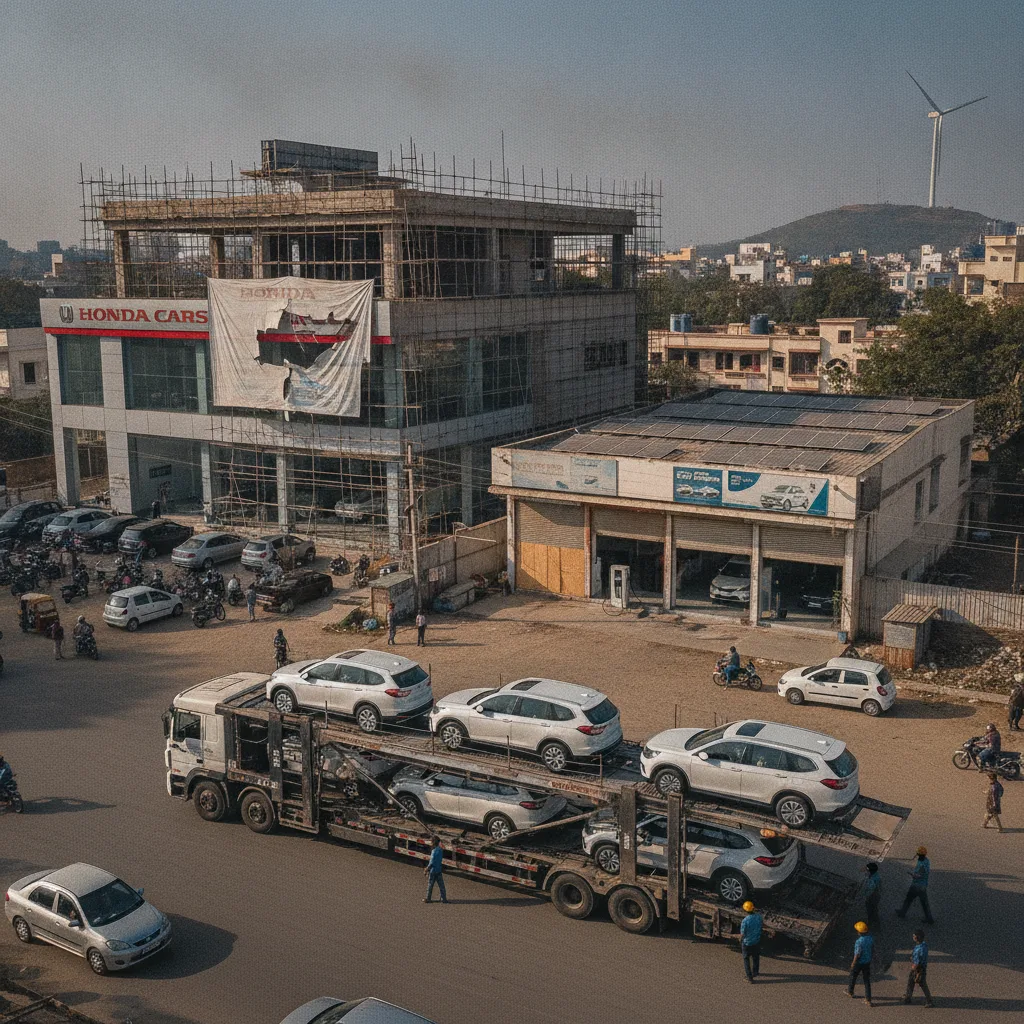
Honda Cars India is changing course. After years of sliding sales and a limited product lineup, the company is betting on imported vehicles and a new SUV push to win back customers.
The strategy is a sharp departure from Honda's earlier approach of making most cars locally. Now, the company plans to bring in premium models from Japan as completely built units. These imports will target buyers who want high-end features and are willing to pay a premium.
At the same time, Honda is doubling down on SUVs. The company knows that Indian buyers have moved away from sedans and hatchbacks. SUVs now make up more than half of all passenger vehicle sales in the country. Honda, which long relied on the City sedan and the Jazz hatchback, has only one SUV in its lineup, the Honda WR-V. That model is aging and faces tough competition from newer rivals.
Honda's sales numbers tell the story. In 2023, the company sold just over 90,000 cars in India. That is a fraction of what market leaders like Maruti Suzuki and Hyundai sell in a single quarter. Honda's market share has dropped below 2%. Ten years ago, it was over 5%.
Part of the problem is that Honda has not launched a new mass-market model in India for years. The company stopped making the Accord and CR-V locally. It also pulled the diesel engine option from its lineup, which hurt sales in a market where diesel still has a strong following among taxi and long-distance drivers.
Now, Honda is trying to fix that. The company has said it will launch a new mid-size SUV in India by 2025. That model will be built at its plant in Tapukara, Rajasthan. The factory currently runs at less than half its capacity of 180,000 cars a year. A new model could help fill those lines.
But the import plan is the more immediate shift. Honda will bring in cars like the Civic hybrid and the Accord hybrid from Japan. These will be sold in limited numbers and at high prices. The move is a way to test demand for premium hybrids without investing in local assembly. It also lets Honda offer something its rivals do not, a strong hybrid system that can run on electric power for short distances.
Honda is not alone in this strategy. Other automakers like Toyota and Volkswagen have also started importing more models to India. The government's new EV policy, which cuts import taxes for companies that commit to local manufacturing, has made this easier. But Honda has not yet announced any big EV plans for India.
Industry analysts say the import-and-SUV strategy is a low-risk way for Honda to stay relevant. But they warn that the company needs a stronger local game plan. Import volumes are small, a few thousand cars a year, and will not move the needle on market share. The real test will be whether the new SUV can compete with the Hyundai Creta, the Kia Seltos, and the Maruti Suzuki Grand Vitara.
Honda's dealers are watching closely. Many have struggled with low footfall and thin margins. A new SUV could bring customers back to showrooms. But if the launch is delayed or the pricing is off, the slide could continue.
For now, Honda is playing a cautious game. Imports give it a halo of exclusivity. SUVs give it a chance to fight in the biggest segment. Whether that is enough to rebuild its India presence remains to be seen.
Comments
Be the first to comment.
Leave a comment