
Tata’s Next Wave: 3 Electric Cars Set to Redefine India’s Roads
Tata Motors rolls out three new EVs that aim to boost range, cut price and expand charging support.
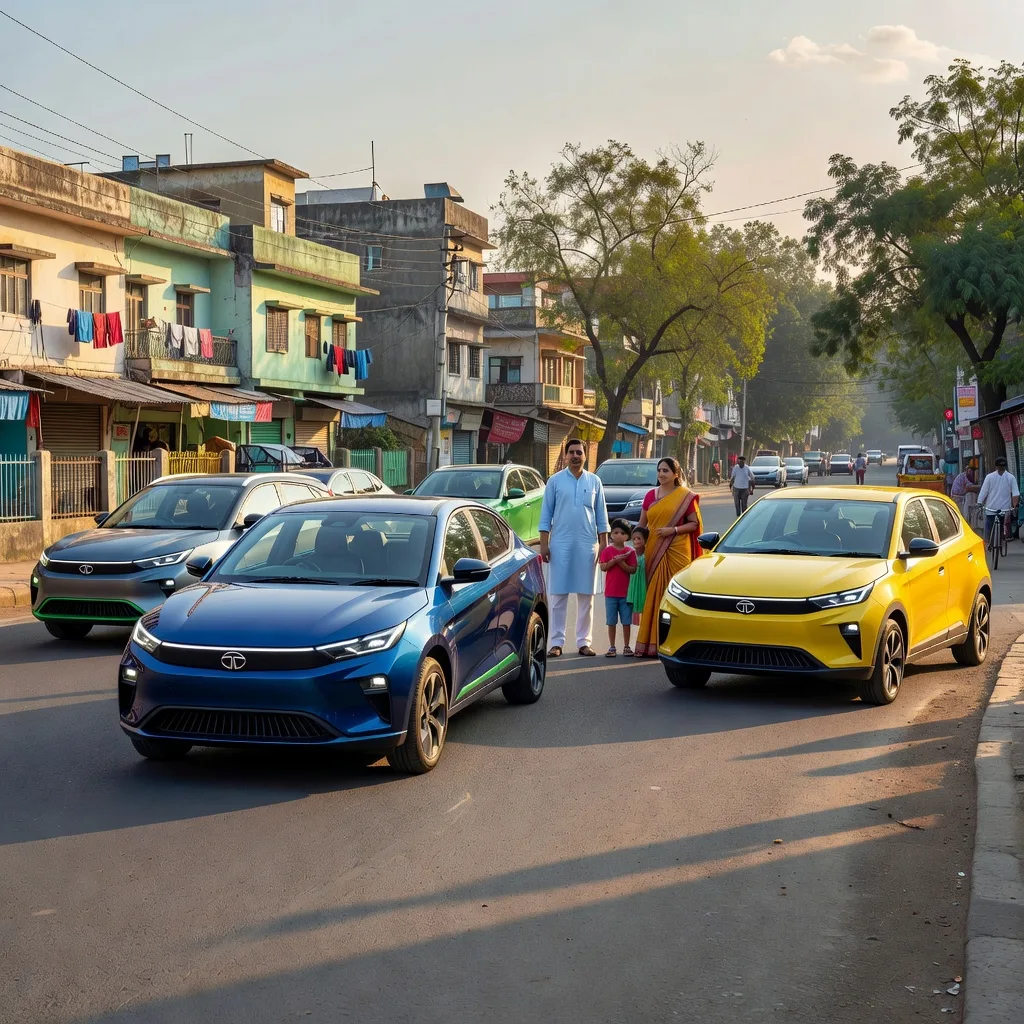
Tata Motors announced three electric models that will hit Indian showrooms over the next two years. The company says the line‑up will broaden its EV portfolio, address price sensitivity and help the country meet its climate goals.
What's coming
The three cars cover different market segments. Tata positions the first as a city hatchback, the second as a compact SUV and the third as a midsize crossover.
- Tata Tiago EV, a low‑cost hatchback built on the Tiago platform. It will offer a 250‑km range on a single charge and a price below INR 8 lakh.
- Tata Nexon EV Max, an upgraded version of the popular Nexon EV. It will sport a larger battery for a 350‑km range and fast‑charging that reaches 80% in about 45 minutes.
- Tata Safari EV, a midsize crossover aimed at families. It will feature a 500‑km range, dual‑motor all‑wheel drive and a suite of driver‑assist tools.
When they will arrive
Tata plans to start deliveries of the Tiago EV in mid-2025, followed by the Nexon EV Max later that year. The Safari EV is slated for early 2026. All three models will be built at Tata's existing plants, which should keep tooling costs low.
Pricing and features
The company says the Tiago EV will start at INR 7.99 lakh, the Nexon EV Max at INR 12.5 lakh and the Safari EV at INR 18 lakh. Each model will support the nationwide fast‑charging network that Tata is expanding with partners such as Tata Power and Shell.
Standard equipment will include a 10‑inch infotainment screen, smartphone mirroring, and a basic driver‑assist package. Higher trims will add larger batteries, premium upholstery and advanced safety systems.
Market impact
Analysts expect the new cars to push India's EV penetration past 5% by 2027. The lower price of the Tiago EV could lure first‑time buyers, while the Safari EV targets families looking for a greener alternative to diesel SUVs.
Industry observers note that Tata's move aligns with the government's push for a 30% EV share of new vehicle sales by 2030. If the pricing holds, the three models could help narrow the gap between electric and conventional cars.
Looking ahead
Tata Motors says it will keep expanding its battery sourcing and will explore local cell production to cut costs further. The firm also plans to launch a subscription service that lets owners swap batteries at select hubs, a step that could ease range anxiety for long‑distance travelers.
With the three new EVs, Tata aims to cement its place as a leading Indian electric‑car maker and give buyers more choices as the market shifts away from fossil fuels.
Comments
Be the first to comment.
Leave a comment