Why India's 2W and 3W segments lead the EV charge
Two-wheelers and three-wheelers account for the bulk of India's electric vehicle sales, driven by lower costs, simpler technology, and strong policy support.
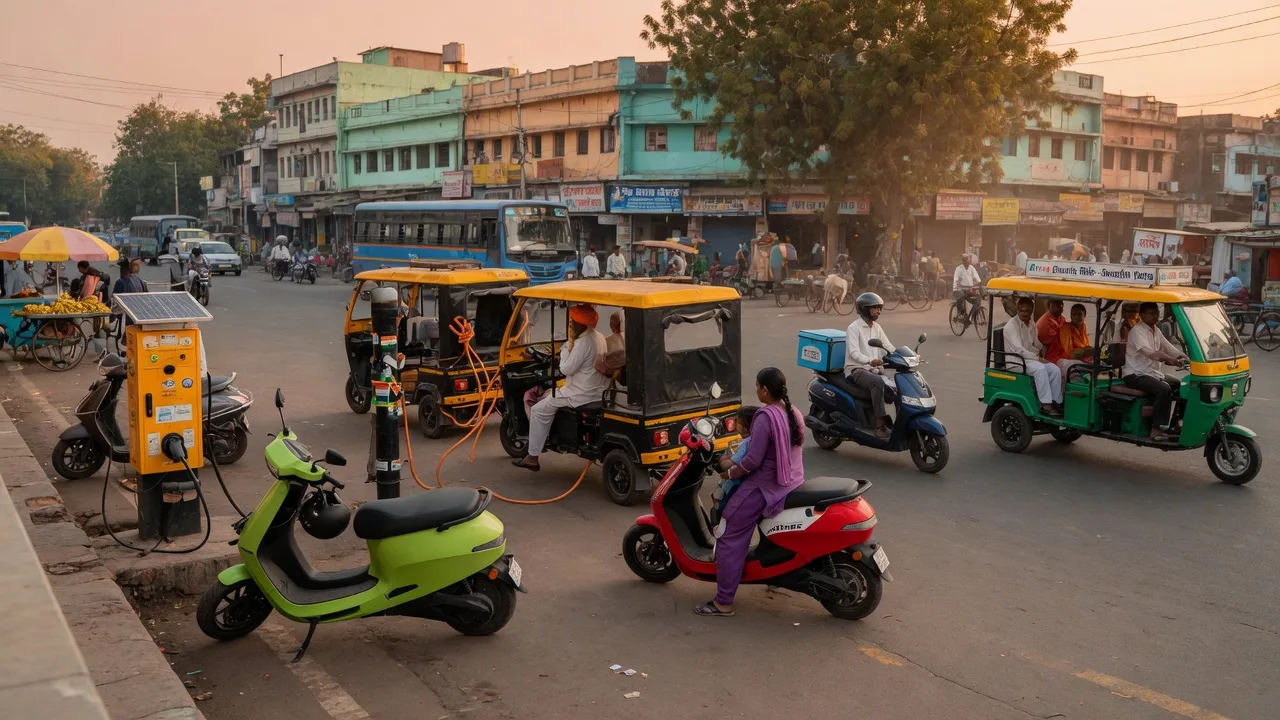
India's electric vehicle story is not written by cars. It is written by scooters, motorcycles, and autorickshaws. The two-wheeler and three-wheeler segments together make up more than 90 percent of the country's EV sales, according to industry data cited by ET Auto. Cars, the flashier part of the market, still lag far behind.
Why are 2Ws and 3Ws pulling ahead? The reasons are straightforward: lower purchase price, smaller batteries, and shorter daily travel distances. A typical electric scooter costs between Rs 60,000 and Rs 1.5 lakh. A comparable petrol scooter costs about the same to buy, but the electric version saves heavily on fuel and maintenance. For three-wheelers, used as passenger rickshaws or goods carriers, the math works even better. An e-rickshaw can pay back its upfront cost in 12 to 18 months through lower running expenses.
Policy push and falling battery prices
The government has helped. The Faster Adoption and Manufacturing of Electric Vehicles (FAME) scheme, now in its second phase, offers direct subsidies to buyers of electric two-wheelers and three-wheelers. Several states add their own incentives, waiving road tax and registration fees. Battery prices have dropped sharply over the past decade, from over Rs 15,000 per kWh in 2015 to around Rs 8,000 per kWh today, making the overall vehicle cheaper.
Charging infrastructure remains patchy. Most 2W and 3W owners charge at home or at work using a standard wall socket. That works because these vehicles typically travel 30 to 50 kilometers a day. Public fast-charging stations are still rare, but the need for them is lower in these segments than for long-distance cars or buses.
Fleet operators drive 3W adoption
Fleet operators, companies that run delivery services or passenger transport, have pushed three-wheeler EV sales sharply higher. Firms like Zypp Electric, Yulu, and Ola Electric have put thousands of e-scooters and e-rickshaws on Indian roads. Amazon, Flipkart, and Zomato have committed to electrifying their last-mile delivery fleets. In Delhi, the government mandated that all new three-wheelers registered for commercial use must be electric. Similar rules now apply in several other cities.
Ola Electric alone sold over 200,000 electric scooters in 2023, making it the largest EV maker in the country by volume. Bajaj Auto, TVS Motor, and Ather Energy also report strong 2W sales. In the 3W segment, Mahindra & Mahindra and Piaggio Vehicles lead, with models like the Treo and the Ape E-X.
Challenges remain
Not everything is smooth. Quality problems have hit some manufacturers. Ather Energy recalled about 5,000 scooters in 2022 to fix a battery issue. Ola Electric faced customer complaints about software glitches and service delays. The government tightened subsidy rules in 2023 after some companies claimed incentives for vehicles that did not meet local sourcing norms. Sales dipped briefly but recovered.
Charging infrastructure for longer trips is still thin. Rural and semi-urban areas have few public chargers. Financing remains a hurdle, banks often charge higher interest rates on EV loans than on petrol vehicle loans, citing resale value uncertainty. The used EV market is small, so buyers worry about what their scooter or rickshaw will be worth after five years.
Still, the numbers keep climbing. India sold about 1.5 million electric two-wheelers and three-wheelers in 2023, up from roughly 400,000 in 2020. The government wants 80 percent of new two-wheeler and three-wheeler sales to be electric by 2030. That target looks ambitious, but the trend is clear: the small vehicles are doing the heavy lifting.
Comments
Be the first to comment.
Leave a comment