Agrivoltaics in India: Solar Panels and Crops on the Same Land
Growing food and generating power on one field is gaining ground in India, but the economics and the shade still need work.
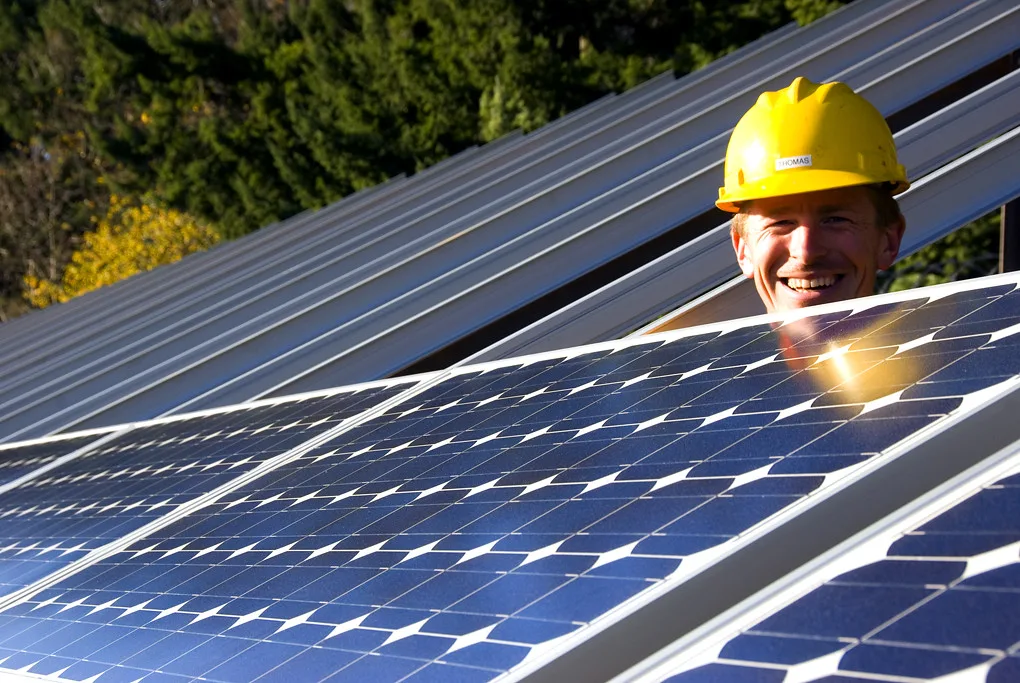
Agrivoltaics means putting solar panels and crops on the same piece of land. The panels make electricity. The ground beneath them still grows something, fodder, vegetables, sometimes grain. The idea has been around for over a decade, but it's drawing fresh attention in India as land gets scarcer and solar targets get bigger.
The pitch is simple. India needs land for solar parks and land for farming. Agrivoltaics tries to avoid picking one over the other. Panels mounted a few metres up let machinery and people move underneath. In some designs, the shade helps crops that don't like harsh sun. In others, the panels cut evaporation, so the soil holds moisture longer.
Why India is looking at it
India has set a large renewable energy target, and ground-mounted solar is the cheapest way to hit it. But large solar parks eat into grazing land and farmland, and that draws local resistance. Agrivoltaics offers a way to keep farming going while the panels earn money.
The country also has a lot of marginal land, dry, degraded, or rain-fed, where a farmer struggles to make a full living from crops alone. A solar lease on top of that land can add a steady income. For developers, the appeal is easier land access and fewer disputes.
There's a policy angle too. Several states have been experimenting with dual-use rules, and the central government has pushed pilot projects. The Manorama Yearbook explainer frames agrivoltaics as an exam topic, which tells you something: it's now part of the mainstream policy conversation, not just a lab idea.
What the field evidence shows
Results so far are mixed, and that's worth saying plainly. Crops that tolerate shade, leafy greens, some pulses, fodder grasses, do reasonably well under panels. Wheat and other full-sun crops often lose yield. The panel spacing, height, and orientation decide how much light reaches the ground, and getting that balance right is the hard part.
Cost is the other hurdle. Raising panels higher than standard ground-mount structures costs more. Farmers also need a way to sell the power, which usually means a developer or a discom in the picture. Small farmers can't easily finance the setup on their own.
Water is a quieter benefit. In dry regions, shade under panels slows evaporation, and some trials report lower irrigation needs. That matters in states where groundwater is already stressed.
Where it fits
Agrivoltaics won't replace large solar parks. It's a niche tool, best suited to dryland farms, orchards, and places where land is expensive or contested. It also suits crops that can take partial shade and farmers who want a second income stream.
The scope in India is real but bounded. The country has the sunlight and the farmland. What it needs is clearer standards on panel height and spacing, financing models that work for smallholders, and more field data on which crops actually survive under a roof of glass. Until those pieces come together, agrivoltaics will stay a promising experiment rather than a default choice.
Source: Manorama Yearbook · 24 Oct 2026
Comments
Be the first to comment.
Leave a comment