
India Crosses 50% Clean Energy Mark For First Time in 2026
Renewable sources now make up half of India's installed power capacity, a milestone driven by solar and wind growth.
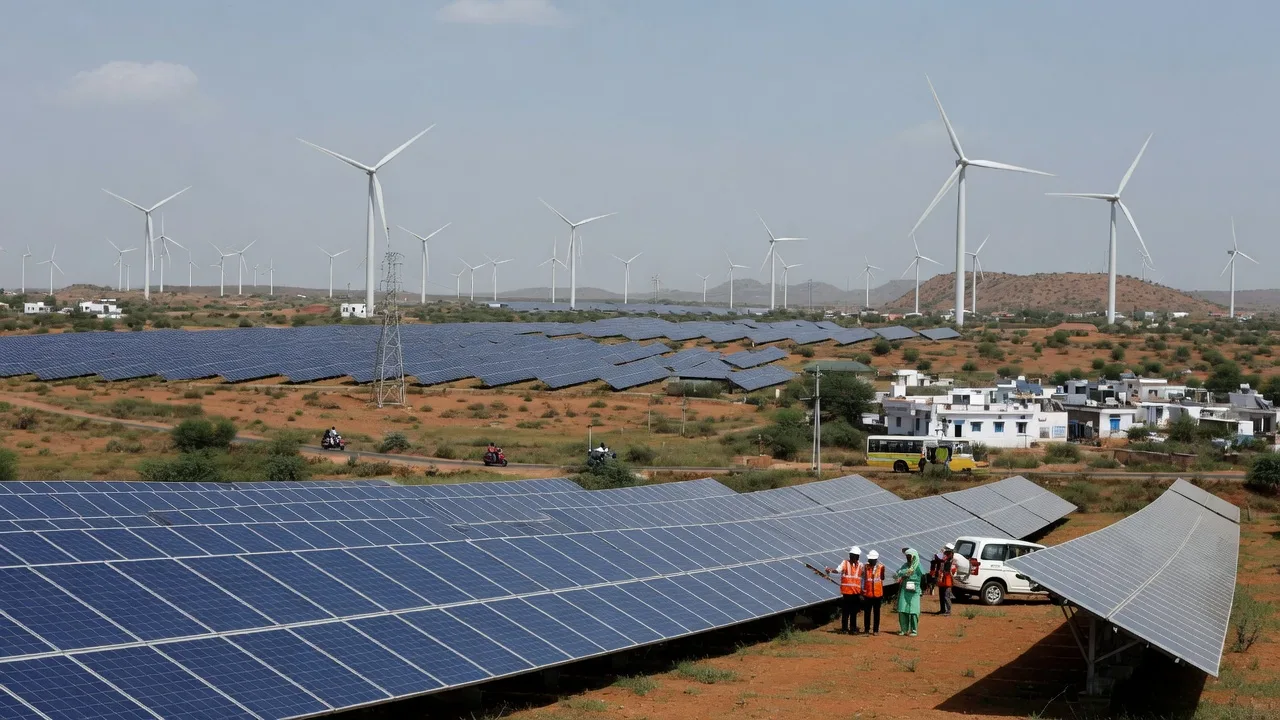
India has crossed the 50% clean energy mark for the first time in 2026. The milestone means renewable sources now make up half of the country's total installed power capacity. The data comes from the Central Electricity Authority and was first reported by carboncopy.info.
Solar power led the charge. It accounts for roughly 30% of the clean energy share. Wind follows at about 12%. Small hydro, biomass, and other renewables make up the rest. Coal still dominates actual electricity generation, but the capacity shift is real.
What the Numbers Show
India's total installed power capacity sits at around 450 gigawatts. Clean energy, including large hydro, now stands at roughly 225 gigawatts. That's the 50% mark. Five years ago, that number was closer to 36%.
The jump happened fast. In 2021, the government set a target of 500 gigawatts of non-fossil fuel capacity by 2030. At the current pace, India could hit that goal before the deadline. Solar installations alone have doubled in the last three years.
Large hydropower plants, which the government counts as clean energy, make up about 47 gigawatts of the total. Critics argue large hydro should not get the same label as solar or wind. But the official classification stands.
Grid Challenges Remain
Reaching 50% capacity is not the same as running on 50% clean power. Coal plants still supply about 70% of India's electricity. Solar and wind are variable, the sun does not shine at night, and the wind does not always blow.
Grid operators have had to ramp up battery storage projects. The government approved 12 gigawatt-hours of new battery storage in 2025 alone. Pumped hydro projects are also getting a second look.
Transmission lines remain a weak spot. Solar-rich states like Rajasthan and Gujarat often struggle to send power to high-demand states like Uttar Pradesh and Maharashtra. The Green Energy Corridor project aims to fix that, but delays have dogged it.
Policy Drivers
The milestone did not happen by accident. The government pushed through several policy changes. It waived inter-state transmission charges for solar and wind projects. It also forced state utilities to buy renewable power through renewable purchase obligations.
Corporate demand helped too. Big companies like Reliance, Tata, and Adani have signed large power purchase agreements. Tech firms like Google and Microsoft are buying clean energy to meet their own climate goals.
Domestic manufacturing got a boost from the production-linked incentive scheme for solar modules. India now makes about 40 gigawatts of solar cells and modules each year, up from 15 gigawatts in 2022.
What Comes Next
The next target is tougher. India aims for 500 gigawatts of non-fossil fuel capacity by 2030. That means adding roughly 275 gigawatts in four years. That is more than the entire clean energy capacity built in the last decade.
Land acquisition remains a bottleneck. Solar farms need large tracts of land, and farmers often resist selling. Bureaucratic hurdles slow down project approvals. And grid connectivity for new projects still takes up to two years.
Vineet Mittal, a clean energy analyst at the Centre for Energy Studies in New Delhi, said: "The 50% mark shows momentum. But the hard part, integrating this power into the grid and backing it with storage, is just beginning."
Comments
Be the first to comment.
Leave a comment