
India Steps Into Central Asia’s Solar Market With Uzbekistan Deal
A new agreement between Indian and Uzbek firms opens the door for solar equipment supply and project development in a region hungry for clean power.
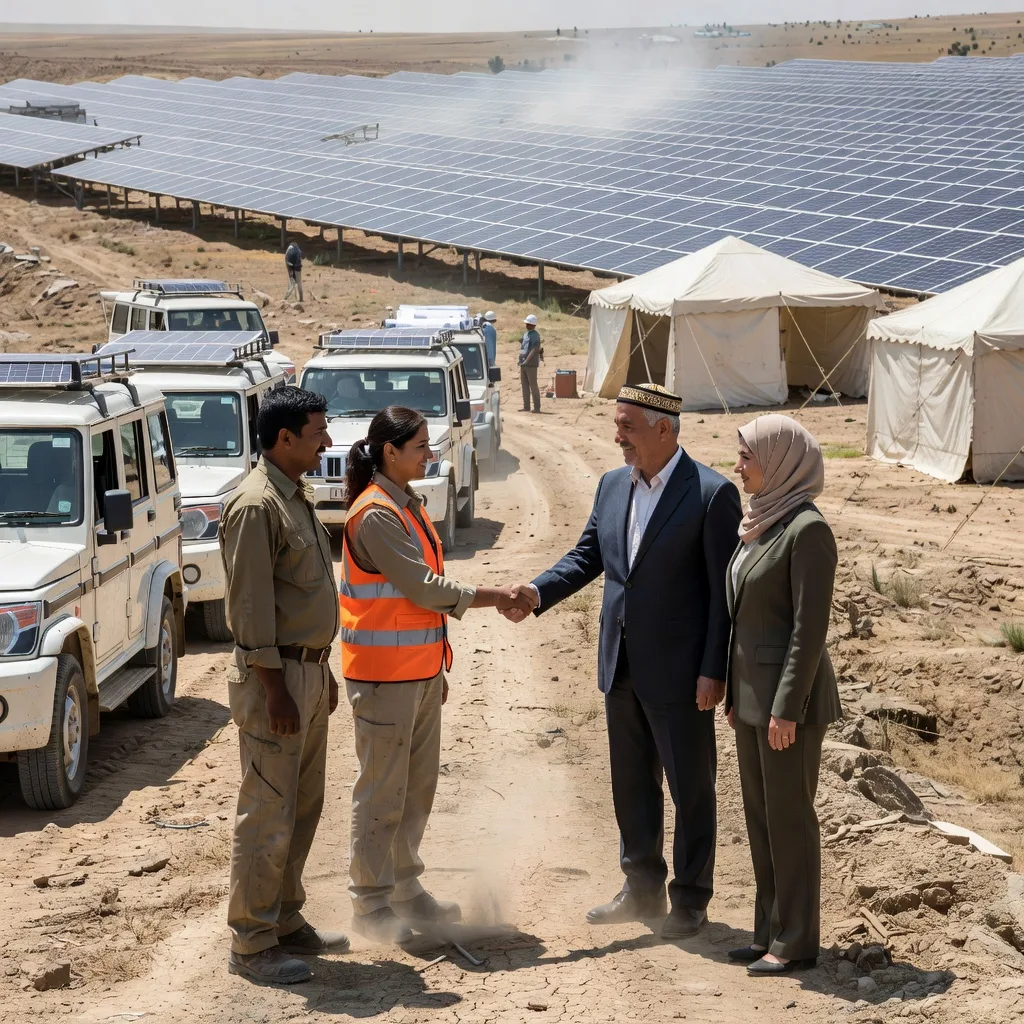
TASHKENT, India is quietly planting a flag in Central Asia's renewable energy landscape. A recent deal between Indian solar manufacturers and Uzbekistan's state energy company signals a shift: New Delhi wants to sell more than just goodwill.
The agreement, signed in Tashkent, covers the supply of Indian-made solar panels and cells to Uzbek projects. It also opens the door for Indian firms to build and run solar farms in the country.
Uzbekistan is racing to add 7 gigawatts of solar and wind capacity by 2030. The country gets most of its power from natural gas and coal. Its aging Soviet-era grid needs new generation fast. And the sun beats down on the Kyzylkum Desert for most of the year.
Indian companies bring something the Uzbeks need: low-cost manufacturing. India's solar panel factories have ramped up fast, driven by domestic demand and government production-linked incentives. Now those factories are looking for buyers abroad.
The deal is small for now. But it sets a template. If Indian panels prove reliable in Uzbekistan's dry heat and dust, more orders could follow from neighboring Kazakhstan, Kyrgyzstan, and Tajikistan. All three have big renewable targets and thin industrial bases.
There are risks. Supply chains across Central Asia are slow. Land border crossings between India and Uzbekistan run through Afghanistan or Pakistan, neither is a safe bet. Most equipment will move by sea to Iran or Russia, then overland. That adds weeks and cost.
Still, the logic is clear. India buys most of its oil and gas from the Middle East and Russia. Selling solar panels to Central Asia helps balance trade. It also gives India a foothold in a region where China has been the dominant investor for two decades.
"This is not a charity project," said a senior Indian trade official who spoke on condition of anonymity because the negotiations were not public. "We are looking at a commercial win-win. They need clean power cheap. We need export markets for our solar industry."
Uzbekistan has already signed renewable deals with Saudi Arabia's ACWA Power and the United Arab Emirates' Masdar. Indian firms are smaller players. But they offer something the Gulf giants cannot: proximity to the supply chain. Indian ports are closer to Central Asia than Chinese ports are. And Indian solar cells are competitive on price.
The Uzbek government is also pushing local manufacturing. A joint venture under the deal will explore making solar components inside Uzbekistan. That could cut logistics costs and create jobs, both big priorities for President Shavkat Mirziyoyev's administration.
For India, the move is part of a broader play. The Ministry of External Affairs has been pushing for deeper energy ties with Central Asian states. A working group on renewable energy met in Tashkent last month. More meetings are planned for next year.
The real test will come when the first shipment of Indian panels lands in Tashkent. If they work, the deal grows. If they don't, the door closes. For now, the sun is shining on a new partnership.
Comments
Be the first to comment.
Leave a comment