
India's EV push cannot skip retrofitment, say experts
Retrofitting old vehicles into electric ones offers a cheaper, faster path to clean mobility, but policy gaps hold it back.
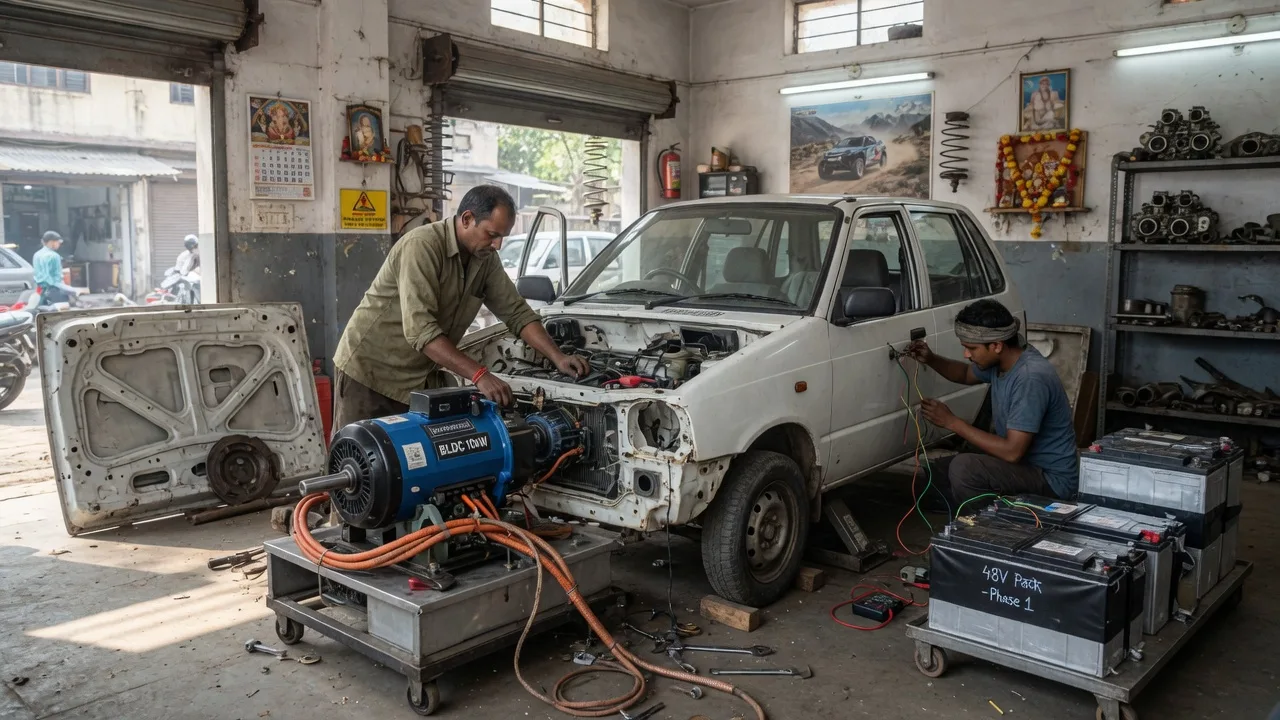
India's electric vehicle push is racing ahead. New EV sales are climbing. Charging stations are popping up. But one piece of the puzzle is getting left behind: retrofitment.
Retrofitting means ripping out a petrol or diesel engine and dropping in an electric motor and battery pack. It can turn an old autorickshaw, taxi, or bus into a zero-emission vehicle. The cost is far lower than buying a new EV. For a three-wheeler, it can run between Rs 1 lakh and Rs 1.5 lakh. A new electric three-wheeler costs three times that.
The government knows this. In 2015, it set up a committee to write retrofit rules. The Automotive Industry Standard 140 came out in 2016. It lays down safety and performance norms. But adoption has been slow. Few workshops are certified. Fewer vehicle owners know it is an option.
"The policy exists on paper," said an industry source who asked not to be named. "But there is no push to get it off the ground."
The numbers tell the story. India has roughly 25 million three-wheelers and 6 million buses and trucks on the road. Most run on diesel or petrol. Their average age is 10 to 15 years. Scrapping them all would be wasteful and expensive. Retrofitting extends their life and cuts emissions.
Delhi, Mumbai, and Bengaluru have the worst air in the country. A big chunk of that pollution comes from old diesel engines. Retrofitting those vehicles could bring quick wins for public health.
But barriers remain. First, cost. Even the lower retrofit price is a stretch for many owners. Autorickshaw drivers earn Rs 800 to Rs 1,200 a day. A Rs 1.5 lakh retrofit is a gamble. Second, range. Most retrofit kits offer 80 to 100 km per charge. That works for city trips but not for longer hauls. Third, warranty and service. Buyers worry about who will fix the vehicle if something breaks.
Some states have moved ahead. Delhi's transport department allowed retrofitting of e-rickshaws in 2021. Kerala started a pilot for retrofitting state-owned buses. But national policy is patchy. The Faster Adoption and Manufacturing of Hybrid and Electric Vehicles scheme, or FAME, offers subsidies for new EVs. It does not cover retrofitting.
"You are leaving out a huge stock of vehicles," said Anumita Roychowdhury, executive director at the Centre for Science and Environment. "Retrofitment is not a silver bullet. But it is a very practical tool for cleaning up the existing fleet."
The technology is ready. Companies like e-Trio in Pune and Biliti Electric in Hyderabad sell retrofit kits. They have converted hundreds of three-wheelers and taxis. The kits include a motor, controller, and lithium-ion battery. Installation takes two to three days.
What is missing is demand. Vehicle owners need confidence. They need access to cheap loans. They need a network of certified retrofitters and service centres. They need the government to treat retrofitting the same way it treats new EV sales.
The transport ministry is working on a national retrofit policy. Officials say it will address standards, testing, and incentives. No timeline has been announced.
Meanwhile, the clock is ticking. India wants 30% of new vehicle sales to be electric by 2030. That target covers only new sales. It does nothing for the 300 million vehicles already on the road. Retrofitting can fill that gap. But only if the government, industry, and banks come together.
"Retrofitment is not a niche," said the industry source. "It is a mass-market solution that needs mass-market support."
Comments
Be the first to comment.
Leave a comment