India's EV Push Hits a Coordination Wall — Can It Be Fixed?
A new analysis from The Daily Brief by Zerodha highlights the lack of coordination between central and state policies as a major hurdle for India's electric vehicle ambitions.
India wants to go electric. The government has set big targets, 30% of new car sales by 2030, 80% of two- and three-wheelers. But a new analysis from The Daily Brief by Zerodha points to a stubborn problem: nobody is rowing in the same direction.
The piece, titled "The coordination puzzle staring at India's EV ambitions," argues that the real bottleneck isn't technology or consumer demand. It's the messy overlap between what the central government promises and what states actually deliver.
Take the Faster Adoption and Manufacturing of Electric Vehicles (FAME) scheme. It offers buyers a direct subsidy. But states run their own EV policies, with different registration fees, road tax exemptions, and charging infrastructure rules. A buyer in Delhi might get a fat tax break. A buyer in Uttar Pradesh? Not so much. That patchwork confuses manufacturers, scares off investors, and slows the whole market.
The report notes that India needs a single, unified EV policy, not a dozen competing ones. Without it, companies struggle to plan production. They don't know which states will offer incentives, or for how long. Charging companies can't decide where to put stations. The result: a fragmented market that grows slower than it should.
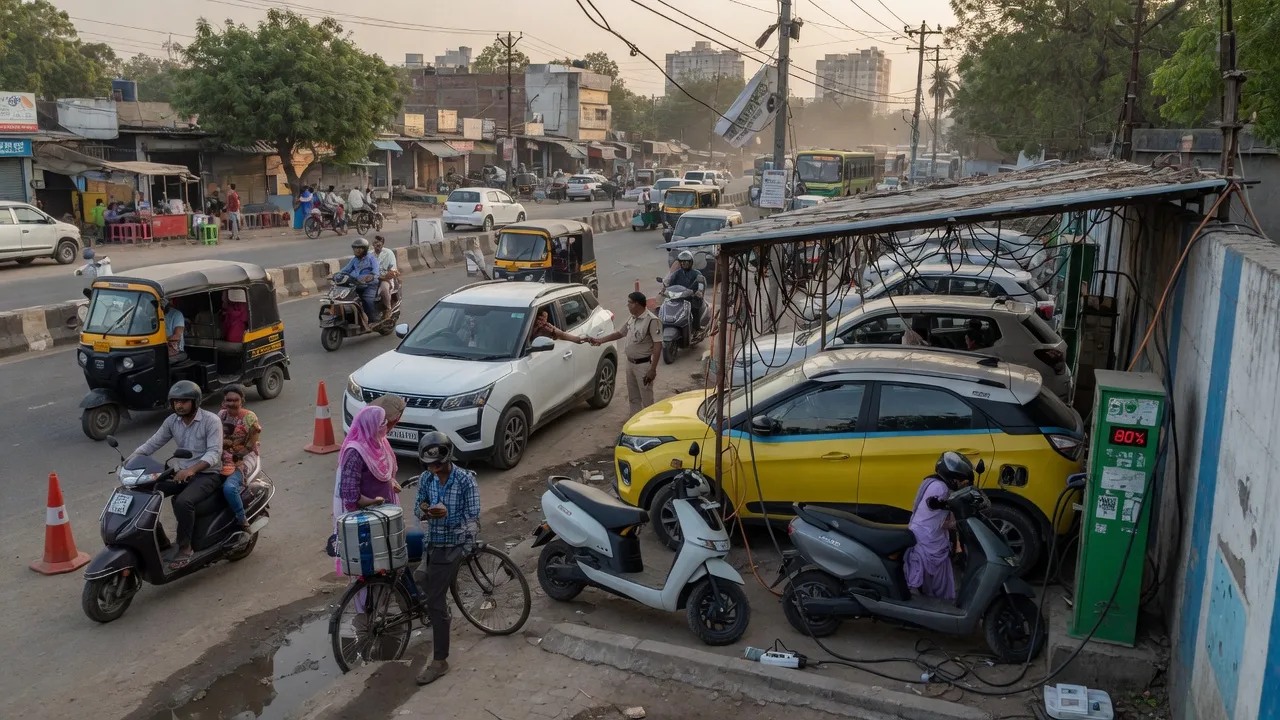
Another layer of the puzzle: the grid. EV adoption means more electricity demand. India's grid is already strained. Peak power shortages hit several states this summer. If millions of EVs start charging at the same time, the system could buckle. The analysis calls for better coordination between the power ministry and the transport ministry. Right now, they don't talk enough.
Then there's the supply chain. India wants to build batteries at home. But that requires lithium, cobalt, and nickel, materials the country doesn't have in quantity. The government has pushed for mining deals abroad, but those take years. Meanwhile, battery prices stay high, and EVs stay expensive.
The Daily Brief also flags a mismatch in ambition. The central government talks about 100% EV sales by 2030 for three-wheelers and 40% for buses. But state transport departments still buy diesel buses. Municipal corporations still issue permits for petrol three-wheelers. There's no mechanism to align their plans with the national goal.
None of this means India's EV story is doomed. Sales of two-wheelers and three-wheelers are rising. Tata Motors and Mahindra have strong electric car lines. But the analysis makes one thing clear: targets don't build markets. Coordination does.
Without a shared playbook, India risks spending billions on subsidies while the real barriers, confused buyers, nervous investors, and a grid that isn't ready, stay in place.
Comments
Be the first to comment.
Leave a comment