
India's Solar Factories Get a Cash Boost as Clean Power Push Gains Speed
New funding and policy steps are driving a surge in solar panel production across India.
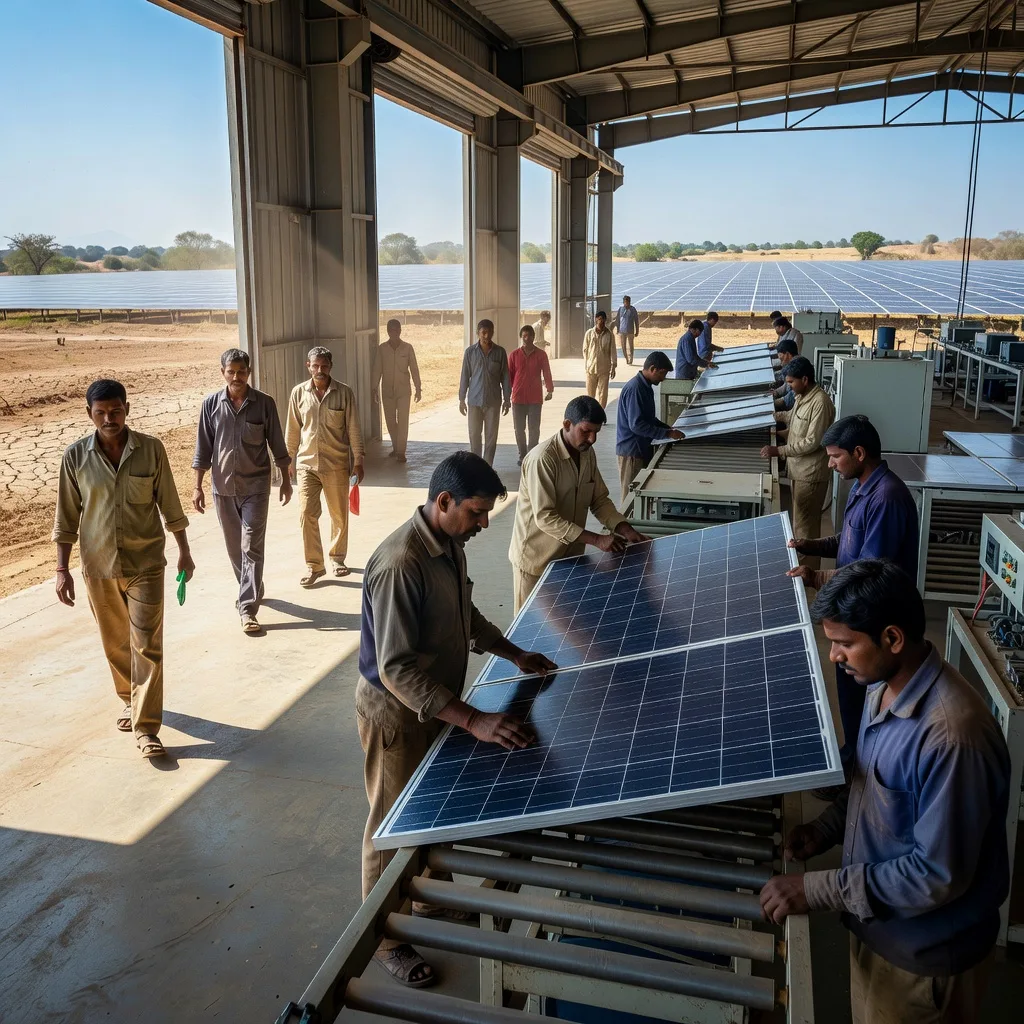
Policy incentives fuel growth
In early 2024 the Indian government rolled out a package of tax breaks and capital subsidies aimed at solar manufacturers. The rules let firms write off a larger share of equipment costs and reduce customs duties on imported raw glass and silicon. By cutting the price of setting up a new line, the policy has let both start‑ups and big players add capacity faster than before.
Foreign and domestic money flow in
Since the incentives began, foreign investors have put more than $5 billion into Indian solar factories. Companies from the United States, Europe and China have bought stakes in joint ventures or set up wholly owned plants in states such as Gujarat, Tamil Nadu and Madhya Pradesh. At the same time, Indian conglomerates like Adani, Tata and Reliance have announced fresh equity raises to fund new production lines. The mix of homegrown and overseas cash shows that investors see a long‑run market for solar panels made inside the country.
Capacity builds at pace
The latest data from the Ministry of New and Renewable Energy shows that total manufacturing capacity rose from 12 gigawatts in 2022 to 22 gigawatts in 2023. New plants in Rajasthan and Odisha are each slated to churn out 2 gigawatts of wafers per year, while a refurbishment program at an older plant in Andhra Pradesh will add another 500 megawatts of output. The boost in capacity helps the government meet its target of 100 gigawatts of solar power by 2030 without relying on imports.
Challenges and outlook
Even with strong policy support, manufacturers face a tight labor market and a need for skilled technicians. To grow the workforce, firms are partnering with technical colleges and launching apprenticeship schemes. Supply chain bottlenecks for high‑purity silicon also linger, prompting some companies to invest in domestic mining projects. Analysts say that if the government keeps the fiscal incentives steady and clears regulatory hurdles, India could become the world's top exporter of solar panels within the next five years.
Comments
Be the first to comment.
Leave a comment