
Solex Chair: India Must Incentivise Domestic Solar as China Weighs Export Curbs
With Beijing reportedly considering restrictions on solar technology exports, Indian manufacturers are pressing for stronger policy support at home.
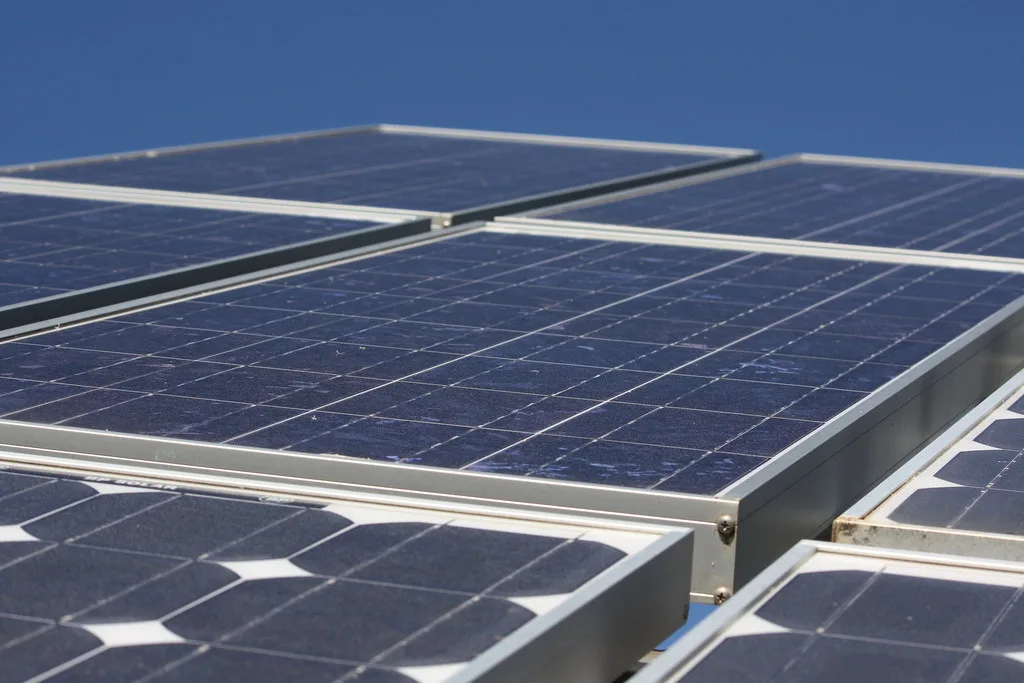
India needs to step up incentives for domestic solar manufacturing as China weighs curbs on technology exports, the chair of Solex Energy has said, according to a report in The Economic Times.
The warning lands at an awkward moment for India's solar build-out. The country has added module and cell capacity at a fast clip over the past few years, but much of the machinery, wafers and specialised equipment behind that capacity still comes from China. Any restriction on those exports would hit Indian factories first.
Solex Energy, listed on Indian exchanges, makes solar modules and has been expanding its manufacturing footprint. Its chair's argument is straightforward: if the supply of Chinese technology tightens, India's own production lines need to be ready to fill the gap, and that won't happen without government support.
Why the timing matters
China dominates the global solar supply chain, from polysilicon to wafers to cells. Reports of possible export curbs have circulated before, and each round sends a shiver through importing markets. For India, the stakes are concrete. The country is chasing ambitious renewable energy targets, and solar accounts for the bulk of new capacity additions.
Domestic manufacturing has grown under protective measures, including basic customs duties on imported cells and modules and the approved list of models and manufacturers that governs government-linked projects. But the deeper links of the chain remain thin. Wafer and polysilicon production in India is negligible.
The Solex chair's call fits a pattern of Indian manufacturers asking for more: production-linked incentives with wider coverage, support for upstream components, and a stable duty structure that lets them plan years ahead rather than quarters.
What's on the table
The industry's wishlist tends to run along familiar lines:
- Expanded incentives for cells, wafers and polysilicon, not just modules
- Clearer long-term duty policy so manufacturers can commit capital
- Support for technology tie-ups and equipment sourcing outside China
- Faster execution of already-announced manufacturing schemes
None of this is cheap. Solar manufacturing is capital-heavy, and Indian firms compete against Chinese producers operating at a scale no domestic player can match yet. That gap is exactly why the industry wants policy to carry some of the risk.
There's a counter-argument too. Higher protection raises module prices, and cheap solar has been the engine of India's renewable growth. Balance matters. The government has so far tried to walk the line, shielding domestic makers without letting costs spiral.
What the Solex chair has done is put a date stamp on the debate. If China does move on export curbs, India's window to build self-reliance narrows sharply. Factories take years to commission. Policy takes months to notify. The arithmetic is uncomfortable.
The Economic Times report did not specify which technologies China might restrict or when any decision could come. It also did not detail the size of incentives Solex is seeking.
For now, the ball sits with the government. India's solar ambitions and its manufacturing ambitions are pulling in the same direction, but they need the same supply chain to get there. Whether New Delhi moves before Beijing does is the question the industry is asking.
Source: The Economic Times · 25 Oct 2026
Comments
Be the first to comment.
Leave a comment