
India’s Wind Power Surges to 57,443 MW, Hits 106 Billion Units in FY26
Wind farms across the country push capacity past 57,000 MW and generate a record 106 billion kilowatt hours in the fiscal year ending March 2026.
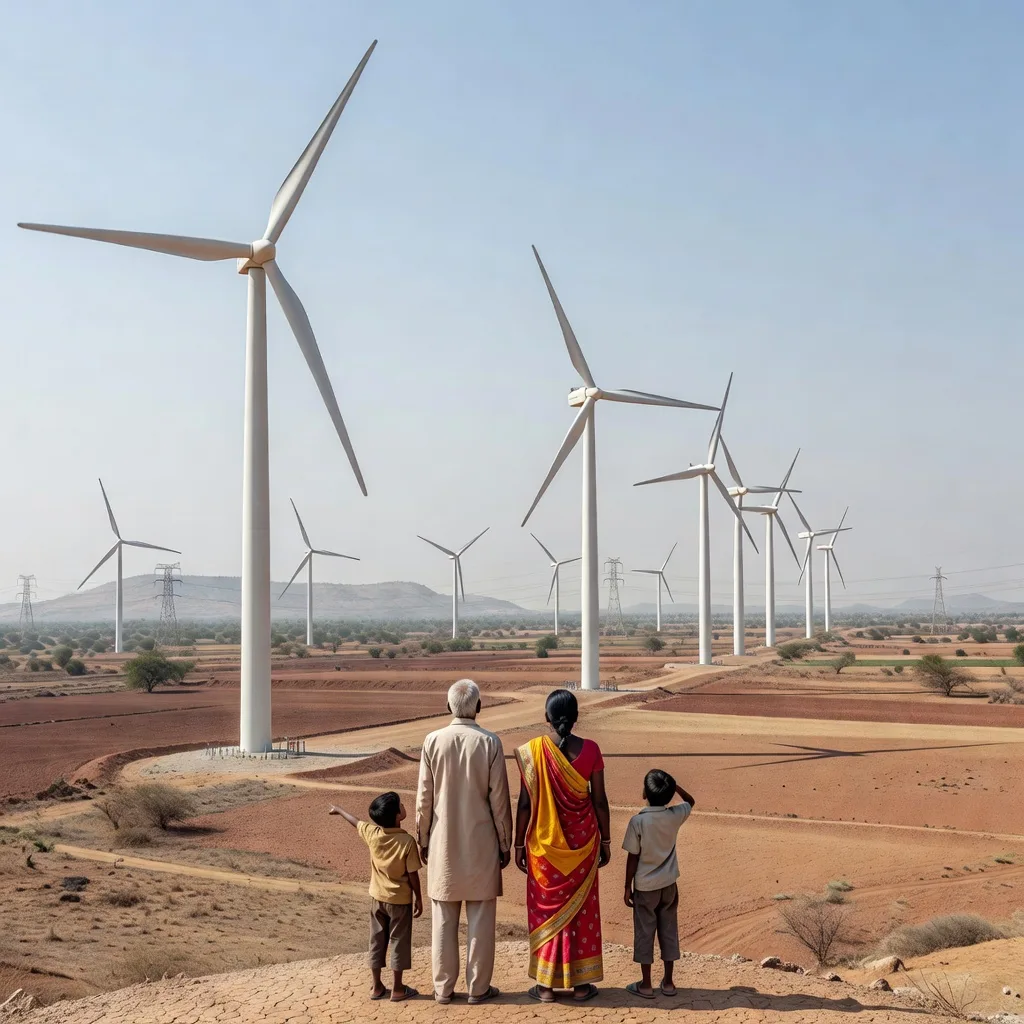
New Delhi, The Ministry of New and Renewable Energy said on Tuesday that India's wind power capacity rose to 57,443 megawatts (MW) at the close of the fiscal year 2026. The sector also produced 106 billion kilowatt hours of electricity during the same period, a level not seen before.
Capacity growth
In the past twelve months the country added 4,200 MW of wind farms, according to the ministry's quarterly report. Most of the new sites are in the states of Gujarat, Tamil Nadu and Rajasthan, where wind speeds are high and land is available. The report notes that the government's push for clean power and the falling cost of turbines helped drive the expansion.
Generation milestones
Wind generation reached 106 billion kilowatt hours in FY26, up from 94 billion kilowatt hours in FY25. The increase reflects both the larger installed base and higher capacity factors at many older plants that have been upgraded with modern blades and control systems.
Policy backdrop
The growth comes after the 2023 Renewable Energy Targets Act set a goal of 60,000 MW of wind capacity by 2030. The ministry says the FY26 figure shows the country is on track, though it still needs to add more projects to meet the ten‑year target.
Industry response
Leading developers such as Suzlon, Vestas India and ReNew Power said the numbers validate their investment plans. A spokesperson for ReNew Power noted that the firm expects to commission another 1,500 MW of wind farms by the end of 2027.
Challenges ahead
Experts point to grid integration as a key hurdle. The national grid must handle intermittent supply while keeping stability. To address this, the power ministry is rolling out new storage projects and upgrading transmission lines in wind‑rich regions.
Impact on emissions
Wind power helped displace an estimated 90 million tonnes of carbon dioxide in FY26, according to the ministry's emissions calculator. The shift supports India's pledge under the Paris Agreement to cut its carbon intensity by 45 percent by 2030.
Outlook
Analysts expect wind capacity to keep rising as the government clears more land for projects and offers higher tariffs for clean energy. If the current pace holds, India could reach the 60,000 MW target before 2030 and further boost generation beyond 120 billion kilowatt hours by 2032.
BioEnergy Times will continue to follow the development of India's wind sector and report on policy changes, market trends and technology advances.
Comments
Be the first to comment.
Leave a comment