
Make in India's next test is not capacity, but capability
India's solar manufacturing push has scaled up module assembly, but the real challenge lies in building domestic capability for cells, wafers, and polysilicon.
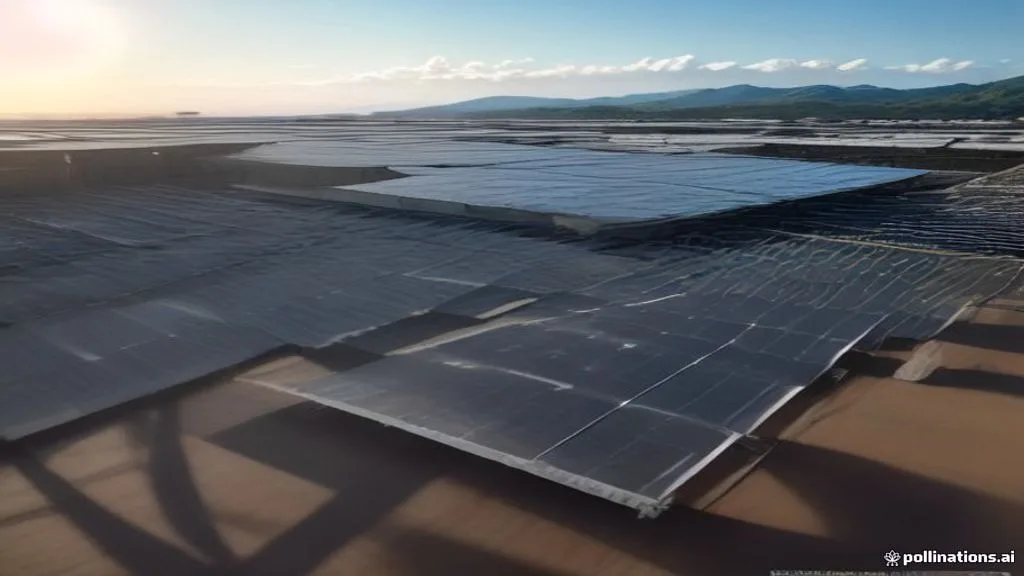
India's solar manufacturing sector has a capacity problem that isn't really a problem anymore. Module assembly lines have sprouted across the country, and nameplate capacity now runs into tens of gigawatts. But the headline number hides a stubborn gap: most of those modules are built from imported cells, and almost all of those cells come from China.
The government's Make in India drive has focused on capacity addition. Production-linked incentives, customs duties, and domestic content requirements have pushed companies to set up shop. That worked, at least on paper. But capacity without capability is a hollow victory. A module line can be commissioned in months. A wafer fab takes years, deep technical know-how, and a supply chain that doesn't exist yet.
The missing links
Solar manufacturing has four main stages: polysilicon, ingots and wafers, cells, and modules. India is strong in the last step, weak in the first three. Polysilicon production is negligible. Wafering is almost nonexistent. Cell manufacturing is growing but still far short of demand. The result is a familiar pattern: import the high-value components, assemble the low-value ones, and call it manufacturing.
pv magazine India reported on September 25, 2026, that the next test for Make in India is not capacity, but capability. The point is blunt. Building more module lines won't solve the problem if the cells inside them still arrive on ships.
Why does this matter? Because solar is now the cheapest source of new power in most of India. The country aims to install 500 GW of non-fossil capacity by 2030. Every panel that gets deployed without a domestic supply chain deepens the import bill. And every global shock, whether a trade war or a pandemic, exposes how fragile that dependence is.
What capability looks like
Capability means being able to make the stuff that's hard to make. It means engineers who understand plasma etching and diamond wire sawing. It means factories that can ramp up yield without flying in foreign technicians. It means a domestic ecosystem of equipment suppliers, specialty chemicals, and testing labs.
Some Indian companies are trying. Reliance, Adani, and Tata have announced integrated plans that go beyond modules. But announcements are not production. The timelines are long, the capital is heavy, and the technology is guarded. China didn't build its solar dominance overnight. It took a decade of state support, learning by doing, and relentless cost reduction.
India has the demand. It has the policy intent. What it lacks is the patient capital and the technical depth. The PLI scheme rewards capacity, not capability. That's a design flaw. A factory that assembles imported cells gets the same subsidy as one that makes its own wafers. The incentive to move upstream is weak.
The trade-offs
Protectionism can help. Basic customs duties on cells and modules give domestic makers room to breathe. But they also raise the cost of solar power, at least in the short run. The government has to balance energy access with industrial policy. It's a tightrope.
There's also the question of scale. A wafer fab needs to run at high utilization to be viable. India's domestic demand might not be enough to absorb that output, at least initially. Exports would be necessary, but Indian modules are not yet cost-competitive in global markets without subsidies.
None of this is a reason to give up. It's a reason to be honest about where the bottlenecks are. Capacity is easy to measure and easy to celebrate. Capability is harder. It shows up in yield rates, in patents, in the number of engineers who can troubleshoot a diffusion furnace at 2 a.m.
The next phase of Make in India will be judged by those metrics, not by gigawatt announcements. As pv magazine India put it, the test is capability. That's a harder exam, and India hasn't passed it yet.
Source: pv magazine India · 25 Sep 2026
Comments
Be the first to comment.
Leave a comment