
64 GW Midday Drop Shows India Must Build Storage Now
A sharp 64 GW fall in solar output at midday reveals how fast India's grid is changing and why battery storage is no longer optional.
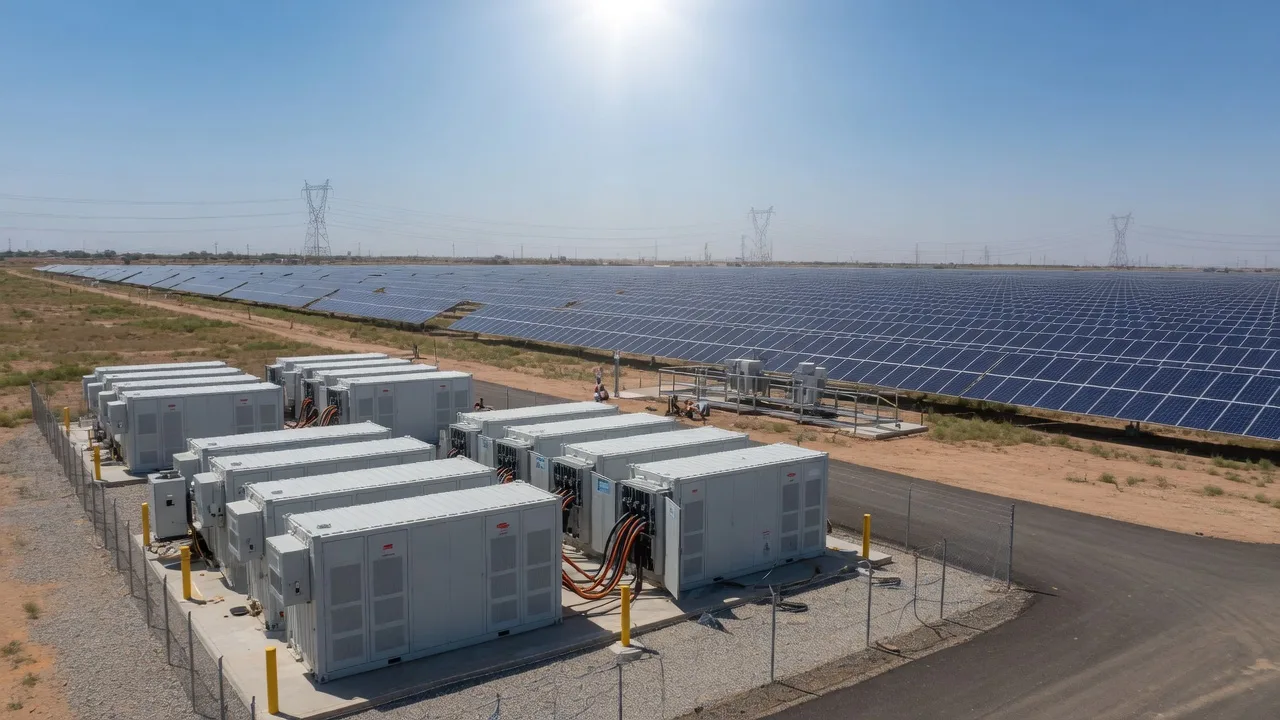
India's solar boom has a new problem. On a recent clear day, the country's solar farms pumped out 64 GW less power at noon than they did just hours earlier. That swing, from morning peak to afternoon trough, is the biggest ever recorded. It shows how deeply solar now shapes India's electricity grid.
The data comes from Saur Energy, which tracks renewable generation in real time. On that day, solar output climbed fast after sunrise, hit a peak, then dropped sharply as clouds moved in. Within a few hours, the grid lost 64 GW of supply. That is more than the total installed capacity of France's nuclear fleet.
Grid operators had to scramble. They called on coal plants to ramp up. They asked hydropower stations to release more water. They even cut power to some industrial users. It worked, but barely. The incident drove home a simple point: India needs storage, and it needs it fast.
Why 64 GW matters
India has added solar capacity at breakneck speed. Installed solar capacity now stands at over 80 GW, up from just 10 GW five years ago. But solar is variable. It depends on the sun. When clouds roll in, output can fall by half in minutes. That is what happened on this day.
The 64 GW drop is not an outlier. Similar swings have become more frequent as solar's share grows. In 2023, the average midday solar output was 35 GW. In 2024, it rose to 45 GW. The peaks keep climbing. So do the drops.
The Central Electricity Authority has warned that India needs 27 GW of battery storage by 2030 to keep the grid stable. Right now, it has less than 1 GW. The gap is huge. And it is growing.
Storage is the missing piece
Battery storage can soak up solar power when it is abundant and release it when it is not. That smooths out the swings. Without storage, grid operators must rely on coal and gas plants to fill the gaps. That defeats the purpose of adding solar in the first place.
The government knows this. In 2023, it approved a plan to build 4 GW of battery storage through a viability gap funding scheme. But that is a fraction of what is needed. Private developers are building large-scale battery projects, but they face high costs and long approval times.
Pumped hydro is another option. India has several pumped storage projects under construction, but they take years to build. Batteries can be deployed faster. The question is cost.
Lithium-ion battery prices have fallen sharply in recent years. They are now below $140 per kilowatt-hour, down from over $1,000 a decade ago. Analysts expect them to fall further. But even at current prices, a 1 GW battery system costs roughly $400 million. That is expensive, but not as expensive as building new coal plants.
What happens next
The 64 GW drop is a warning. It tells us that India's grid is entering a new phase. Solar is no longer a fringe source. It is a major player. And that means the rules of the game have changed.
Grid operators must now plan for rapid swings in supply. They need better forecasting tools, more flexible generation, and lots of storage. Without those, the risk of blackouts will rise.
The government has set a target of 500 GW of renewable capacity by 2030. That is ambitious. But it is achievable only if storage keeps pace. The 64 GW drop shows what happens when it does not.
India's solar story is a success. But success brings new challenges. The next chapter will be about storage.
Comments
Be the first to comment.
Leave a comment