
Rising solar penetration strains India's power grid, warns EAC-PM paper
A new paper from the Economic Advisory Council to the Prime Minister says the rapid growth of solar power is creating grid stability problems that need urgent fixes.
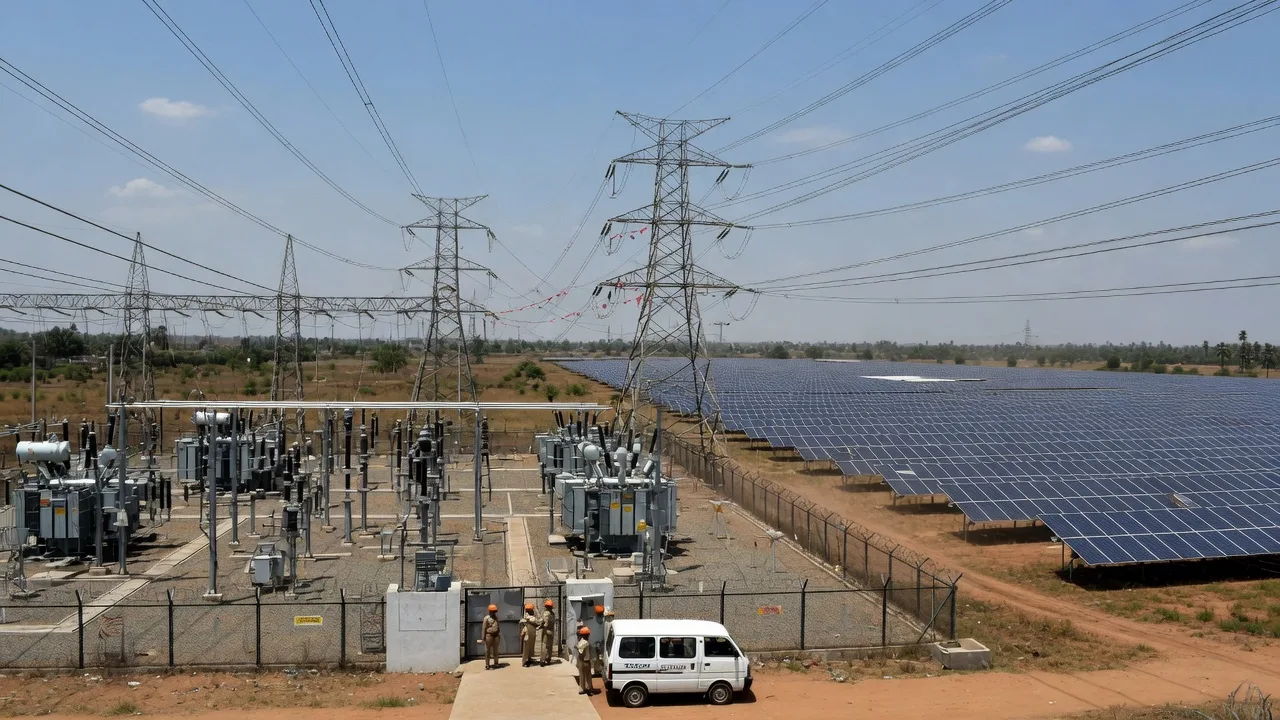
India's fast-growing solar capacity is putting new stress on the country's power grid, according to a paper from the Economic Advisory Council to the Prime Minister (EAC-PM). The report, covered by Business Standard, warns that without changes to grid operations and market design, the problem will get worse.
Solar power now makes up a big share of India's electricity generation during daylight hours. But that creates a sharp drop in supply when the sun goes down, a phenomenon grid operators call the "duck curve." The steep evening ramp-up forces coal and gas plants to start and stop quickly, which is costly and hard on equipment.
The EAC-PM paper says the grid's ability to handle this variability is being stretched. It points to rising frequency fluctuations and a greater need for rapid-response backup power. Some regions have already seen grid operators order cuts to solar generation to keep the system stable, a move that wastes clean energy and hurts project returns.
India's solar capacity has grown fast. Installed solar stood at roughly 73 GW as of early 2025, up from just 2.6 GW a decade ago. The government wants 500 GW of non-fossil fuel capacity by 2030, with solar expected to supply most of that. But the paper argues that adding more solar without fixing grid infrastructure and market rules will create bigger problems.
The report calls for several changes. It says India needs better forecasting of solar output, more flexible power plants, and a bigger role for energy storage, both batteries and pumped hydro. It also urges a revamp of power purchase agreements to reward plants that can ramp up and down quickly, not just those that run all the time.
Grid-scale battery storage is still tiny in India. The government has offered subsidies and set targets, but costs remain high. The paper notes that without storage, solar's value to the grid falls sharply once its share of total generation passes a certain point. That threshold, the report suggests, may already be close in some states.
The EAC-PM paper also flags problems with the way India's power markets work. Most solar power is sold under long-term contracts that guarantee a fixed price. That leaves little room for price signals that could encourage solar plants to cut output when the grid is at risk. The report recommends moving toward more real-time pricing and shorter-term contracts.
Grid operators are already taking steps. The National Load Despatch Centre has started issuing more frequent alerts about solar variability. Some states are testing systems that let operators remotely curtail solar farms when needed. But the paper says these are stopgap measures, not long-term solutions.
The report comes as India pushes hard on renewable energy targets. The government sees solar as central to its climate goals and its plan to cut dependence on coal. But the EAC-PM paper is a clear signal that the transition brings its own technical challenges.
For now, the grid is coping. But the paper warns that without action, the stress will only grow, and the risk of blackouts or costly emergency measures will rise along with it.
Comments
Be the first to comment.
Leave a comment