Agrivoltaics in India: Solar Panels and Crops on the Same Land
Drishti IAS examines how pairing solar panels with farmland could ease India's land squeeze, and where the practical snags lie.
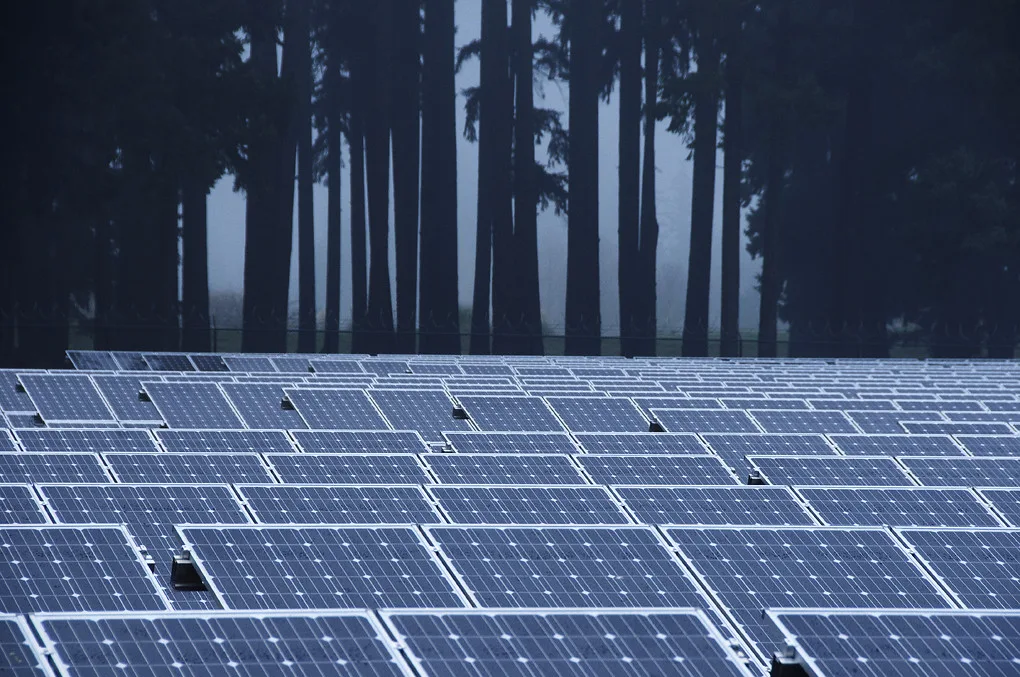
India needs land for solar. It also needs land for food. Agrivoltaics, the practice of growing crops under or between solar panels, sits at the centre of that squeeze, and Drishti IAS took up the subject in a piece published on 13 November 2026.
The idea is simple enough. Panels go up. Crops keep growing underneath. The same plot does two jobs.
That matters in a country where large solar parks have run into land acquisition trouble, and where farmland is already fragmented and heavily worked. Drishti IAS frames agrivoltaics as a way to cut the competition for land rather than add to it.
What the panels do to the crops
Panels don't just sit there. They change the field. Shade under the array lowers the temperature at ground level and cuts evaporation, which can help water-hungry crops in dry stretches. Not every crop likes it. The ones that do best are typically shade-tolerant, and the ones that don't will struggle.
There's a trade-off on the solar side too. Panels raised high enough for a tractor or a person to work beneath cost more to mount than ground-level arrays. Row spacing eats into the density of the installation, so output per acre drops.
Drishti IAS lays out the balance plainly: more land efficiency, less energy per hectare.
Why the timing matters
India has set steep renewable energy targets, and solar has carried most of that build-out. Most of it has gone onto open ground. Rooftop has lagged. That leaves farmland as the obvious next frontier, and it puts agrivoltaics in the middle of the policy argument over how to hit the targets without taking cultivable land out of production.
The Drishti IAS piece points to the dual-income angle as well. A farmer with a solar array on part of the field gets a power or lease income stream alongside the harvest. That cushion matters in a sector where a single bad monsoon can wipe out a year.
The snags
None of this is plug-and-play. The article flags several practical hurdles:
- Higher upfront cost for elevated mounting structures and wider row spacing.
- Limited crop choices, since shade tolerance varies widely.
- Maintenance access for panels and for farm machinery on the same plot.
- Unclear land-use rules in several states, which can stall projects before they start.
There's also the question of who owns the arrangement. A farmer leasing land to a developer is in a different position from a farmer who owns the panels and sells the power. The economics shift depending on which model is in play.
Where it stands
Agrivoltaics in India is still mostly at the pilot and demonstration stage. Drishti IAS treats it as a promising route rather than a settled one, and that's a fair read. The concept has backing in principle from the renewable energy push. The hard part is making the numbers work on a real farm, with a real crop, in a real monsoon.
The article's own framing puts the test in plain terms: whether the land can pay for itself twice over, or whether the panels simply crowd out the plough.
Source: Drishti IAS · 13 Nov 2026
Comments
Be the first to comment.
Leave a comment