
Alfanar and Senvion Pledge Deeper Localisation for India Wind Sector
At the Powering the Next Era event, the two companies said they will step up domestic sourcing of wind turbine components, backing India's clean energy push.
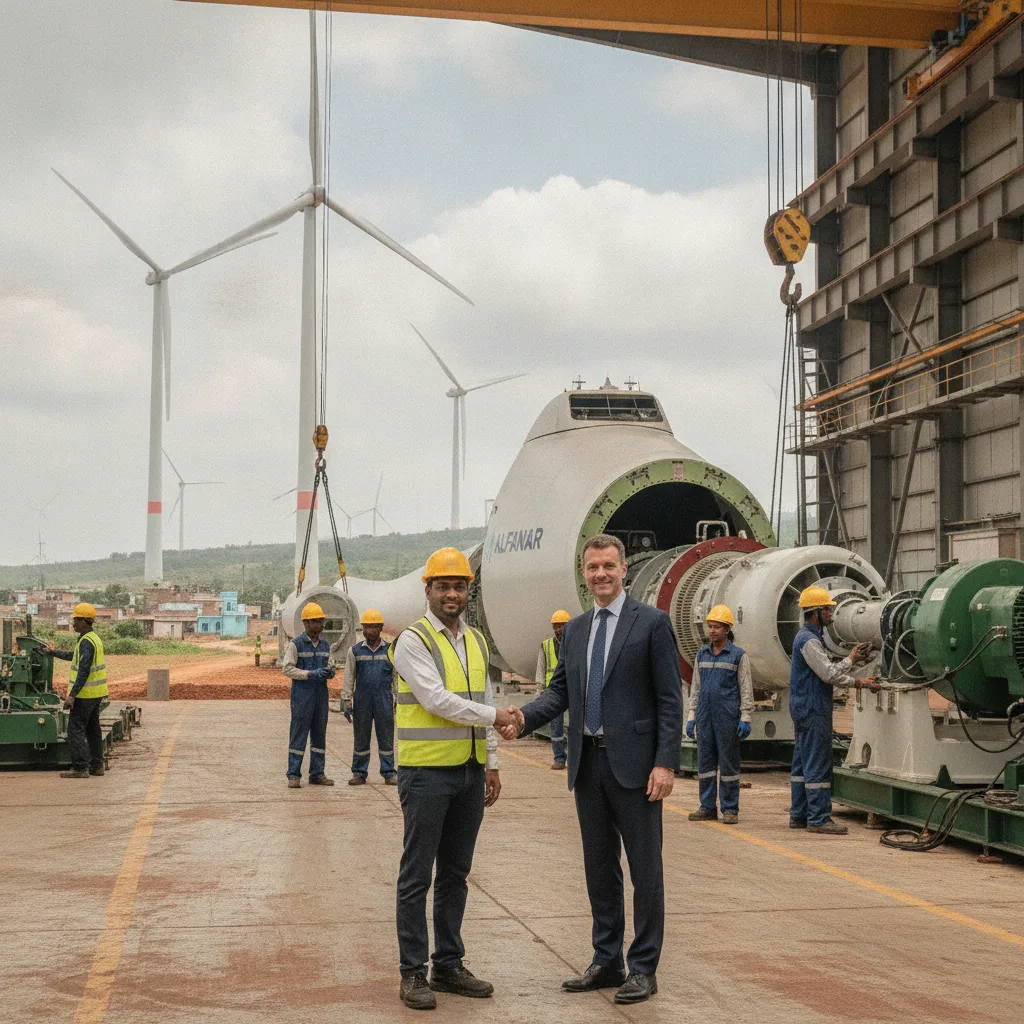
NEW DELHI, Alfanar and Senvion have reaffirmed their plans to push localisation deeper into India's wind energy supply chain. The announcement came at the Powering the Next Era event, organised by Energetica India Magazine.
Both companies said they will increase the share of Indian-made components in their wind turbines. The move aligns with the government's push to cut import dependence and build a self-reliant renewable energy industry.
Alfanar, a Saudi-based energy and infrastructure group with a growing wind portfolio in India, said it sees local manufacturing as key to lowering costs and speeding up project timelines. Senvion, a German wind turbine maker with a factory in India, said it will expand its domestic supplier base for towers, blades, and electrical systems.
India already has a large wind energy base. The country ranks fourth globally in installed wind capacity, with over 44 gigawatts. But the sector has struggled with slow project execution and supply chain bottlenecks. Localisation could help fix that.
What localisation means on the ground
For Alfanar and Senvion, localisation is not new. Both companies have been sourcing parts from Indian vendors for years. But the new pledge goes further. They plan to bring more high-value components, such as gearboxes and generators, under domestic production.
This shift matters for job creation. A localised supply chain means more factories, more engineers, and more skilled workers in states like Gujarat, Tamil Nadu, and Karnataka, where wind farms are concentrated.
It also helps with costs. Imported parts face duties and shipping delays. Making them in India can cut turbine prices by 10 to 15 percent, industry experts say. That would make wind power cheaper than coal in more parts of the country.
Senvion's Indian arm has already started work on a new blade manufacturing line. Alfanar is scouting locations for a nacelle assembly plant. Both projects are expected to be operational within 18 months.
Policy push behind the shift
The government's Production Linked Incentive scheme for wind energy has given companies a reason to localise. The scheme offers financial rewards for boosting domestic value addition. Alfanar and Senvion are among the firms that have applied for it.
India also wants to add 10 GW of wind capacity every year until 2030. That target requires a steady flow of turbines. Without local factories, meeting that goal would be hard.
Wind energy faces competition from solar, which has seen faster cost drops. But wind has an edge: it runs at night and during monsoons, when solar output dips. A mix of both is needed for grid stability.
Alfanar and Senvion said they will work with small and medium Indian suppliers to help them meet global quality standards. That includes training workers and sharing technical know-how.
The event also touched on challenges. Land acquisition remains a hurdle. So does grid connectivity. But the companies said localisation can solve one part of the puzzle.
"We are committed to making in India for the world," a Senvion representative said at the event. Alfanar's team echoed that, saying their Indian operations will serve as a hub for exports to South Asia and the Middle East.
The two companies did not give a timeline for hitting a specific localisation percentage. But they said the share of Indian content in their turbines will rise with each new model they launch.
Comments
Be the first to comment.
Leave a comment