
Ethanol push gains ground as automakers shift focus from EVs
Indian automakers and fuel suppliers are moving beyond electric vehicles to ethanol-blended fuels, driven by policy support and the need for a diversified clean-energy mix.
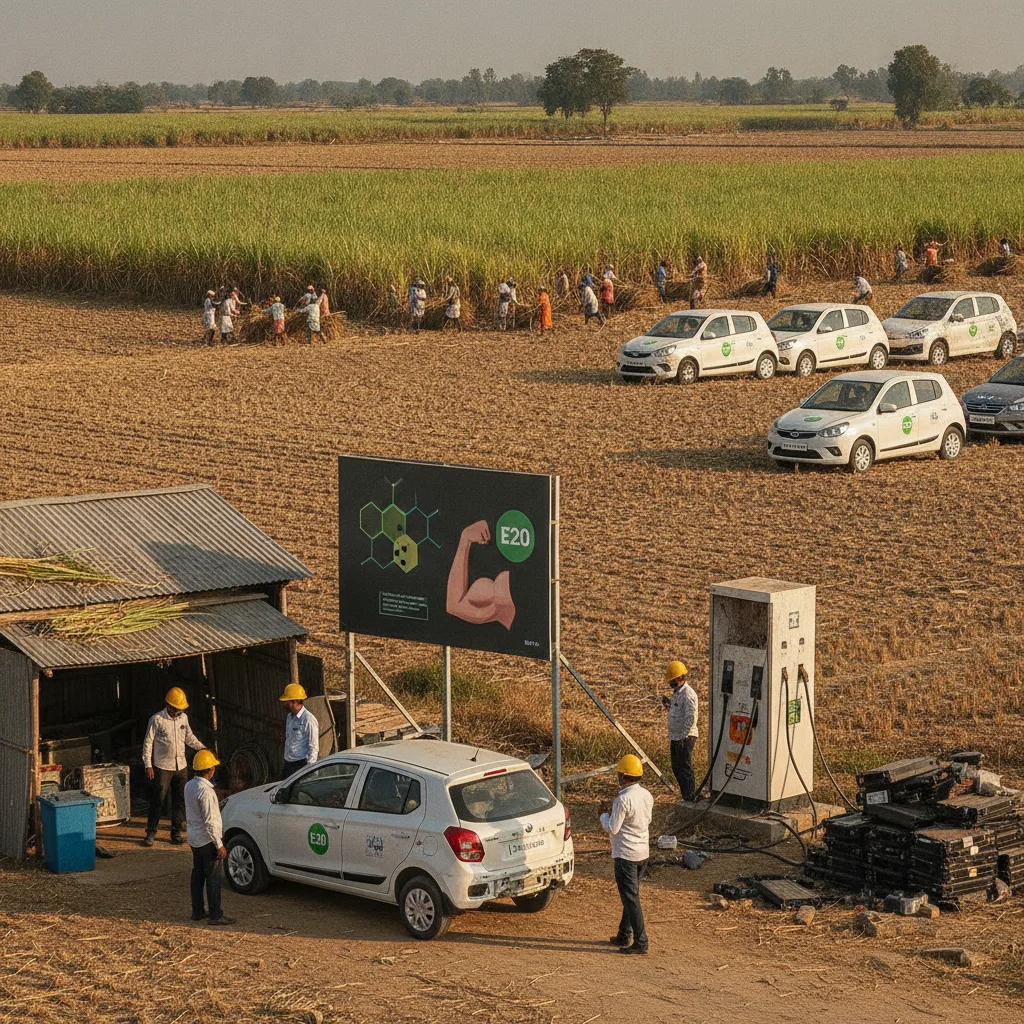
NEW DELHI, The Indian auto sector is turning a new corner. After years of focus on electric vehicles, the industry is now putting serious weight behind ethanol.
Automakers, fuel companies, and policymakers are all looking at ethanol as a practical bridge fuel. It can cut emissions without requiring a complete overhaul of existing engines or refueling networks.
"Ethanol blends offer a way to decarbonise the existing fleet faster than a full EV switch," said a senior official from the Society of Indian Automobile Manufacturers, speaking on condition of anonymity. "The infrastructure is already there."
India currently blends about 10% ethanol with petrol. The government wants to hit 20% by 2025. That target is driving investment from both car companies and oil marketers.
Car makers test flex-fuel engines
Several automakers are now developing flex-fuel engines. These can run on any mix of petrol and ethanol, from E10 to E85.
Toyota Kirloskar Motor has already started trials on a flex-fuel version of its popular Hyryder SUV. Maruti Suzuki is testing an ethanol-compatible WagonR. Both companies have said flex-fuel cars could hit showrooms within two years if fuel supply keeps up.
"We see ethanol as a complement to electric, not a competitor," said a Maruti Suzuki spokesperson. "Different customers need different solutions."
On the fuel side, Indian Oil Corporation has begun setting up ethanol pumps across major cities. The company plans to have 1,000 such stations by the end of 2024. Other public-sector oil firms are following suit.
Why ethanol now?
The push comes from multiple directions. First, India's sugar industry produces large amounts of molasses, a raw material for ethanol. Using it for fuel reduces waste and supports farmers.
Second, ethanol blending cuts tailpipe carbon monoxide and hydrocarbon emissions. It also lowers India's oil import bill. The country imports roughly 85% of its crude oil needs.
Third, the government sees ethanol as a way to meet its Paris Agreement climate targets without forcing a rapid shift to EVs, which still face range anxiety and high upfront costs.
"Ethanol is not a silver bullet, but it is a bullet we can fire right now," said a senior official at the Ministry of Petroleum and Natural Gas.
Challenges remain
Not everyone is convinced. Critics point out that ethanol has lower energy density than petrol. That means vehicles get fewer kilometres per litre. There are also worries about water use and land competition for food crops.
India's ethanol programme relies heavily on sugarcane. That crop uses large amounts of water. In drought-prone states like Maharashtra and Karnataka, this raises sustainability questions.
"Ethanol is better than nothing, but it is not a long-term solution," said an energy analyst at the Centre for Science and Environment. "The real answer is still electrification paired with renewable power."
Still, the momentum is real. Last month, the government approved a Rs 8,000-crore scheme to support second-generation ethanol plants. These use agricultural waste instead of food crops. The first such plant, in Panipat, is set to start production by mid-2025.
For now, the auto sector is keeping its options open. Electric vehicles, ethanol blends, and even hydrogen fuel cells are all on the table. The question is not which technology wins. It is how fast India can move away from fossil fuels.
Comments
Be the first to comment.
Leave a comment