
Grid congestion and land hurdles slow India's renewable energy push
A new analysis from Ember Energy points to transmission bottlenecks and land acquisition delays as the main barriers to India's next phase of clean power growth.
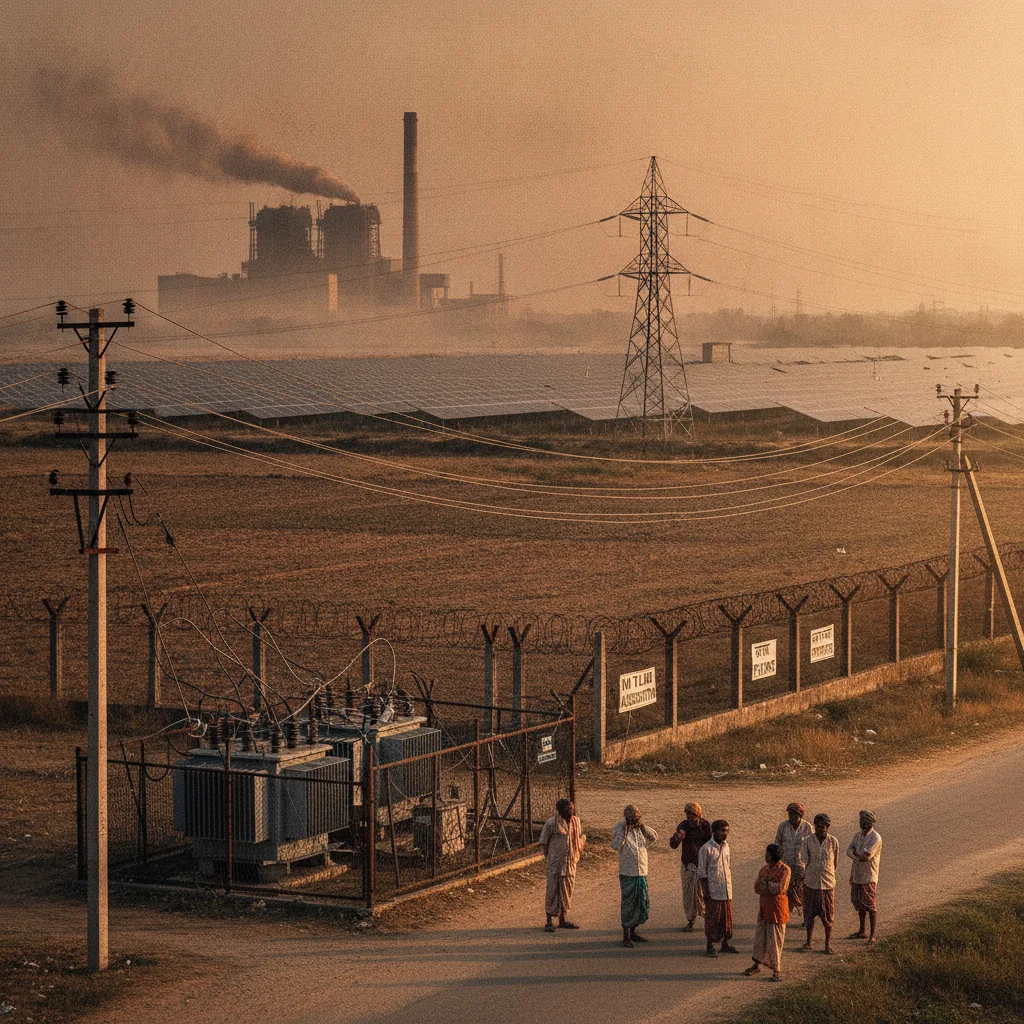
India's renewable energy sector is hitting a wall. After years of rapid growth in solar and wind power, the next phase of expansion is being slowed by two stubborn problems: grid congestion and land acquisition delays. That's the finding from a fresh analysis by Ember Energy, a global energy think tank.
The report says India added about 15 gigawatts of renewable capacity in the last fiscal year. That's a solid number. But the country needs to add nearly 50 gigawatts a year to meet its 2030 target of 500 gigawatts of non-fossil fuel capacity. The gap is wide.
Transmission is the choke point
The biggest bottleneck is the power grid. India's transmission network was built for a different era, one dominated by large coal plants near cities. Renewable energy, especially solar and wind, comes from far-flung areas. Rajasthan, Gujarat, Tamil Nadu, and Karnataka produce the bulk of the country's clean power. But the lines to carry that electricity to demand centers in Delhi, Mumbai, and other big cities are either full or missing.
Ember points to a simple fact: new solar and wind projects are getting approved but can't connect to the grid. Developers wait months, sometimes years, for transmission access. The result is a growing queue of stalled projects. The government has announced plans to build green energy corridors, but execution has been slow. Land acquisition for new transmission towers often sparks local disputes, adding years to timelines.
State utilities also drag their feet. Many are reluctant to sign power purchase agreements with renewable developers. They worry about the cost of backing up intermittent solar and wind with coal or hydro. That hesitation creates a second bottleneck: offtake uncertainty.
Land: scarce and contested
Land is the other big hurdle. Solar farms need vast tracts of flat, sunny land. Wind farms need ridgelines with steady breezes. Both compete with agriculture, forests, and urban sprawl. India's land records are often outdated. Ownership disputes are common. And state governments have their own rules, making it hard for developers to scale up across multiple states.
Some developers are turning to floating solar on reservoirs or agrivoltaics, combining solar panels with crops. But these solutions are still small in scale. The cost of acquiring land has jumped in recent years, squeezing project margins. Ember notes that many states have not yet set aside dedicated renewable energy zones, which would speed up approvals.
There's also the question of storage. As solar and wind share of the grid grows, the need for battery storage and pumped hydro becomes urgent. But storage projects face their own land and grid challenges. Without storage, the grid can't absorb more variable power without risking blackouts.
What the government is doing
The central government has taken some steps. It has launched a scheme to build 50 GW of renewable capacity with a bundled transmission system. It has also pushed for faster environmental clearances and single-window approval for projects. But Ember says these efforts have not yet changed the ground reality. The pace of new transmission line construction has actually slowed in the last two years.
State-level politics complicate things further. Some states with high renewable potential have imposed new tariffs or renegotiated old contracts. That spooks investors. India needs around $30 billion a year in clean energy investment. Right now, it's getting roughly half that.
Ember's take is blunt: India has the resources and the policy ambition. What's missing is the infrastructure and the institutional speed to match. Without fixing the grid and land problems, the 500 GW target will stay out of reach.
Comments
Be the first to comment.
Leave a comment