
IISD Report: Rural India Needs Policy Push for Distributed Renewable Energy
A new analysis from the International Institute for Sustainable Development says scaling distributed renewable energy in rural India requires targeted policies, better financing, and stronger local institutions.
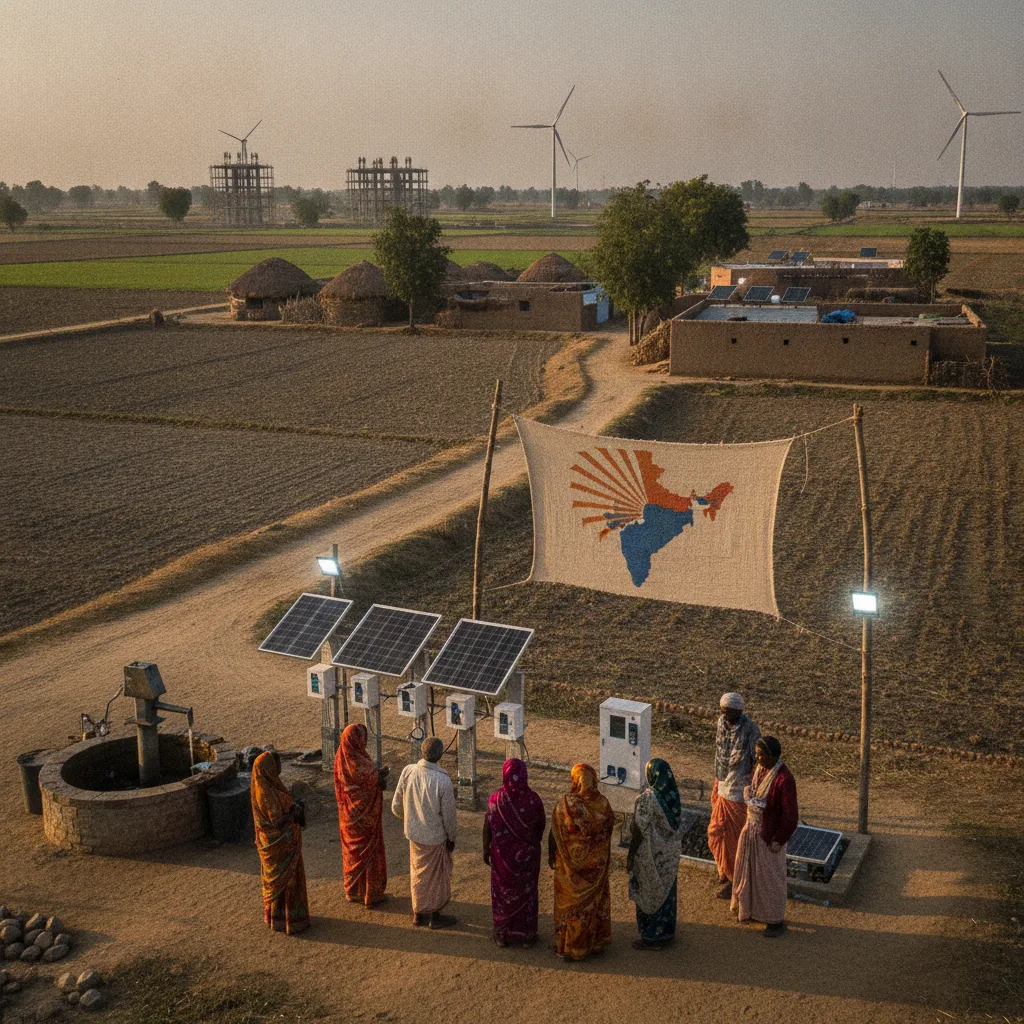
The International Institute for Sustainable Development (IISD) has released a report on scaling distributed renewable energy (DRE) in rural India. The findings point to a mix of policy gaps, financing hurdles, and institutional weaknesses that block wider adoption.
DRE systems, small solar units, mini-grids, and biomass plants, can power homes, farms, and small businesses off the main grid. India has pushed hard on big solar parks and wind farms. But rural areas still lag. The IISD report says DRE is critical for last-mile energy access and for cutting carbon emissions at the same time.
The report looks at three states: Uttar Pradesh, Bihar, and Rajasthan. These states have high rural populations and low electrification quality. Many villages get power for just a few hours a day. DRE could fill that gap.
But the numbers are small. The report notes that installed DRE capacity in these states remains a fraction of what is needed. Financing is a big reason. Banks see rural DRE projects as risky. Loan tenures are short. Interest rates are high. Developers struggle to get working capital.
Policy support exists on paper. The central government has schemes like the KUSUM program for solar pumps and the PM-KUSUM scheme for small solar plants. State governments have their own targets. But the report says implementation is patchy. Subsidies often arrive late. Bureaucratic delays kill project timelines.
Another problem is weak local institutions. Village panchayats and rural cooperatives lack the technical know-how to run DRE systems. Maintenance is poor. Many solar pumps and mini-grids break down within a year. Without local repair networks, they stay broken.
The IISD report recommends several fixes. First, create a dedicated DRE fund at the national level. This fund would offer low-interest loans and guarantees to developers and end-users. Second, simplify subsidy disbursement. Use direct benefit transfer so money reaches farmers and entrepreneurs fast. Third, train local technicians and set up spare-part supply chains in rural markets.
The report also pushes for better data. Right now, no single agency tracks DRE deployment in real time. The government should build a public dashboard showing installation, performance, and breakdown rates. This would help investors and policymakers spot problems early.
Tariff design matters too. Many mini-grid operators charge flat rates. That does not cover costs. The report suggests flexible tariffs, higher rates for commercial users, lower rates for households. Smart meters could make this work.
Rajasthan offers one bright spot. The state has tied DRE projects to its solar park infrastructure. Mini-grids near the Bhadla Solar Park get cheap land and grid connectivity. The report says other states could copy this model.
But the big takeaway is clear: India cannot reach its 500 GW renewable energy target by 2030 without rural DRE. Big projects alone will not fix the energy gap in villages. The IISD says the window for action is narrow. If policies do not change in the next two years, the rural DRE market may stall for a decade.
The report is based on field visits, interviews with developers and officials, and analysis of government data. It was released on March 18, 2025.
Comments
Be the first to comment.
Leave a comment