India becomes world's third-largest renewable energy capacity holder: Joshi
Union Minister Pralhad Joshi announced that India now ranks third globally in installed renewable energy capacity, behind only China and the United States.
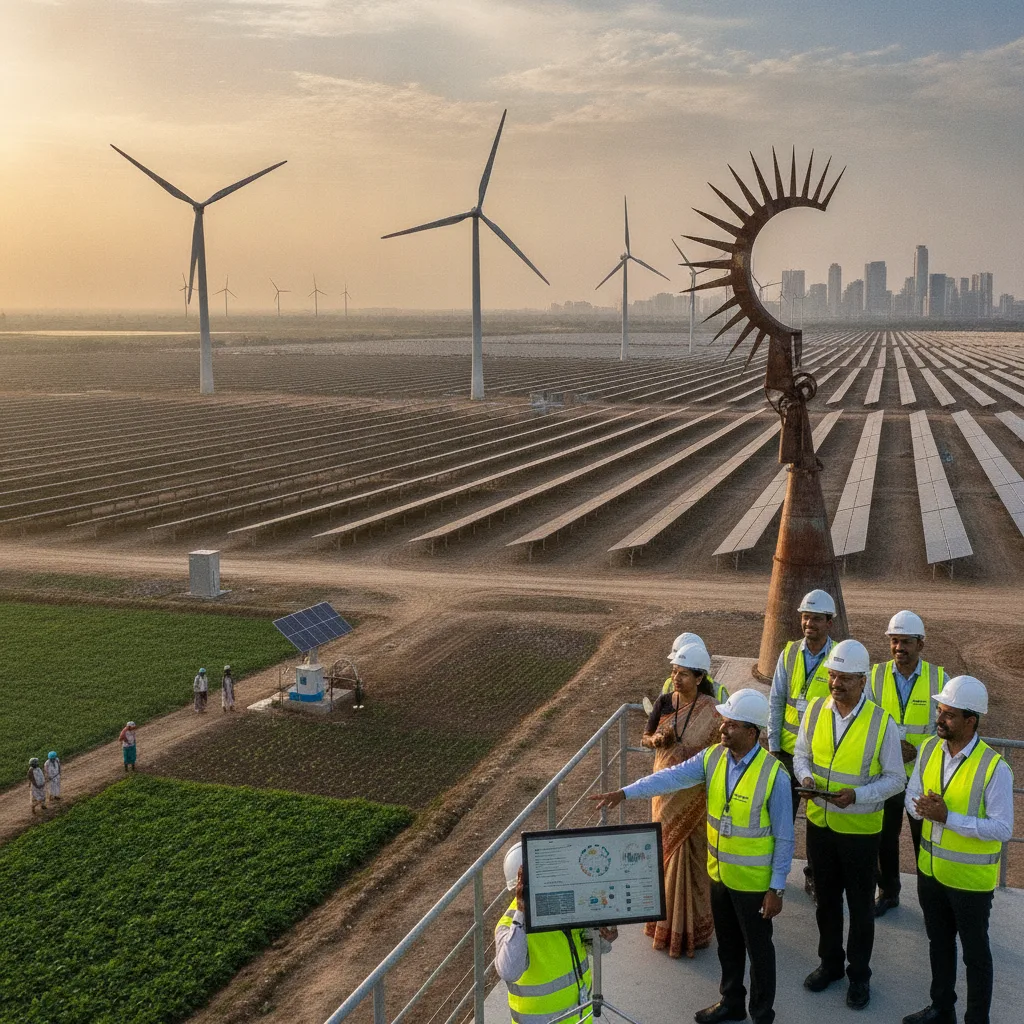
India has become the world's third-largest renewable energy capacity holder, Union Minister for New and Renewable Energy Pralhad Joshi said on Thursday. The announcement came via a post on X, shared by the official DD News handle.
Joshi's statement places India behind only China and the United States in total installed renewable energy capacity. The minister did not release a specific updated figure for total capacity, but government data from earlier this year put it at over 200 gigawatts (GW).
The milestone covers capacity from solar, wind, biomass, and small hydro projects. India has set a target of 500 GW of non-fossil fuel energy capacity by 2030.
Solar power has driven much of the recent growth. As of October 2024, India's installed solar capacity stood at roughly 90 GW, with utility-scale solar farms and rooftop installations both expanding quickly. Wind power accounts for about 47 GW.
The government has pushed a mix of policies to speed up renewable deployment. These include production-linked incentives for solar manufacturing, green energy open access rules for industrial buyers, and a national hydrogen mission that aims to make India a hub for green hydrogen production.
Joshi's announcement comes at a time when global renewable capacity additions are breaking records. The International Energy Agency reported in early 2025 that the world added nearly 560 GW of renewable capacity in 2024, with China alone accounting for more than half of that. India added roughly 25 GW last year, the third-highest national total.
Despite the strong showing, challenges remain. Land acquisition for large solar and wind parks has slowed projects in states like Rajasthan and Gujarat. Grid integration of variable renewable power also needs upgrades. The government has floated plans for massive battery storage tenders and pumped hydro projects to address this.
India still relies on coal for about 70% of its electricity generation. Peak power demand hit a record 250 GW this summer, pushing coal-fired plants to run at high capacity. Officials say renewable growth must accelerate to meet both climate goals and rising demand from a growing economy.
The third-place ranking puts India ahead of Germany and Brazil, two countries that have long invested heavily in clean energy. Germany's renewable capacity is around 160 GW, while Brazil's is roughly 180 GW, mostly from hydropower.
Joshi's statement did not include a timeline for when India might move up to second place. The gap with the United States, which has about 400 GW of renewable capacity, remains wide.
Comments
Be the first to comment.
Leave a comment