
India bets on dual mobility strategy as ethanol and electric vehicles move forward together
The government is pushing both ethanol blending and electric vehicles at the same time, aiming to cut oil imports and lower emissions without picking winners.
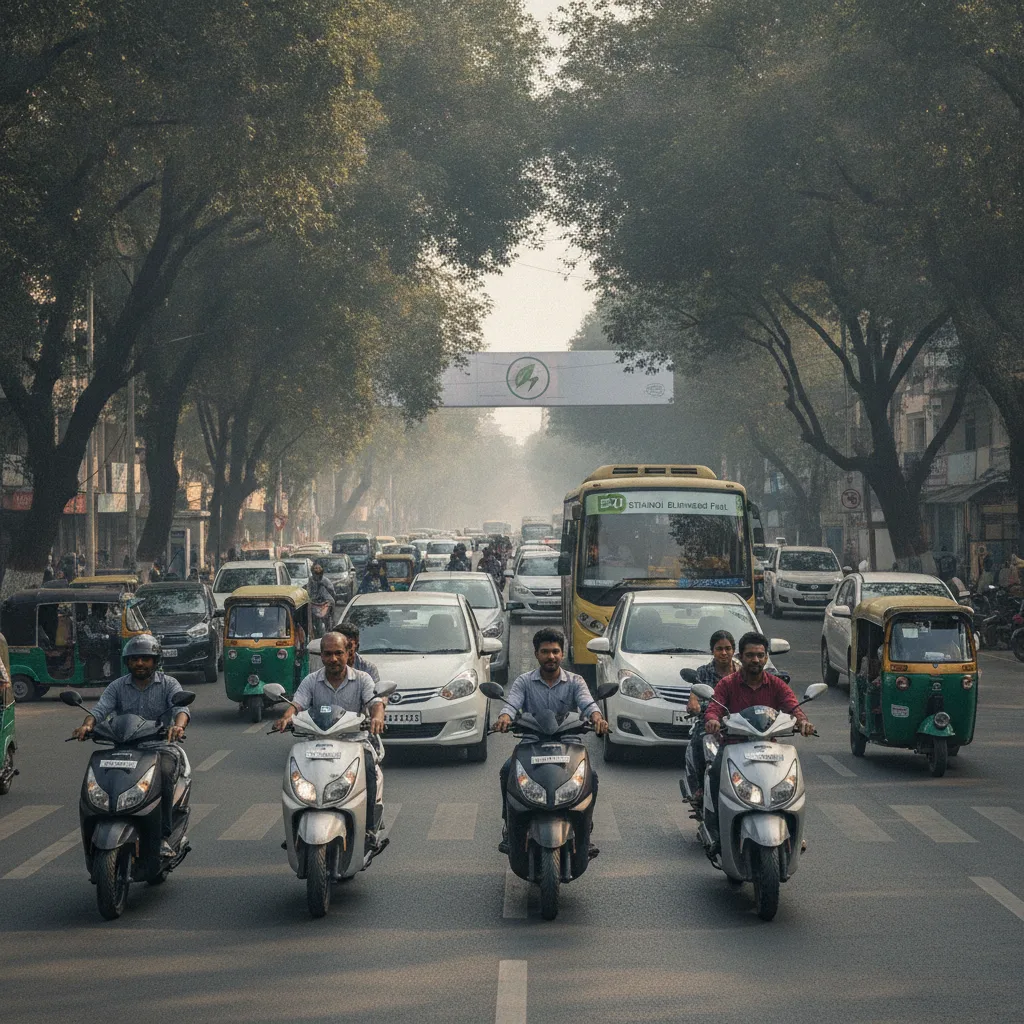
NEW DELHI, India is not putting all its eggs in one basket. The government is pushing ahead with a dual mobility strategy that backs both ethanol-blended fuel and electric vehicles. The idea is simple: cut the country's massive oil import bill and bring down tailpipe emissions without betting everything on a single technology.
Ethanol, made from sugarcane and other farm produce, already gets mixed with petrol. The government wants to raise the blending share to 20 percent by 2025. That target was moved up from 2030. At the same time, the Faster Adoption and Manufacturing of Hybrid and Electric Vehicles scheme, known as FAME, hands out subsidies to buyers of electric two-wheelers, three-wheelers, and buses.
The dual approach has practical roots. India has a large sugar industry that can supply ethanol. Farmers get an extra source of income. Sugar mills get a steady buyer. The government gets a way to use surplus cane without piling up sugar stocks. On the other side, electric vehicles offer a long-term path to zero tailpipe emissions. They also reduce dependence on imported crude oil, which covers more than 80 percent of India's needs.
Policy push and industry response
In 2023, the Ministry of Petroleum and Natural Gas announced that oil marketing companies would set up 400 new ethanol pumps across the country. The Ministry of Heavy Industries extended FAME II until March 2024, with a total outlay of 10,000 crore rupees. Both moves show the government wants to keep both tracks alive.
Automakers are responding. Maruti Suzuki sells cars that run on E20, a blend of 20 percent ethanol and 80 percent petrol. Tata Motors and Mahindra & Mahindra are rolling out more electric models. Two-wheeler makers like Ola Electric and Ather Energy have scaled up production. The ethanol industry, led by groups like the Indian Sugar Mills Association, has invested in new distillation capacity.
But the dual strategy comes with tensions. Ethanol blending competes with food crops for land and water. India faced a sugar shortage in 2023 after erratic rainfall, and the government had to restrict exports. Electric vehicles depend on lithium-ion batteries, which are mostly imported from China. A supply chain shock could stall the EV push.
Some experts argue that the two paths could complement each other. Ethanol can power hybrid vehicles, which need smaller batteries and less charging infrastructure. Electric vehicles can run on renewable electricity, which is growing fast in India. Solar and wind capacity now exceed 170 gigawatts, and the government aims for 500 gigawatts of non-fossil capacity by 2030.
Numbers on the road
Sales data shows the shift is real but uneven. Electric vehicle sales crossed 1.5 million units in 2023, up from about 1 million in 2022. Two-wheelers made up the bulk. Electric car sales remain low, at around 80,000 units, partly due to high upfront costs and limited charging stations. Ethanol blending reached about 11.5 percent of petrol in the 2022-23 supply year, up from 1.5 percent in 2014. The government says the 20 percent target is on track.
The Ministry of Road Transport and Highways has also allowed sale of E100, pure ethanol, for flex-fuel vehicles. That opens the door for carmakers to offer models that can run on any ethanol-petrol mix. The policy is voluntary, but it signals that the government sees ethanol as a long-term option, not just a stopgap.
Critics point out that ethanol has lower energy density than petrol, so vehicles get fewer kilometers per liter. That means more stops at the pump. Electric vehicles have range anxiety and long charging times. Both technologies still face hurdles. The government seems willing to let the market sort out which one wins, or if both can coexist.
The dual strategy also has a political dimension. The ruling party draws support from rural areas where sugarcane is a key crop. Promoting ethanol helps farmers. At the same time, urban voters, who face some of the worst air pollution in the world, want cleaner transport. Electric vehicles appeal to that group. By backing both, the government spreads the benefits and the risks.
For now, India is keeping its options open. The next few years will show whether the two tracks can run in parallel or whether one will pull ahead.
Comments
Be the first to comment.
Leave a comment