
India's green energy paradox: record solar, falling wind
India added more renewable capacity than ever in 2023, but wind power growth stalled and coal still dominates the grid.
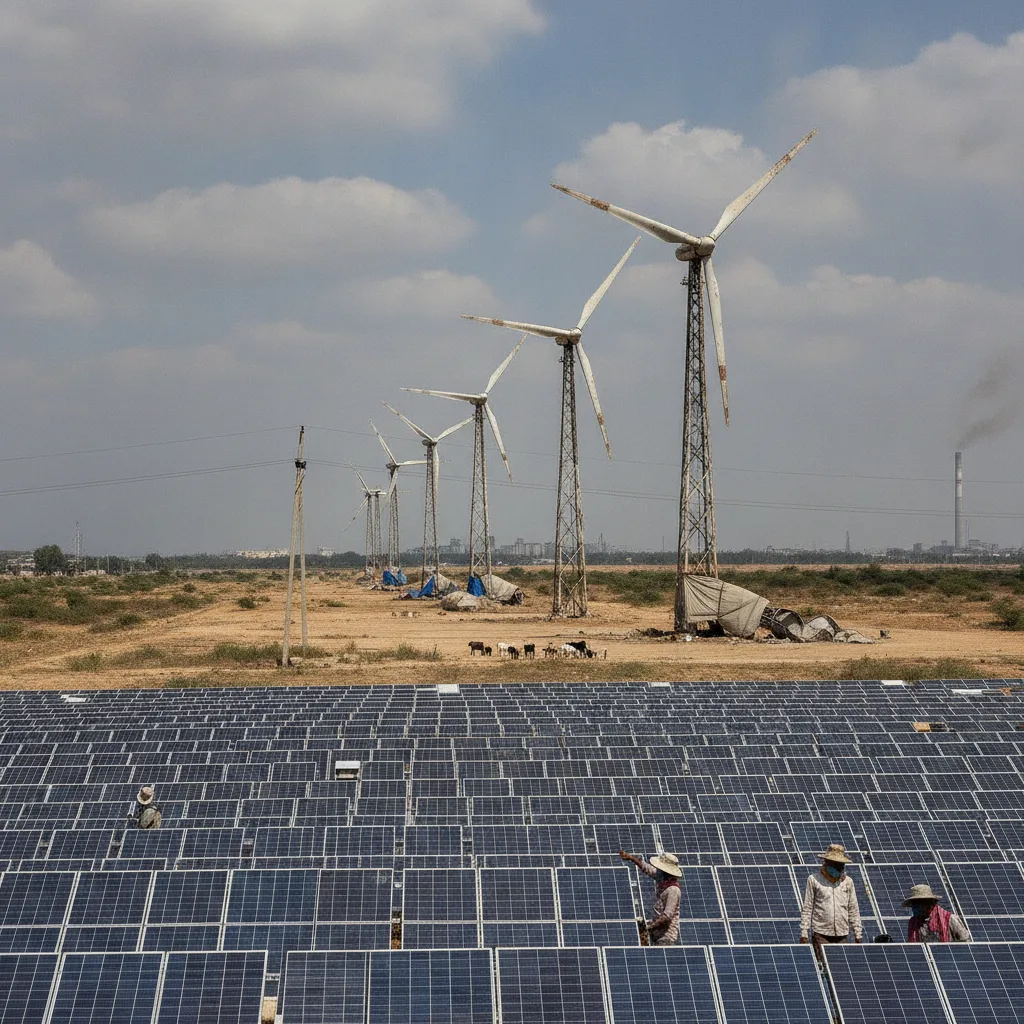
India added a record 18.5 GW of renewable energy capacity in the financial year ending March 2024. That is a jump of over 30% from the previous year. But look closer at the numbers, and a paradox emerges.
Solar power drove almost all of that growth. Wind energy, once a pillar of India's clean energy push, added just 2.3 GW. That is less than half of what the government had targeted for the year. The gap between solar and wind is widening fast.
Solar surges, wind stalls
Solar capacity now makes up more than 60% of India's total renewable energy mix. Large utility-scale projects and a boom in rooftop solar are behind the surge. The government's production-linked incentive scheme for solar modules has also helped domestic manufacturing.
Wind, by contrast, faces headwinds. Land acquisition remains a bottleneck. So does grid connectivity in windy states like Gujarat and Tamil Nadu. The auction pipeline for wind projects has shrunk. Developers say tariffs are too low to cover rising turbine and logistics costs.
India's total renewable capacity stands at about 180 GW. Solar accounts for roughly 75 GW. Wind is around 45 GW. The rest comes from small hydro, biomass, and waste-to-energy.
Coal still king
Despite the record additions, coal-fired power plants ran at over 70% capacity in 2023. That is the highest average plant load factor in a decade. Electricity demand grew by nearly 8% last year, and renewables could not keep pace. India added about 5 GW of new coal capacity in the same period.
The government has set a target of 500 GW of non-fossil fuel capacity by 2030. To get there, India needs to add roughly 50 GW of renewable capacity every year. The current pace falls short.
State-level splits
The paradox is not uniform across India. Gujarat and Rajasthan lead in solar. Karnataka and Tamil Nadu top the wind charts. But some states are pulling back. Andhra Pradesh has renegotiated power purchase agreements, scaring off investors. Uttar Pradesh, despite high solar potential, has added little.
Transmission infrastructure is another weak link. The Green Energy Corridor project, meant to carry renewable power from windy and sunny states to demand centers, is behind schedule. Power evacuation remains a problem in many regions.
Storage missing
Solar power is cheap during the day but vanishes at night. Wind is erratic. Without large-scale battery storage, the grid cannot absorb high shares of renewables. India has less than 100 MWh of grid-scale battery storage operational. The government has announced a viability gap funding scheme for 4,000 MWh of battery storage, but projects are still in the planning stage.
Pumped hydro storage, which uses water reservoirs to store energy, is more mature. India has about 3.3 GW of pumped hydro capacity. But new projects take years to clear environmental and land-use approvals.
What the numbers mean
The central electricity authority projects that India will need 8 GW of battery storage and 10 GW of pumped hydro by 2030 to meet its renewable targets. At current deployment rates, that looks ambitious.
India's green energy paradox is this: record additions, but a growing gap between target and reality. Solar is booming, but wind is stalling. Coal is not retreating. And without storage, the clean energy surge may not clean the grid as fast as planned.
Comments
Be the first to comment.
Leave a comment