
India's Next Crisis: Electricity Demand Outstrips Supply
A new analysis warns that India's power grid faces a structural crunch as peak demand grows faster than generation capacity, shifting the energy debate from fuel scarcity to electricity availability.
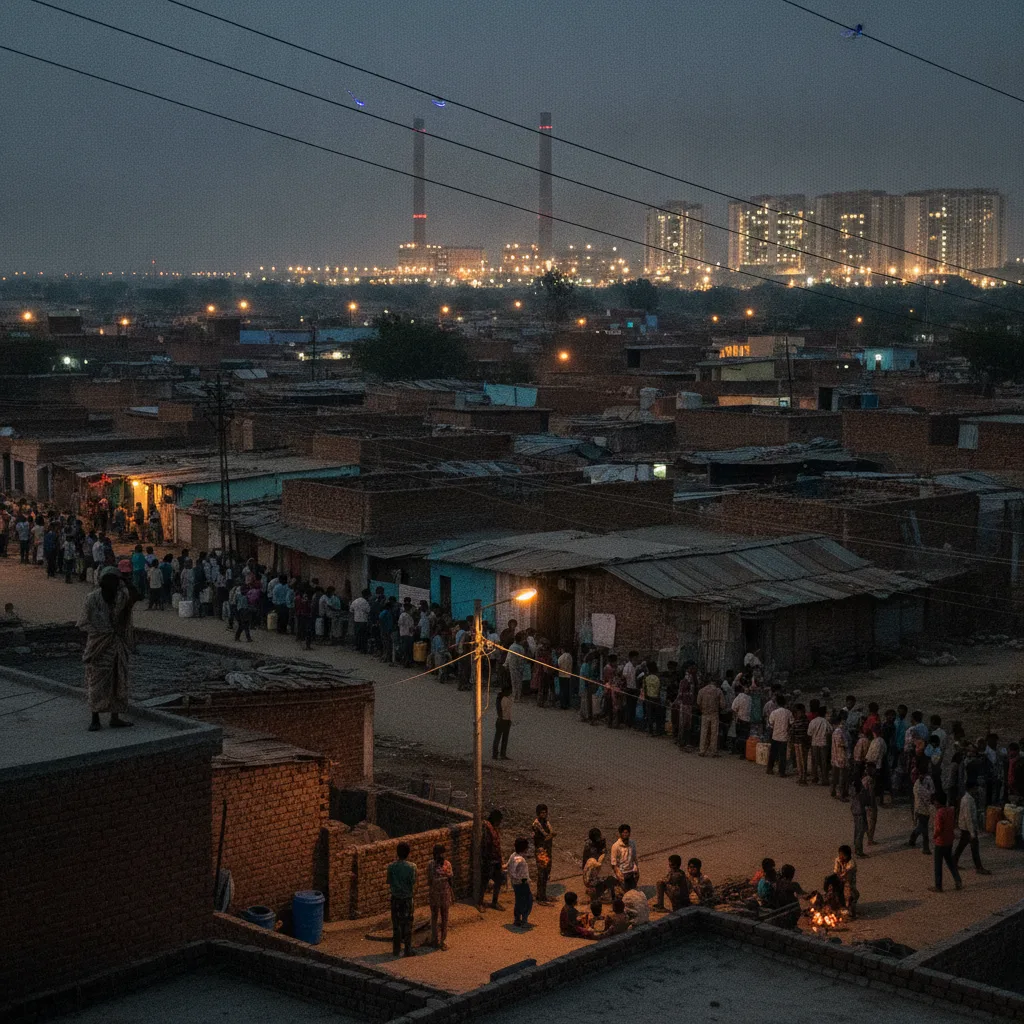
For years, India's energy worries centered on coal and oil. Not anymore. A new report from Open Magazine argues the country's next big crisis is about electricity itself, not the fuel to make it.
The analysis points to a simple, stark fact: India's peak power demand is rising far faster than its ability to generate and deliver electricity. In 2023, the country saw its highest-ever peak demand of 243 gigawatts. The government had to scramble to avoid blackouts. That scramble, the report says, will only get harder.
Demand growing faster than supply
India's electricity demand grew by roughly 10% in the last financial year. That is more than double the average global rate. The reasons are clear: a booming economy, more factories, more air conditioners, and millions of people moving into cities. Add in extreme heat waves, and the grid buckles.
Open Magazine notes that while India has added a lot of renewable energy, solar and wind capacity has tripled in the last five years, that power is not always available when needed. Solar farms stop producing at sunset. Wind farms go quiet on still days. The grid still depends on coal for about 70% of its electricity. But coal plants are aging. Many run below capacity because they cannot get enough coal or water.
Coal plants are not the answer
The report says building new coal plants takes five to seven years. That is too slow to match demand growth. Meanwhile, India's plan to add 500 GW of renewable capacity by 2030 is ambitious. But storage, batteries or pumped hydro, remains expensive and underbuilt. Without storage, solar and wind cannot replace coal during peak hours, especially in the evening when demand spikes.
The government has ordered older coal plants to keep running. It has also pushed for more hydropower and nuclear. But hydropower is limited by geography and monsoons. Nuclear projects face long delays and high costs.
A crisis of planning, not just capacity
Open Magazine highlights a deeper problem: the way India plans its power supply. State-owned distribution companies are often broke. They do not sign enough long-term power purchase agreements. Private investors hesitate to build new plants without guaranteed buyers. The result is a gap between what the grid needs and what gets built.
In 2022, India faced its worst power shortage in six years. States from Uttar Pradesh to Tamil Nadu imposed rolling blackouts. The report warns that without big changes, those blackouts will become routine.
One fix is to speed up battery storage projects. Another is to make the grid smarter, using software to shift demand away from peak hours. The report also calls for better coordination between states, because power moves across state lines, and one state's shortage can hit another.
For now, the numbers tell the story. India's peak demand is projected to hit 277 GW by 2027. Current plans add only about 50 GW of reliable capacity in that time. The gap is real. And it is not about fuel. It is about electricity.
Comments
Be the first to comment.
Leave a comment