
India's wind energy push faces land and grid hurdles
While India ranks fourth globally in wind power capacity, land acquisition and grid integration remain key challenges.
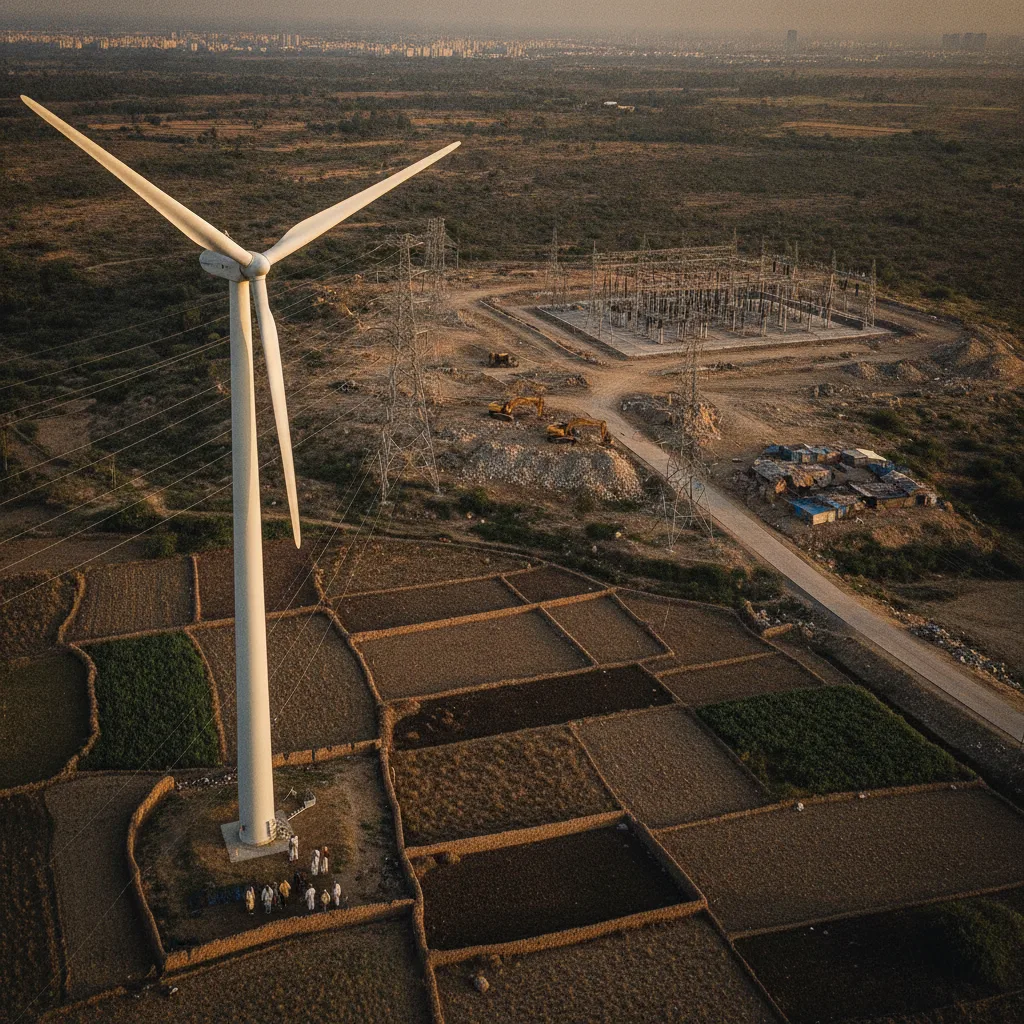
India's wind power landscape
India has installed over 42.8 GW of wind energy capacity as of 2023, making it the world's fourth-largest wind power producer after China, the US and Germany. The southern states of Tamil Nadu, Karnataka and Andhra Pradesh lead in installations, with Tamil Nadu alone contributing nearly 25% of the national total.
Growth drivers
The government's 2018 wind-solar hybrid policy and competitive tariff bidding have accelerated projects. Gujarat's 30 GW offshore wind target by 2030 aims to tap the 70-meter-high wind masts now being installed along its coast. Suzlon Energy and ReNew Power dominate the market with 13 GW and 2 GW of installed capacity respectively.
Persistent challenges
Land acquisition remains the biggest bottleneck - each MW of wind power requires 1-2 acres. Farmers in Maharashtra and Rajasthan increasingly resist long-term land leases. Grid congestion forces Tamil Nadu wind farms to curtail 15-20% of their output during monsoon peaks. The lack of energy storage means 34% of generated wind power gets wasted during low-demand periods.
Supply chain issues linger too. India still imports 60% of wind turbine components despite the phased manufacturing program. The 6-8 month delay in environmental clearances for forest land projects adds costs.
Policy moves
The Ministry of New and Renewable Energy (MNRE) now allows wind-solar hybrids to use the same grid connection. Its new 'rent-a-roof' scheme promotes small wind turbines on urban buildings. The draft National Electricity Plan targets 100 GW wind capacity by 2032 - but analysts say this requires solving land and storage issues first.
Comments
Be the first to comment.
Leave a comment