
IWTMA Calls for Export-Led Strategy to Make India a Global Wind Turbine Hub
The Indian Wind Turbine Manufacturers Association urges the government to adopt an export-focused policy framework to turn the country into a global manufacturing base for wind turbines.
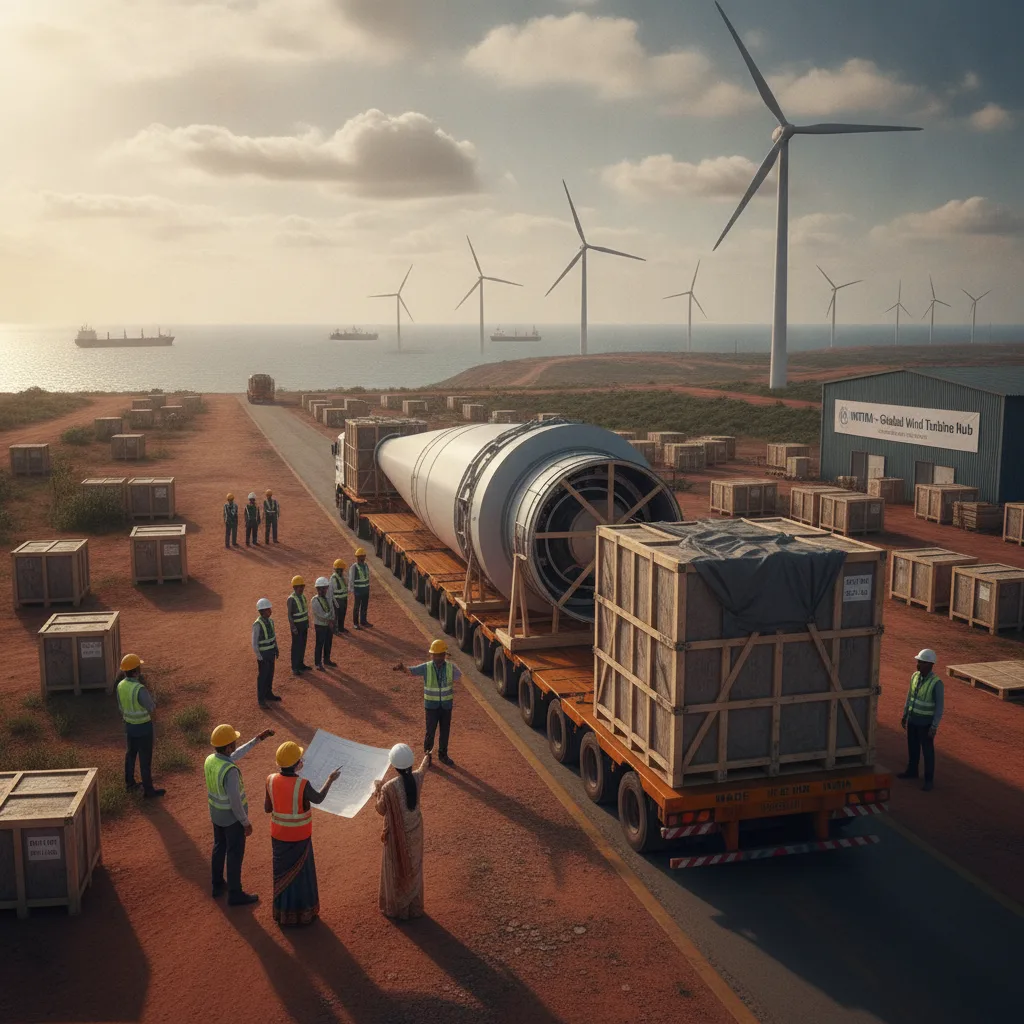
NEW DELHI, India can become a global hub for wind turbine manufacturing, but only if the government shifts to an export-led growth strategy. That is the central argument from the Indian Wind Turbine Manufacturers Association (IWTMA) in a new call to policymakers.
The industry body says India already has a strong base of component makers and turbine assemblers. What it lacks is a clear policy push to sell those machines abroad. Right now, most domestic production goes to meet local renewable energy targets.
IWTMA wants that to change. It argues that an export-first approach would bring in more foreign exchange, create jobs, and lower unit costs through scale. That would make Indian turbines cheaper and more competitive in global tenders.
Why exports matter now
The global wind market is growing fast. Countries in Europe, the Middle East, and Southeast Asia are all looking for reliable suppliers. China dominates the market today, but buyers want alternatives.
India has natural advantages. It has a long coastline for testing and shipping. It has a well-established steel industry. And it has a growing network of small and medium suppliers who make blades, towers, gearboxes, and generators.
But those advantages don't automatically translate into exports. IWTMA points to several roadblocks. High logistics costs, inconsistent tax treatment across states, and a lack of dedicated port infrastructure for heavy wind turbine parts all hurt competitiveness.
The association also notes that Indian manufacturers lack the trade financing and export credit guarantees that rivals in China and Europe get from their governments.
What the government can do
IWTMA has laid out a set of demands. It wants the government to negotiate free trade agreements with key wind markets. It wants a single-window clearance system for export-oriented manufacturing units. And it wants the Renewable Energy Ministry to set a clear export target for wind turbines in the next national energy plan.
The association also calls for production-linked incentives specifically for export-grade turbines. Existing PLI schemes focus on domestic deployment. IWTMA says that leaves a gap for companies that want to build for foreign buyers.
Tax breaks on imported raw materials used in export production would help too. So would faster customs clearance at major ports like Mundra, Chennai, and Krishnapatnam.
The bigger picture
India has set a target of 500 GW of renewable energy capacity by 2030. Wind is supposed to contribute about 140 GW. But installations have slowed in recent years. Land acquisition issues, grid connectivity delays, and tariff uncertainty have all held back new projects.
An export push could change the math. If Indian factories run at higher capacity, costs fall. That makes wind power cheaper at home too. And it builds a supply chain that can survive even when the domestic market hits a rough patch.
IWTMA's pitch comes at a time when global supply chains are being rethought. Many countries want to reduce their reliance on a single source for clean energy equipment. India could step into that gap.
But the window won't stay open forever. Other manufacturing hubs, in Vietnam, Turkey, and Brazil, are also trying to grab a share of the export market. Speed matters.
IWTMA says the government should act within the next 12 to 18 months. A clear export-led strategy, backed by trade deals and infrastructure spending, could put India on the map as a serious wind turbine supplier. Without it, the country risks staying a domestic player in a global game.
Comments
Be the first to comment.
Leave a comment