
Wind-Solar Hybrids Offer Reliable Power for Indian Industry
A new analysis shows that combining wind and solar farms can cut power variability and lower costs for industrial buyers across India.
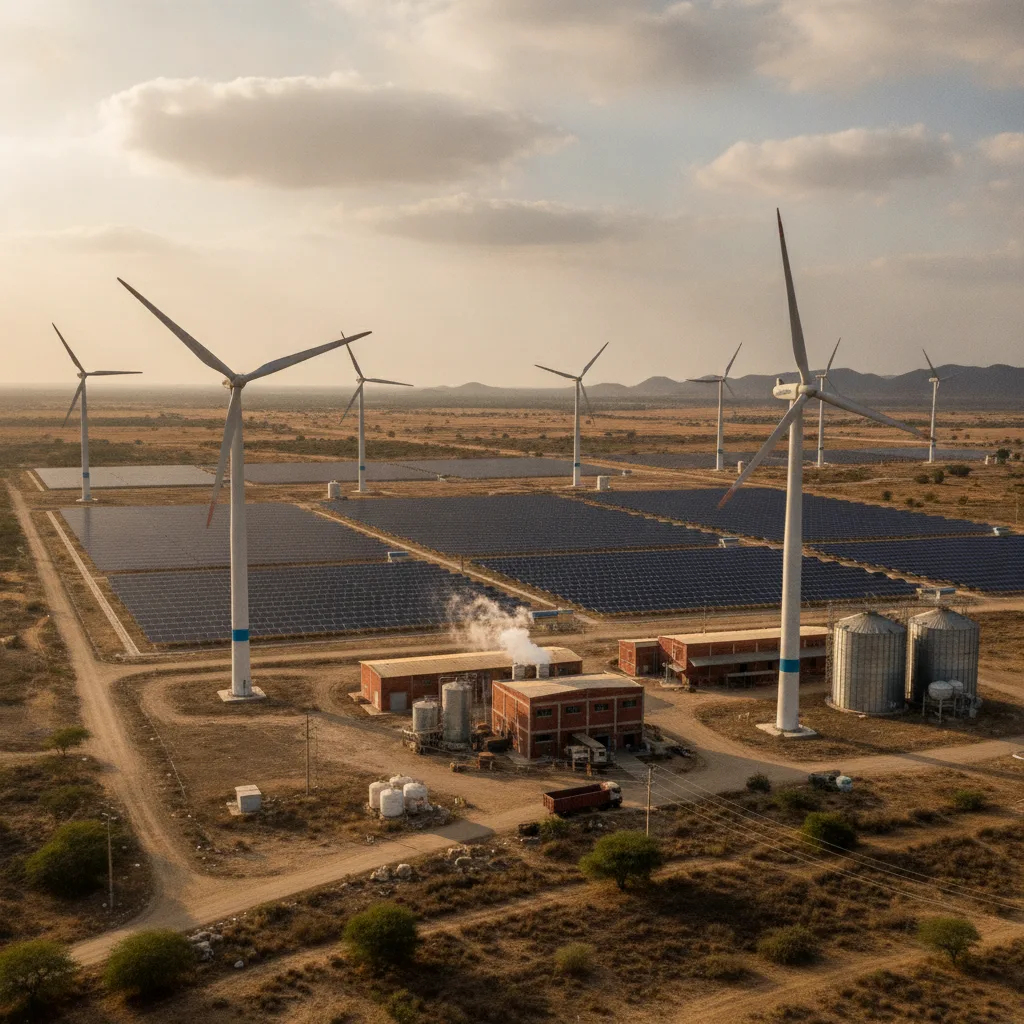
NEW DELHI, Indian industry is looking at wind-solar hybrid projects as a way to get steady, round-the-clock power. A recent report from ET EnergyWorld says these hybrids can solve the biggest problem with renewable energy: it does not blow or shine all the time.
Wind and solar alone are variable. Solar peaks during the day. Wind often picks up at night or during monsoon months. By pairing them at the same site or nearby, the combined output stays more even. This makes it easier for factories and other large users to rely on clean power without backing it up with coal.
The report points to government data showing that India has already installed over 400 MW of wind-solar hybrid capacity. The country aims for much more. The Ministry of New and Renewable Energy has set a target of 30 GW of hybrid projects by 2030.
Lower costs, higher reliability
Hybrid projects are cheaper than building separate wind and solar farms. They share land, transmission lines, and inverters. The levelized cost of electricity from a hybrid plant can fall below Rs 3 per unit, according to industry estimates cited in the report. That is competitive with new coal power.
For industrial buyers, the key gain is reliability. Many states now force factories to buy a share of their power from renewables. But if the wind does not blow, they still need power from the grid. Hybrids reduce that risk. Some projects also add battery storage to smooth out the remaining dips.
"The hybrid model gives industry a predictable power curve," the report says. It lets companies plan production without worrying about sudden drops in renewable supply.
Policy push and grid integration
The central government has issued guidelines for wind-solar hybrid parks. It also allows hybrid projects to sell power directly to big consumers through open access. That cuts out the state distribution companies, which often struggle to pay generators on time.
State-level policies are also changing. Gujarat, Rajasthan, Maharashtra, and Tamil Nadu have good wind and solar resources. They are seeing the most interest from developers. The report notes that these states have also started tenders for hybrid projects with storage.
Grid operators face new challenges. A hybrid plant still has hours when output drops close to zero. To keep the grid stable, the government is pushing for "firm and dispatchable" renewable power. That means hybrids must include storage or backup from hydropower or gas.
The Solar Energy Corporation of India has run tenders for 1.2 GW of firm power from hybrids with storage. The results show tariffs of around Rs 4.5 per unit. That is higher than plain solar but still lower than diesel backup.
Industry uptake
Large industrial groups are already signing deals. The report says companies in steel, cement, and chemicals are buying hybrid power to cut their carbon footprint and shield themselves from rising coal prices. Some are building their own hybrid plants. Others are buying from independent power producers.
One example cited in the report: a cement maker in Rajasthan is getting 30 MW of round-the-clock power from a wind-solar hybrid project with battery storage. The company expects to save Rs 10 crore a year on power costs.
The report warns of hurdles. Land acquisition remains slow. Transmission lines take years to build. And state distribution companies sometimes block open access for hybrid projects. But the overall trend is clear: hybrids are becoming a mainstream option for Indian industry.
"By 2030, wind-solar hybrids could supply 10 percent of India's industrial electricity," the report concludes.
Comments
Be the first to comment.
Leave a comment