
16,900 trucks enter Delhi daily, EV shift could cut 23% of transport emissions
A new Down To Earth report shows diesel trucks make up a huge share of Delhi's transport pollution, pushing officials to speed up electric freight adoption.
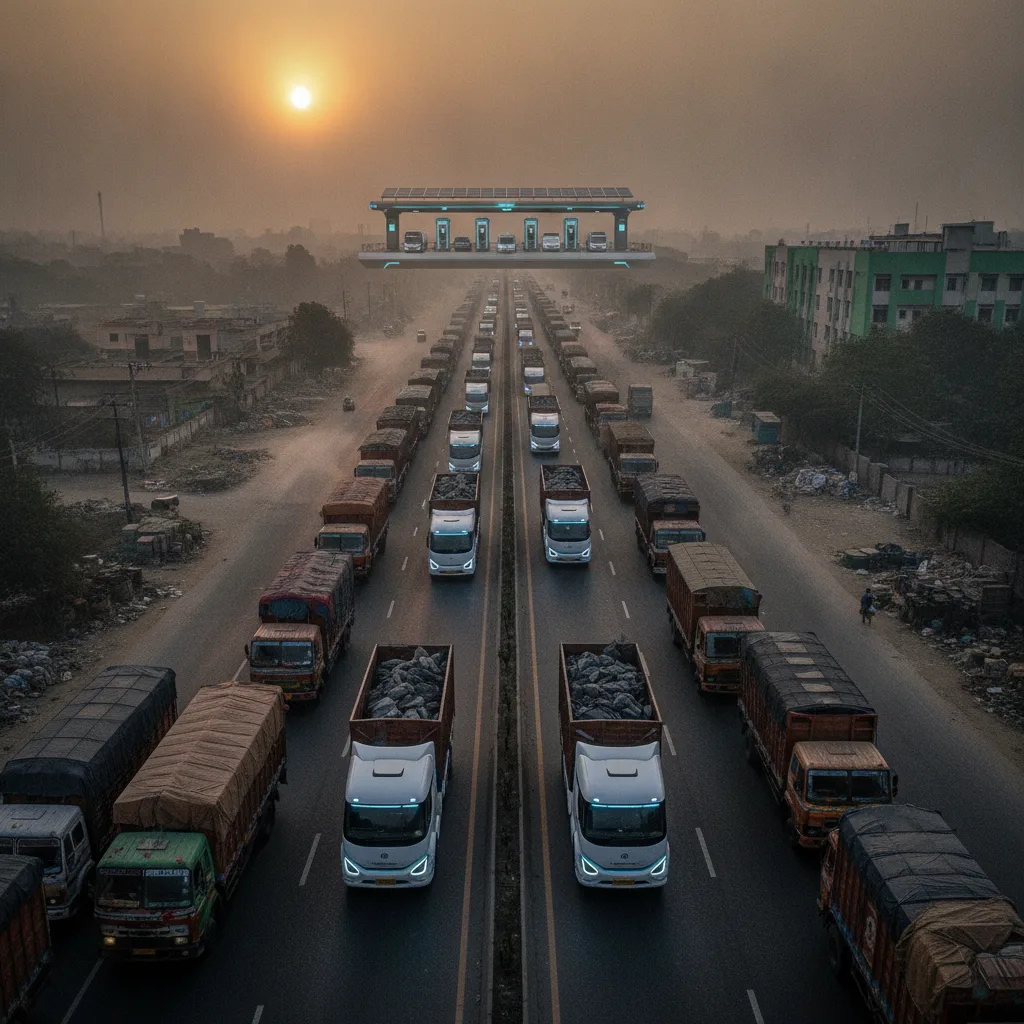
Every day, 16,900 trucks roll into Delhi. They carry food, building materials, and factory goods. But they also carry a heavy pollution load. These trucks produce 23% of the city's transport emissions, according to a new report from Down To Earth.
The numbers are stark. Delhi's transport sector already chokes under vehicle exhaust. Now researchers say shifting freight to electric trucks could cut a big chunk of that pollution. But the transition is slow.
Why freight matters
Passenger vehicles get most of the attention. Electric cars and scooters grab headlines. Yet freight trucks, mostly diesel-powered, burn far more fuel per kilometer. They run long hours, often idling at borders and checkpoints. That makes them a prime target for clean-up efforts.
Down To Earth's analysis draws on government data and traffic studies. It shows that while trucks make up a small fraction of Delhi's total vehicle count, their share of emissions is outsize. The 23% figure covers carbon dioxide and other pollutants like nitrogen oxides and particulate matter.
Delhi's air quality is among the worst in the world. In winter, a thick smog blankets the city. Trucks are not the only cause, farm stubble burning and construction dust also play a role. But cutting freight emissions would give the city a real breather.
Policy push and roadblocks
The Indian government has set goals for electric vehicle adoption. The Faster Adoption and Manufacturing of Hybrid and Electric Vehicles (FAME) scheme offers subsidies. But most of that money has gone to two- and three-wheelers. Heavy trucks have been left out.
State-run Energy Efficiency Services Limited (EESL) has started small pilots. A few dozen electric trucks now run on short routes near ports and warehouses. But scaling up is hard.
Battery range is a problem. A fully loaded truck needs 300 to 400 kilometers of range. Current batteries can manage that only in ideal conditions. Charging infrastructure is thin. Delhi's truck depots and border checkpoints lack fast chargers. And the upfront cost of an electric truck is nearly double that of a diesel one.
Financing is another hurdle. Banks are wary of lending for new technology. Truck owners, many of them small operators with thin margins, cannot afford the risk.
What could speed things up
Down To Earth points to a few solutions. First, the government could extend FAME subsidies to heavy trucks. That would lower the purchase price. Second, it could mandate that a share of government freight, supplies for schools, hospitals, and public works, be carried by electric trucks. That would create a guaranteed market.
Third, charging stations could be built at key points: Delhi's border entry points, major warehouses, and along the Delhi-Mumbai and Delhi-Kolkata highways. Private companies like Sun Mobility and Tata Motors are already testing battery-swapping for trucks. That could cut charging time from hours to minutes.
Some states have moved ahead. Maharashtra and Gujarat have announced electric truck policies. Delhi's own EV policy, launched in 2020, targets 25% of new vehicle sales to be electric by 2024. But freight is not a focus.
The report estimates that replacing just 10% of Delhi's daily truck fleet with electric models would cut transport emissions by more than 2%. That may sound small. But it would also reduce noise and improve air quality near truck routes.
Not just Delhi
This is not only a Delhi story. Other Indian cities face the same problem. Mumbai, Bengaluru, and Chennai see thousands of trucks enter each day. Their emissions data is similar. If Delhi finds a way to clean up freight, other cities could follow.
For now, the 16,900 trucks keep coming. Each one burns diesel. Each one adds to the haze. The question is how fast the switch to electric can happen, and whether the government will push hard enough to make it real.
Comments
Be the first to comment.
Leave a comment