
Adani Green Energy crosses 20 GW operational capacity, 14% of India's utility solar
The company now runs 20,434 MW of solar and wind plants, making it one of the largest clean-energy operators in the country.
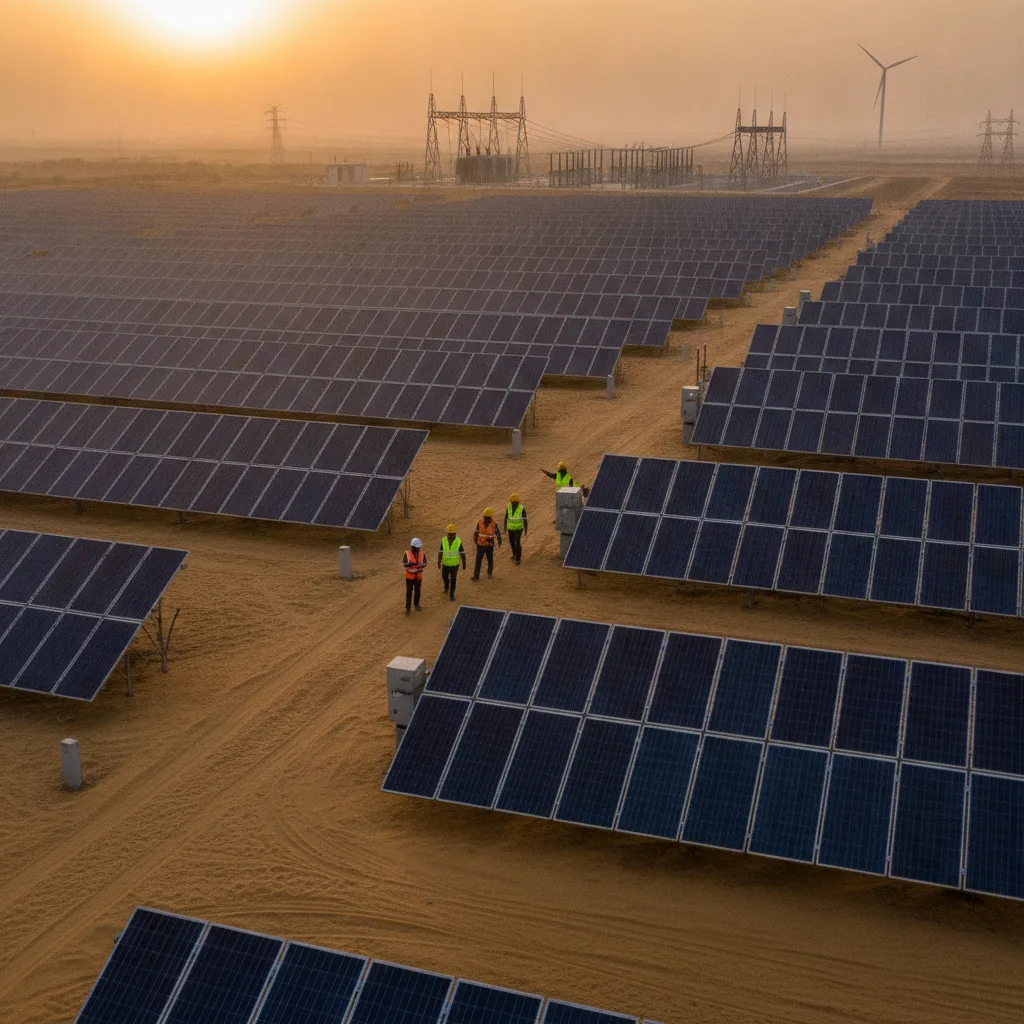
Adani Green Energy Limited has pushed past 20 gigawatts of operational capacity. The company now runs 20,434 megawatts of solar and wind projects across India. That equals roughly 14% of the country's total utility-scale solar and wind installations, according to company figures.
The milestone comes as India races to hit 500 GW of non-fossil fuel capacity by 2030. Adani Green's portfolio alone covers a significant slice of that target. The company's operational assets include large solar parks in Rajasthan and Gujarat, plus wind farms in Tamil Nadu and Karnataka.
How the numbers stack up
India's total installed renewable capacity stood at about 180 GW as of early 2025. Utility-scale solar and wind make up the bulk of that. Adani Green's 20.4 GW represents more than one in every seven megawatts of those two technologies.
The company says it added roughly 6 GW in the past 12 months. That pace puts it among the fastest-growing clean-energy developers in the world. Most of the new capacity came from solar parks in Khavda, Gujarat, where Adani Green is building what it calls the world's largest renewable energy zone.
Adani Green's total pipeline, projects under construction or in development, exceeds 40 GW. If all those plants come online, the company would control a share of India's grid that few private players have matched.
Financing and offtake
The company has locked in power purchase agreements for most of its operational capacity. Buyers include state utilities in Gujarat, Rajasthan, and Andhra Pradesh, as well as corporate customers such as Amazon and Google. Those long-term contracts give Adani Green a steady revenue stream, which helps it borrow cheaply to build new projects.
Adani Green raised about $1.5 billion in green bonds and project finance last year. It also signed a $400 million loan from the U.S. International Development Finance Corporation. That money goes toward solar manufacturing and project construction.
The company's debt-to-equity ratio sits around 1.5, which is moderate for an Indian infrastructure firm. Analysts at Crisil and ICRA have given the company's bonds stable ratings, citing the strength of its PPA portfolio.
Challenges ahead
Land acquisition and grid connectivity remain bottlenecks. Adani Green's Khavda project, for instance, required the state government to lease thousands of hectares of salt desert. Transmission lines to carry power from that remote site to load centers are still being built.
Another issue: solar module prices have fallen sharply over the past year, which helps project economics but also squeezes margins for manufacturers. Adani Green makes some of its own panels through a subsidiary, but it still buys a portion from outside suppliers.
Policy uncertainty is a third risk. India's solar sector has seen sudden tariff caps and retroactive charges before. Any change to open-access rules or interstate transmission charges could hit Adani Green's projects that sell power to corporate customers.
Despite those headwinds, the company shows no sign of slowing down. It plans to reach 45 GW operational capacity by 2030. That would require adding roughly 3 GW every year for the next five years.
For now, the 20 GW mark puts Adani Green in a small club. Only a handful of companies globally, including China's Longi and Spain's Iberdrola, operate more clean energy. In India, no other private developer comes close.
Comments
Be the first to comment.
Leave a comment