Battery Tech, AI and Innovation Key to India's EV Future, Says Report
A new analysis from Entrepreneur India highlights battery advancements, artificial intelligence, and homegrown innovation as the three drivers that will shape the country's electric vehicle market.
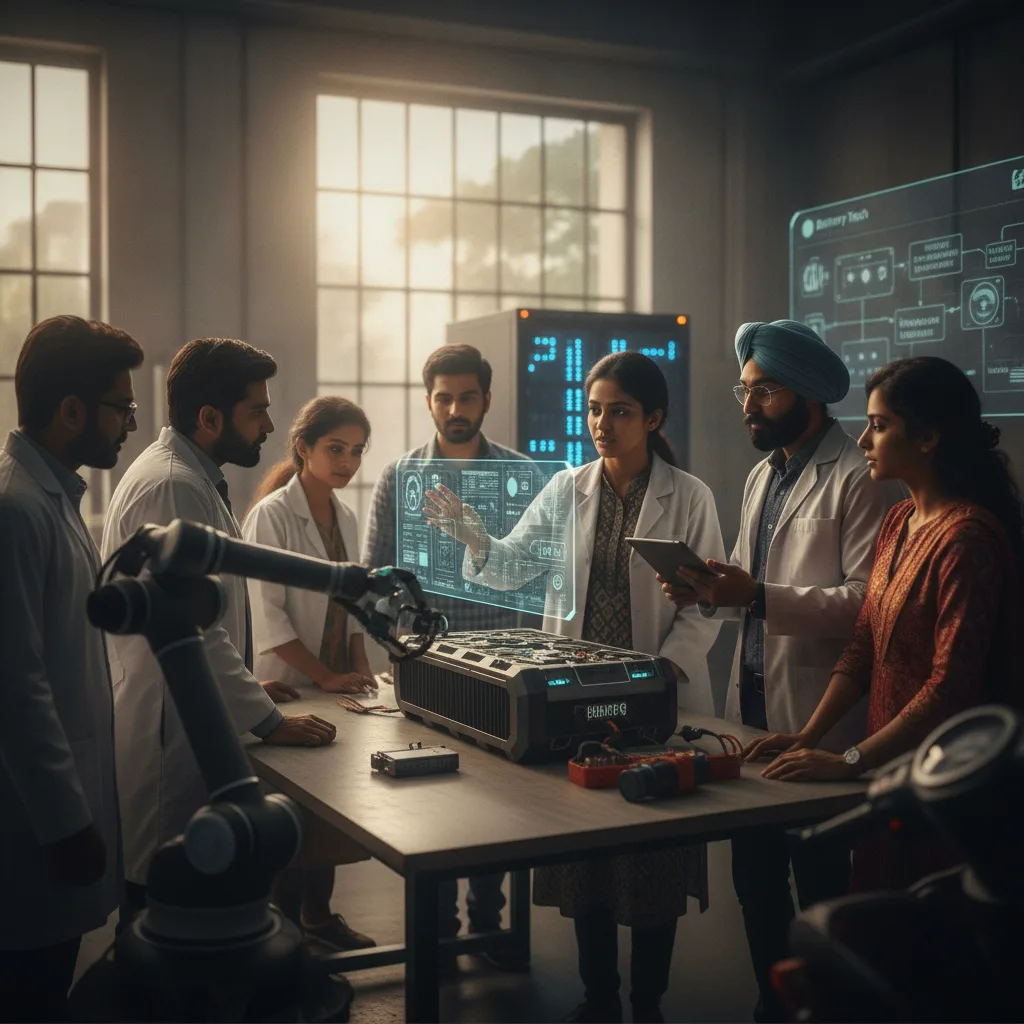
India's electric vehicle future will be built on better batteries, smarter software, and a push for homegrown innovation. That is the central finding of a new report from Entrepreneur India, which looks at the forces likely to shape the sector in the coming years.
Battery technology takes center stage
Battery performance remains the biggest hurdle for EV adoption in India. Range anxiety, charging time, and cost all trace back to the battery pack. The report points to solid-state batteries and sodium-ion cells as two technologies that could change the game. Solid-state batteries promise higher energy density and better safety than current lithium-ion packs. Sodium-ion cells, meanwhile, use cheaper and more abundant materials, a major advantage for a price-sensitive market like India.
Local manufacturing of battery cells is also a priority. The government's production-linked incentive scheme for advanced chemistry cells aims to build domestic capacity and cut dependence on imports. Several Indian companies are already setting up gigafactories.
AI drives efficiency and safety
Artificial intelligence is moving from the lab into the vehicle. The report says AI will play a growing role in battery management systems, predicting cell degradation and optimizing charging cycles to extend battery life. AI-powered software can also improve driving range by analyzing traffic, terrain, and driver behavior in real time.
Safety systems are another area where AI adds value. Advanced driver-assistance features, such as automatic braking, lane-keeping, and collision warnings, rely on machine-learning algorithms. As India's EV fleet grows, such systems could help reduce accidents, especially in dense urban traffic.
Innovation from Indian startups
Indian startups are not waiting for global players to lead. The report highlights a wave of homegrown companies working on everything from electric two-wheelers to charging infrastructure. Many are focusing on affordable models tailored to Indian roads and driving habits. Battery-swapping networks, for instance, are gaining traction for three-wheelers and scooters, where fast charging is less practical.
Some startups are also developing vehicle-to-grid technology, letting EVs feed power back into the grid during peak demand. That could turn parked cars into a distributed energy resource, helping stabilize the grid and earning money for owners.
Policy support and challenges ahead
The Indian government has set an ambitious target: 30% of new vehicle sales to be electric by 2030. The Faster Adoption and Manufacturing of Electric Vehicles (FAME) scheme provides subsidies for buyers and incentives for manufacturers. Several states have their own EV policies, offering additional tax breaks and registration fee waivers.
But challenges remain. Charging infrastructure is still sparse outside major cities. Grid reliability in many parts of the country raises questions about the true carbon footprint of EVs. And the high upfront cost of electric cars continues to deter buyers, even with subsidies.
The report from Entrepreneur India does not offer easy answers. It does, however, make one thing clear: battery chemistry, AI software, and Indian innovation will determine how fast, and how far, the country's EV transition goes.
Comments
Be the first to comment.
Leave a comment