Chinese analysts see India’s EV push as a cautionary tale, not a threat
A report from ThePrint says Chinese experts view India's electric vehicle growth as a warning about policy gaps and market hurdles, not as a competitive danger.
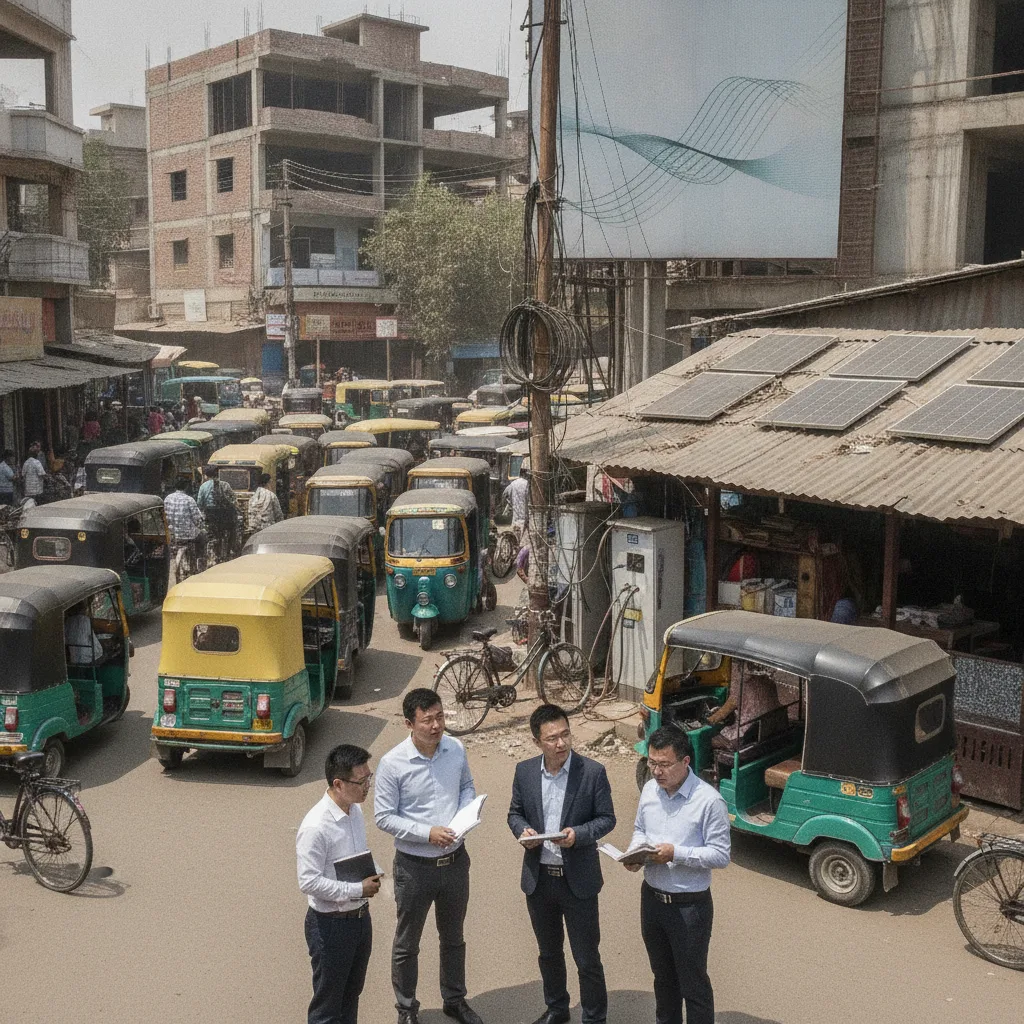
Chinese analysts and industry watchers are not losing sleep over India's electric vehicle boom. A report in ThePrint says they see India's EV push more as a cautionary tale than a competitive threat.
China dominates the global EV supply chain. It makes most of the world's batteries, controls key minerals, and builds millions of electric cars a year. India, by contrast, is still finding its footing. Sales of EVs in India are rising fast, but from a low base. The country's overall car market remains tiny compared to China's.
Chinese observers point to several weak spots. India's charging network is thin. Battery production is still in its infancy. Policy support has been uneven. The government's Faster Adoption and Manufacturing of Electric Vehicles (FAME) scheme has helped, but its second phase ends in March 2024, and a replacement is not yet clear.
"India's EV story is real, but it is not a story of imminent dominance," one Chinese analyst told ThePrint. The report notes that Chinese firms are not panicking. They see India as a market that could grow, but not one that will challenge China's lead anytime soon.
Policy gaps and local hurdles
India has set ambitious targets. It wants 30% of new car sales to be electric by 2030. But the path is bumpy. High upfront costs, limited model choices, and range anxiety still hold buyers back. Local manufacturers like Tata Motors and Mahindra have jumped in, but they rely heavily on imported cells from China.
That dependence is a worry for New Delhi. The government has tried to push local battery manufacturing through production-linked incentive (PLI) schemes. But building a cell-making industry takes years. Meanwhile, Chinese companies like BYD and MG Motor, owned by China's SAIC, have entered India. But they face tightening scrutiny from Indian regulators. New rules on investment from neighbouring countries have slowed some plans.
Chinese analysts argue that India's protectionist moves could backfire. Keeping out Chinese technology and capital might slow India's own EV push. "If you block the supply chain, you also block your own growth," another source told ThePrint.
Different roads, same destination?
Both countries want to cut oil imports and curb pollution. But their strategies diverge. China went all in early, building factories, subsidising buyers, and locking in mineral deals abroad. India has moved more cautiously, balancing local industry protection with climate goals.
The report says Chinese observers see India's struggle as a mirror of their own past. China's EV boom did not happen overnight. It took a decade of heavy state support, infrastructure building, and painful consolidation. Many early EV startups failed. The lesson, they say, is that policy consistency matters more than speed.
India's two-wheeler EV market is actually growing faster than cars. Startups like Ola Electric and Ather Energy have sold hundreds of thousands of scooters. But even here, fire incidents and quality issues have dented confidence. Chinese firms, which dominate two-wheeler battery production, watch these problems closely.
For now, the Chinese view is pragmatic. India is not a rival, it is a market that needs time. "We are not threatened," the report quotes a Chinese industry executive. "We are watching."
Comments
Be the first to comment.
Leave a comment